.png)



Training





Services









Why face-to-face roleplay beats voice-only for people-facing roles, when to use each, and how AI makes in-person practice possible at scale.
There are moments in many conversations when a person's words don't tell the whole story.
A buyer might say a proposal sounds interesting, but their expression suggests they're already drafting a rejection email in their head. Or perhaps a potential customer claims to understand the technical specs on a new product, but there's confusion written all over their face. They eventually leave empty-handed.
That's why human communication can be so tricky. What someone's really thinking often sits somewhere between their words, their tone and their body language. And even the best communicators miss subtle signals and social cues from time to time.
This makes practicing face-to-face conversations essential when training for roles where success depends on building a genuine rapport with the person in front of you.
Here, we explore why face-to-face roleplay is crucial in learning and development. And, although in-person training has been so difficult to scale in the past, we look at how AI can now unlock the possibilities of immersive training in this way.
In very basic terms, immersive learning is 'learning by doing'. Let's face it, no one becomes a world-class musician by studying sheet music. There reaches a point where you simply have to pick up an instrument and play.
That's not just a convenient metaphor, by the way. Around 21% of the measurable difference in performance between good and not-so-good musicians comes down to how much they practice. It's a similar story for sports (18%).
As they say, practice makes perfect – or at least “better”.
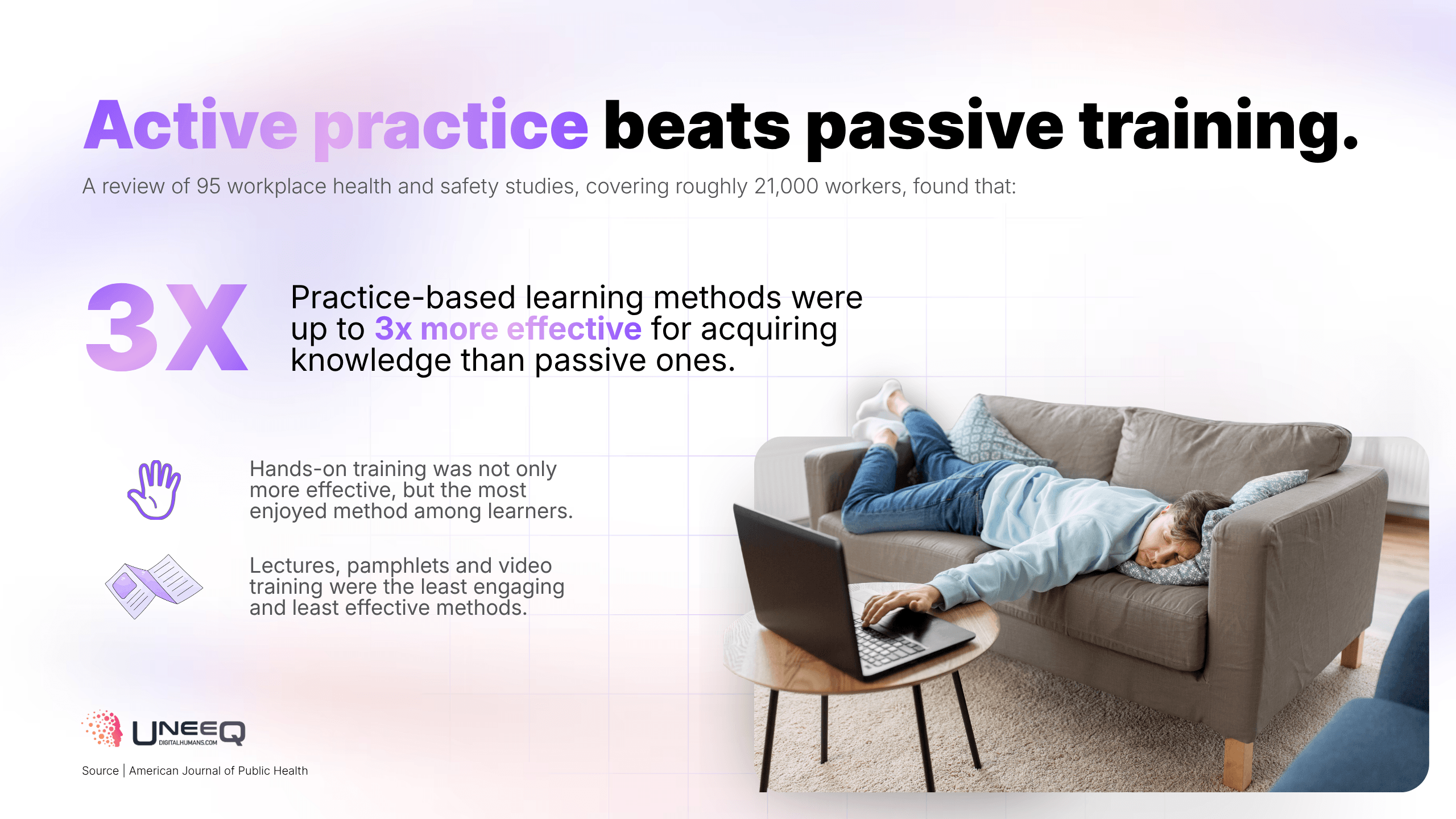
Even in subjects considered more theoretical, such as mathematics, science and engineering, students taught via traditional lectures are 55% more likely to fail than those using immersive learning techniques, studies show.
And when it comes to jobs that require a lot of human interaction, immersive learning often means simulating face-to-face interactions through roleplay.
Now, we know in-person roleplay has its flaws; in fact, it's a topic we've written about before. Roleplay with your peers can feel awkward and unrealistic — it's also incredibly inconsistent, and difficult (and expensive) to scale consistently.
That's because it needs trainers, managers, colleagues, available calendars and enough goodwill to survive multiple mock customer conversations on a busy Thursday afternoon.
Fortunately, AI is beginning to change that. So, let's take a look at what AI roleplay is, and the ways in which it can be used to take immersive training to the next level.
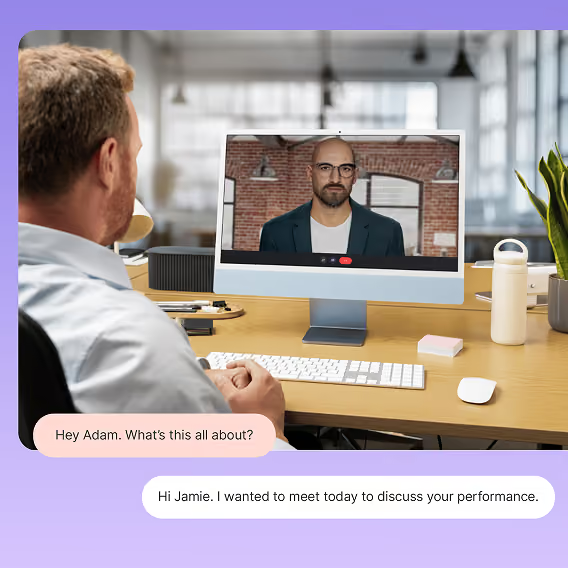
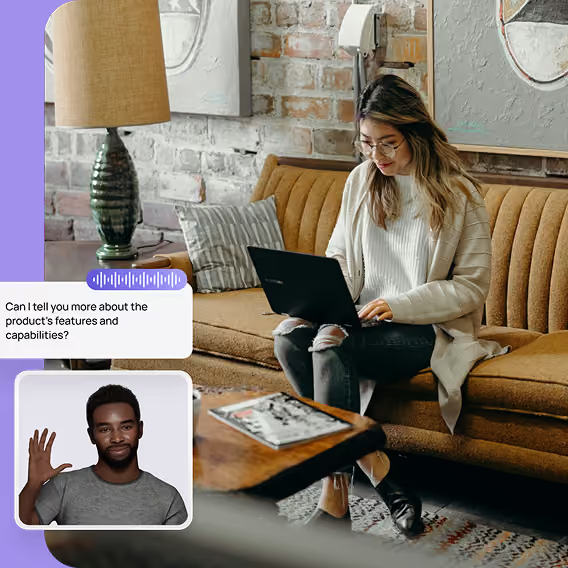
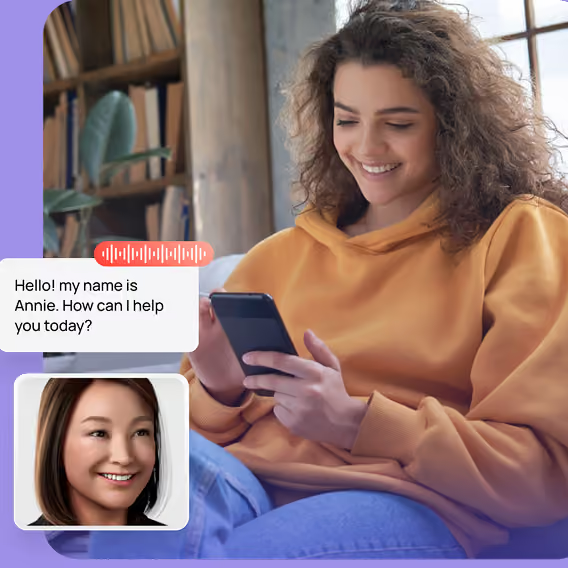
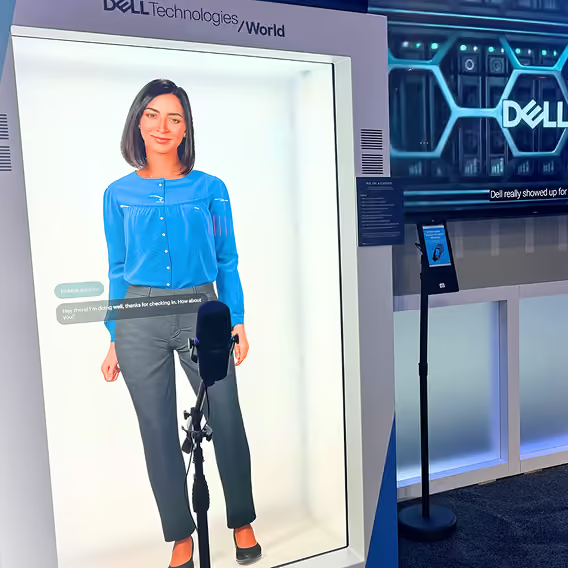
With AI roleplay, rather than speaking to their (often begrudging) colleagues, learners practice scenarios with emotionally intelligent digital humans.
This allows people to simulate important interactions in a safe environment as many times as they need before they must handle them for real, whether that's for sales calls, customer complaints, leadership conversations or interviews.
And because digital humans can integrate with any large language model, they respond in the moment and adapt to a conversation as it evolves. That makes training experiences feel real, but without the first- or second-hand embarrassment that comes when people make mistakes in front of their peers.
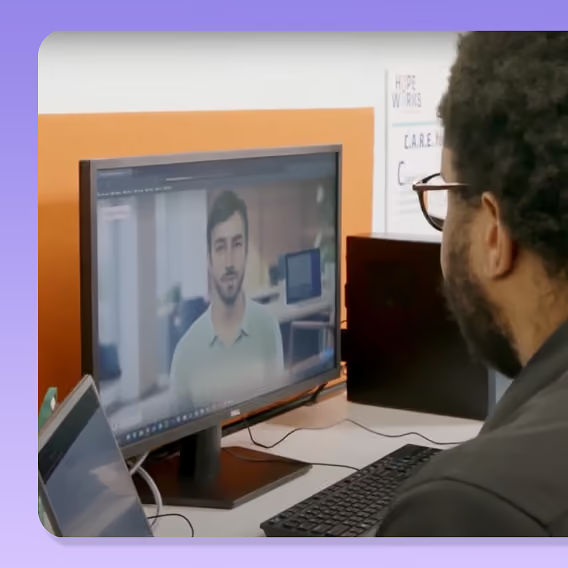
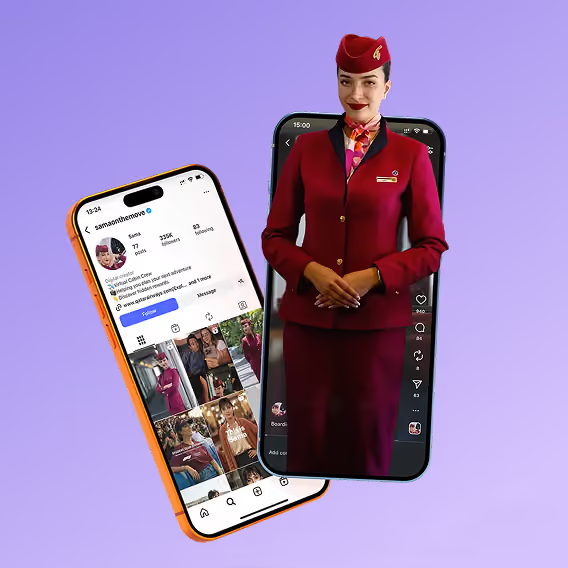
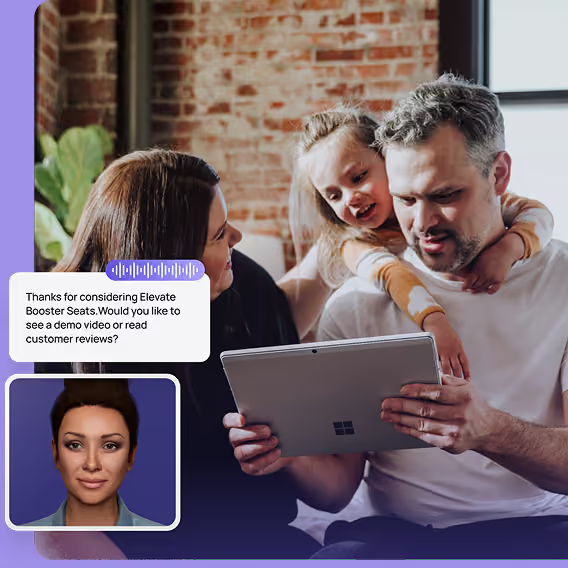
Digital humans also have a face, voice, and mannerisms to further drive immersion, but without the need for VR headsets or other fancy — read: expensive — technologies. In fact, you can speak face-to-face with them through a browser, your phone or a range of other convenient platforms.
These features of digital humans aren't just for immersiveness though; they provide a visual presence and key elements of non-verbal communication so that trainees can more effectively learn to read a room.
Each training scenario is also heavily customizable, because interactions can be unpredictable. It's not uncommon for people to soften objections or hide their emotions. They may get hot under the collar or retreat behind a polite or professional veneer. Everyone's different.
Effective roleplay must be able to accurately reflect these differences in real-life interactions, which is why tools such as UneeQ's Immersive Training Platform enable scenarios to be tailored to a business's specific products, services and buyer personas.
Not only this, but each training scenario can be built in as little as five minutes. And when a session ends, an AI coach can debrief trainees, guiding them through what went well, what went not so well, and ways to improve.
So while you may think of AI roleplay as simply simulating the conversation, you can see there are a lot of other offshoots that become their own benefits – from breaking speed records with scenario creation, to providing better coaching in the moment.
AI roleplay doesn't just refer to face-to-face training. Some platforms offer AI-powered voice learning that simulates phone calls, such as cold calls in sales or customer service calls.
So, which one is better?
We would argue they are different tools for different jobs (literally!). If your job is mostly done over the phone, your training should feel as much like a phone call as possible.
If you manage a telesales team, for instance, your reps don’t really need to see the prospect or read the room visually. In these cases, voice-only roleplay is probably the way to go because it mirrors your working environment (which is what we mean by immersive).
But many real-life workplace interactions do not happen like that.
Sales meetings often take place on video calls or in person. Customer service happens across counters, in branches, in showrooms and on shop floors. And managers must have difficult or sensitive conversations with employees in real life every day.
For these types of interaction, face-to-face roleplay offers a far more realistic training ground. It helps learners practice the full conversation in front of them — not just the words being spoken, but the expressions, pauses, and subtle changes in behavior that can completely change how they should respond.
Love it or hate it, live face-to-face roleplay has always been an important part of preparing people for the realities of their on-the-job interactions. I'm talking the kind real managers used to do (and still do) with their teams.
The problem is that it hasn't always offered the consistency and quality at scale that organizations need.
Managers hate it because it takes all their time. Staff hate it because it fills them with dread.
And while it’s certainly not the silver bullet for everything, in this case AI has truly changed that. AI has made realistic, people-facing practice easier to deliver, easier to repeat, and easier to measure. AI roleplay is able to complement or even replace large amounts of in-person peer roleplay, and 85% of managers say it saves them time (at least that's what our first-party data shows).
If you need face-to-face AI roleplay but don't want to do it all live, we're able to help.
Book a demo to see how we can help you bring face-to-face roleplay into the AI age. Or click here to start your free trial of Immersive Training Platform.