.png)



Training




Services








AI roleplay lets employees practice high-stakes conversations with responsive AI personas. Here's how it works, why it works, and what to look for.
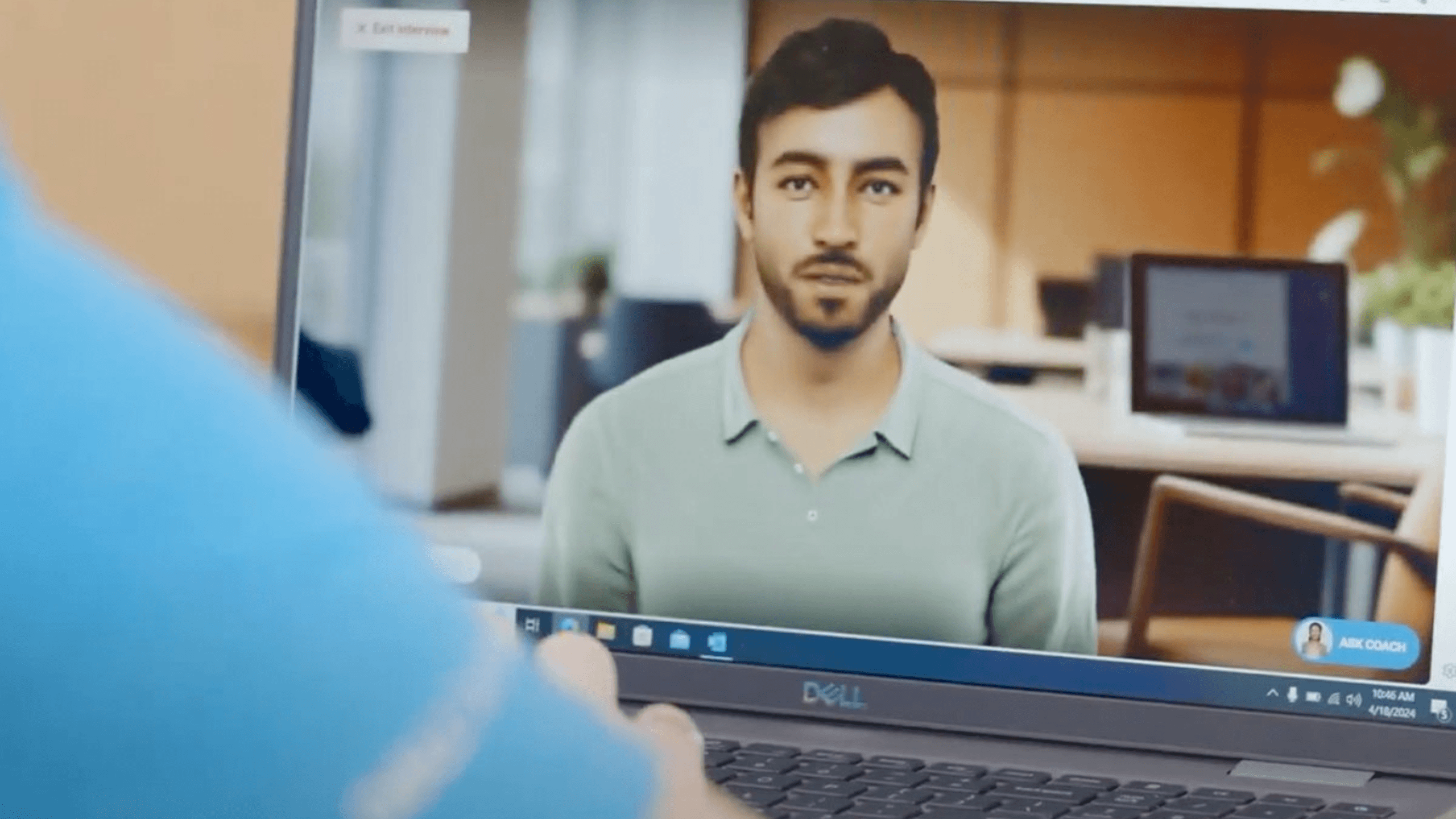
AI roleplay is a training method where employees practice real conversations — sales calls, customer complaints, performance reviews — with AI-powered personas that listen, respond, and push back like real people. Unlike real-life roleplay with peers or scripted e-learning, every conversation is consistent, repeatable and live, so learners build skill and confidence before the stakes are real. The most sophisticated AI roleplay platforms provide fast scenario set-up, deep learner analytics, and AI coaching.
Every L&D leader knows the uncomfortable truth about training: people don't get better at conversations by watching videos about conversations. They get better by having them. The problem is that traditional roleplay — the kind with a manager, a conference room, and a room full of watching colleagues — is awkward, inconsistent, and impossible to scale.
AI roleplay solves that. And to clear one thing up early: yes, "AI roleplay" can also mean chatting with a fictional wizard on a character app. If that's what you came for, wrong blog. This is the kind of roleplay that gets people promoted. This guide covers AI roleplay for workplace training and immersive learning: what it is, how it works, and how L&D teams use it to build real skills.
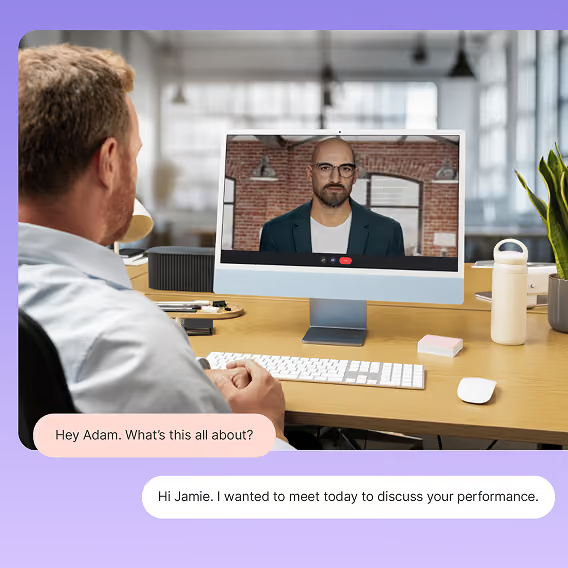
AI roleplay (sometimes written "AI role play") is the practice of rehearsing real workplace conversations with an AI-powered persona that responds dynamically, like a real person would. The AI plays the other side of the conversation — a skeptical buyer, a frustrated customer, an underperforming direct report — and the learner practices navigating it, as many times as they need, with no real-world consequences.
That last part matters. A learner can bomb a negotiation with an AI persona at 11pm on a Tuesday, get feedback, and run it again. No burned prospect. No awkward moment with a colleague. No waiting three weeks for a manager's calendar to open up.
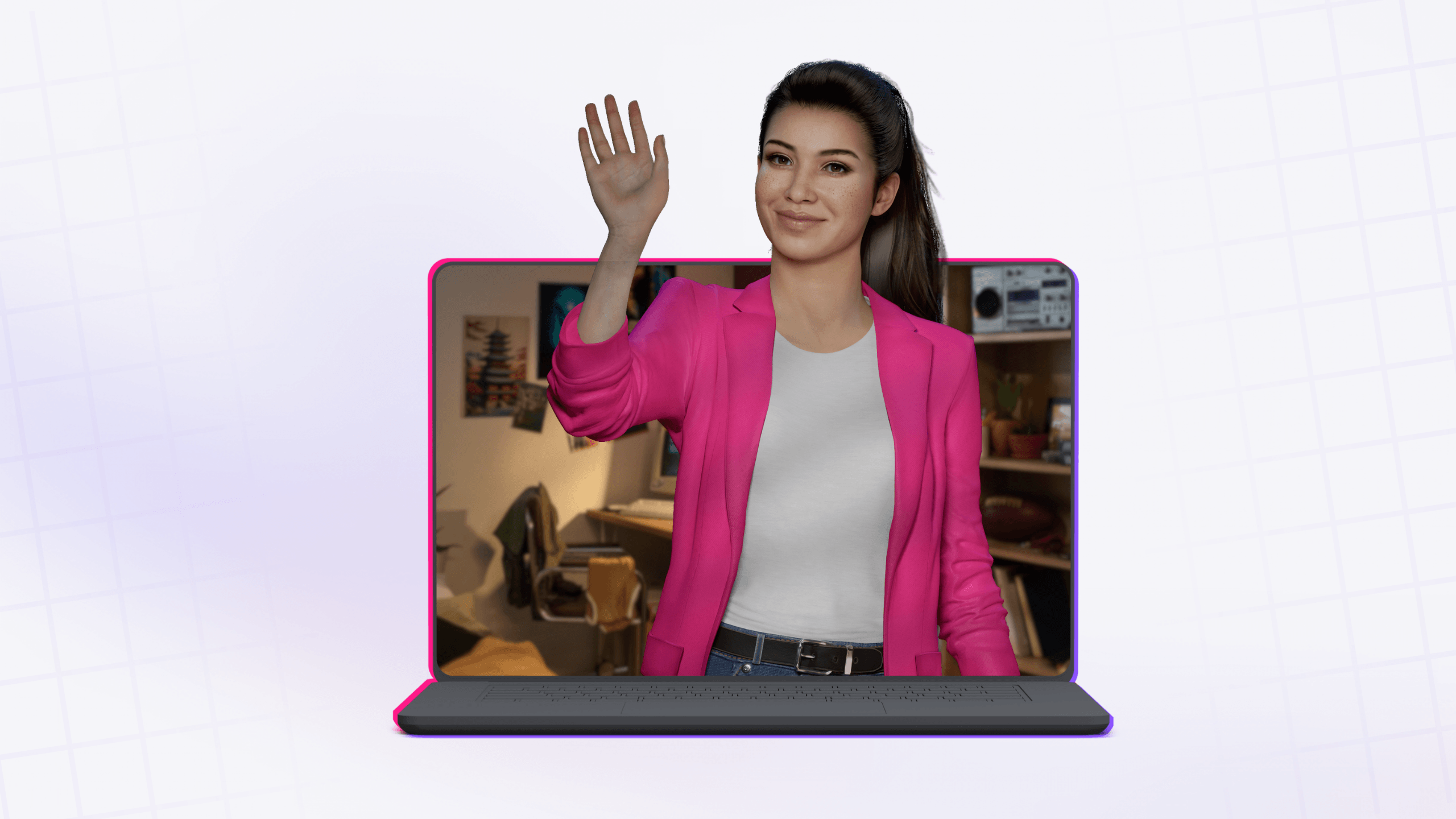
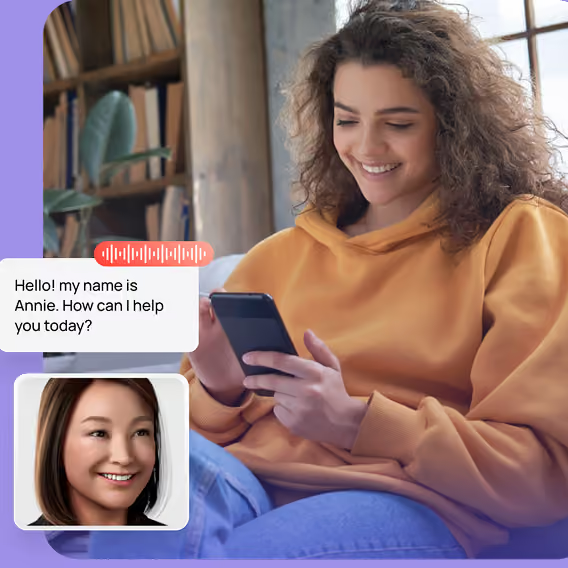
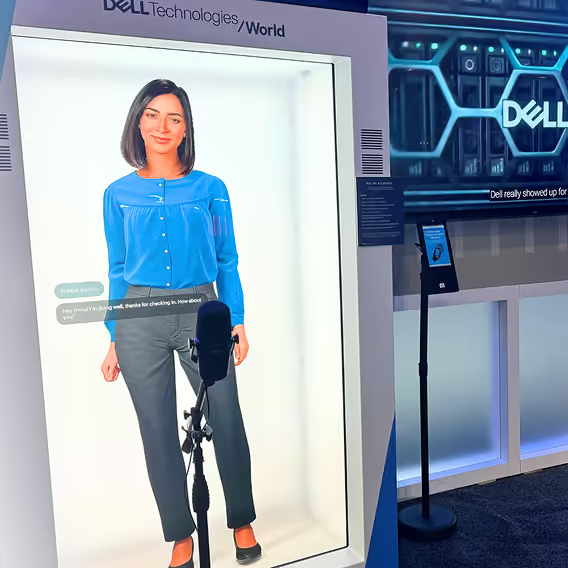
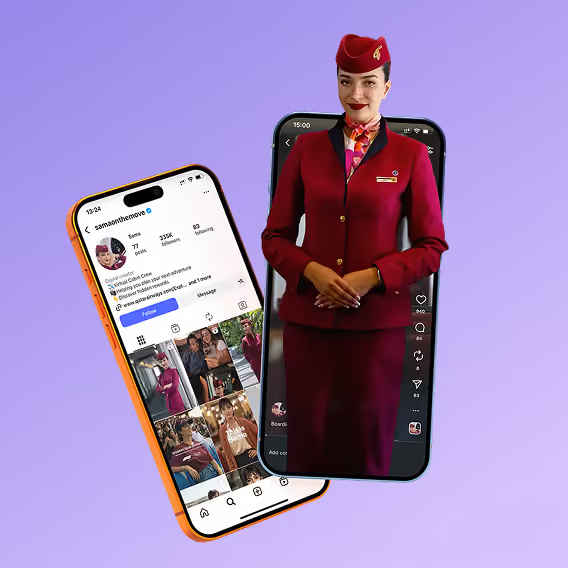
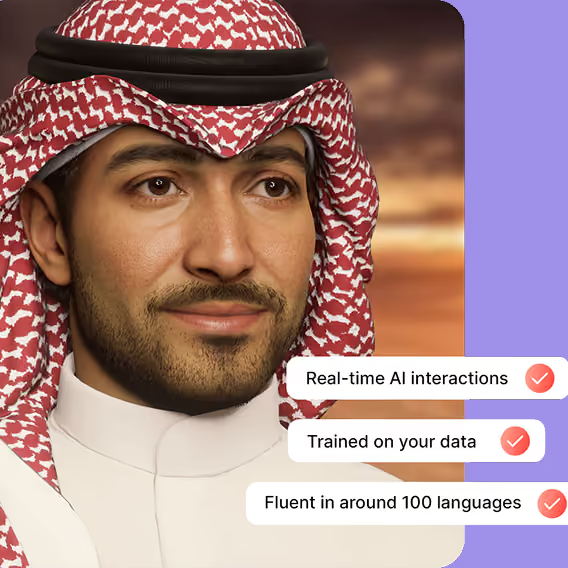
The best AI roleplay goes beyond words on a screen. When the persona is a lifelike digital human (with facial expressions, body language, and emotional reactions) learners practice the full conversation, including the parts that never show up in a transcript.
AI roleplay works by combining a large language model with a defined persona and scenario, so the AI can hold a realistic, unscripted conversation while staying in character and on-objective. The learner talks; the AI listens, responds, objects, and adapts; and the platform scores the performance afterward.
In immersive learning platforms, that conversation happens face-to-face with a lifelike persona, in real time.
Under the hood, four layers do the work — and we'll use our platform here as an example:
1. The persona. Every AI roleplay starts with a character: their role, personality, backstory, goals, and objections. A good persona isn't a quiz in a trench coat. It's a believable person — the CFO who's been burned by vendors before, the customer who's been on hold for 40 minutes.
2. The conversation. The platform needs to keep the persona in character, on-scenario, and aligned with your company's methodology. UneeQ's platform uses one of a variety of leading LLMs to run the conversation part of AI roleplay.
3. The presence. The presence is either text, voice, or in-person silumation. On face-to-face roleplay platforms, an animation engine brings the persona to life visually. UneeQ's Synanim™ autonomously controls the persona's facial expressions, gestures, behavior, and reactions in real time. With these added visual cues, learners can practice reading the room — not just trading sentences. For instance, noticing when a prospect is confused or losing interest in your sales pitch during AI sales roleplay.
4. The feedback. After each session, the platform scores the learner against your assessment framework and shows exactly where they nailed it and where they wobbled. The leading AI roleplay platforms provide coaching capabilities, so users can learn and improve in the moments following a roleplay session.
That loop (practice, feedback, repeat) is what makes AI roleplay so effective in immersive learning. It turns training from something employees consume into something they do.
AI roleplay is having a moment in learning and development because it fixes three problems that have haunted soft skills training for decades.
Coaching doesn't scale. Managers are stretched thin, and one-on-one roleplay eats their week. AI roleplay gives every learner unlimited practice reps, and UneeQ data shows 85% of managers save time on coaching as a result. The manager's role shifts from running roleplays to acting on the insights they produce.
Live roleplay is dreaded. Practicing in front of a manager or peers is a performance, and everyone knows it. Learners hold back, play it safe, and learn less. AI roleplay removes the audience: 90% of learners find AI roleplay less stressful than live roleplay, according to UneeQ research. Psychological safety isn't a nice-to-have here. It's the mechanism that makes practice honest.
The results are measurable. Traditional soft skills training is famously hard to evaluate. AI roleplay produces data on every session. Across UneeQ's Immersive Training Platform, that translates to 95% training effectiveness, 2x knowledge retention, and 3x higher engagement compared with traditional methods — with a 94% learner recommendation rate.
The underlying principle is older than the technology. Decades of research on experiential learning, from ATD and others, points the same direction: people build conversational skill through realistic practice in safe, controlled environments, not through passive content.
AI roleplay works for any role where the quality of a conversation shapes the outcome. Here's where L&D teams are using it most.
Sales reps use AI roleplay to practice discovery calls, demos, objection handling, and negotiations with AI buyers who push back like the real thing. Instead of learning on live prospects (and burning pipeline in the process), reps arrive at real calls already sharp. UneeQ customers see a 40% reduction in time-to-first-deal with AI sales roleplay.
Service teams practice the conversations nobody wants to have for the first time with a real customer: complaints, escalations, delivering bad news, staying empathetic under fire. AI roleplay for customer service training lets agents face an angry persona a dozen times before they ever face an angry human once.
AI roleplay for leaders focuses on the high-stakes moments of management: performance reviews, tough feedback, conflict resolution, and negotiation. These are exactly the conversations leaders avoid practicing because the traditional alternative — roleplaying a termination with a colleague — is excruciating. Leadership training with AI roleplay makes rehearsing them normal, private, and repeatable.
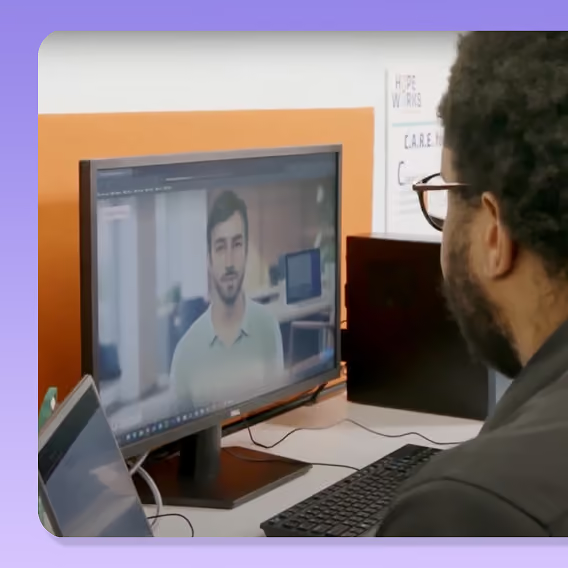
Universities and workforce programs use AI roleplay to prepare students for real-world careers: job interviews, client conversations, and professional communication. Hopeworks, a workforce-development nonprofit, uses UneeQ digital humans to help young adults build interview skills and professional confidence before they enter the job market — practice that once required scarce volunteer time, now available on demand. Explore how institutions use immersive training in education.
Beyond these four, the same approach powers conflict management training, negotiation training, emotional intelligence training, and communication skills training across the business — one platform, multiple learning domains.
.jpg)
Pearson, one of the world’s leading learning companies, built Dana — an AI language tutor powered by UneeQ’s digital human platform. Pearson’s research shows only 48% of employees feel confident speaking English at work, so Dana lets professionals practice workplace English through lifelike roleplay — from giving pitches to running performance reviews — in a safe, stress-free environment. Synanim™ drives her expressions, gestures, and even breathing rate in real time, so every session feels like talking to a real person, without the performance anxiety.
AI roleplay builds the skill; AI coaching makes it stick. Practice without a debrief is half the loop — and the most valuable coaching moment is the few minutes right after a session ends, when reflection is sharpest. That's exactly when human coaches are least available. Research cited by Jobera found that 96% of employees want timely feedback, yet 32% wait three months or more to get any.
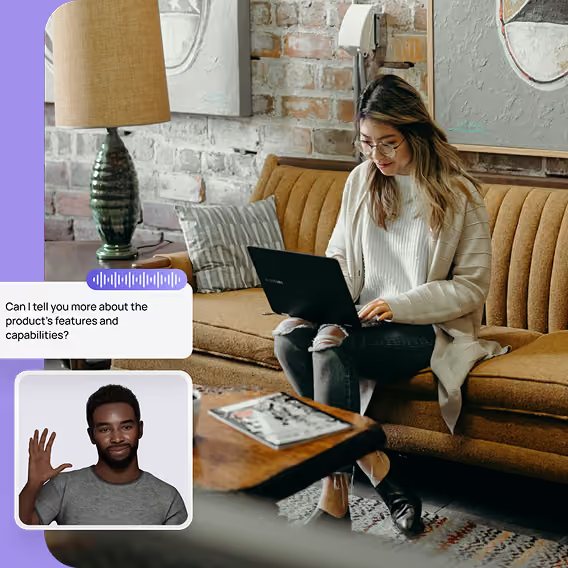
That gap is why UneeQ built AI Buddy, a capability within the Immersive Training Platform and the first in the market to deliver face-to-face, spoken coaching from a digital human. The moment an AI roleplay session ends, AI Buddy sits down with the learner for a real two-way conversation about what they did, what they said, and how they came across.
AI Buddy arrives knowing the full context: the session transcript, your organization's coaching framework, the learner's scores, and — through UneeQ's 3D Analytics — how the learner physically showed up, from eye contact and body language to tone of voice. And it's a genuine dialogue, not a lecture. Learners can challenge an interpretation, replay a difficult moment, or test how a different response would have landed.
By default, learners meet Eno: a curious, playful robot with just enough irreverence to take the edge off tough feedback. (Behavioral research suggests people are often more receptive to critical feedback from a non-human source — apparently it's easier to hear "you talked over the customer three times" from a cheerful robot.) Organizations can configure everything: the personality, the coaching methodology, and which digital human plays the Buddy — any character in the Immersive Training Platform can take the role.
Together, AI roleplay and AI coaching close the loop: practice, debrief, improve, repeat. Every practice moment becomes a learning moment.
AI roleplay tools fall into three camps, and the right one depends on how your people actually work. Based on publicly available information, here's how the landscape breaks down.
1. DIY LLM prompting. Anyone can ask ChatGPT to "act as a skeptical buyer." It's free and fast, and for individual experimentation it's a fine start. But there's no persona consistency, no realism, no analytics, and no way to manage it across a team. At enterprise scale, DIY roleplay is a hobby, not a program.
2. Voice-first simulators. Tools like Yoodli, Hyperbound, and Second Nature focus on audio-based practice and speech analysis. Based on publicly available information, they're a strong fit for phone-heavy teams — think SDR cold calling or contact-center voice work. The trade-off: with no visual counterpart, learners can't practice body language, facial cues, or reading the room.
3. Face-to-face digital human platforms. Platforms like UneeQ and Mursion use real-time CGI digital humans, so learners practice full face-to-face conversations — the visual and emotional layer included — with the deepest soft skills analytics. This camp is the best fit for employees who engage customers face-to-face or via video, rather than phone-only.
If you're comparing specific vendors, our AI training comparison guide break down many of the leading options in more depth.
AI roleplay keeps everything that made traditional roleplay valuable (realistic practice, human dynamics) and removes pretty much everything that makes it painful.
| Traditional roleplay | AI roleplay | |
|---|---|---|
| Availability | When calendars align | 24/7, on demand |
| Audience | Manager and peers watching | Private, judgment-free |
| Consistency | Varies by facilitator | Same quality, every time |
| Repetition | One or two takes | Unlimited reps |
| Measurement | Subjective impressions | Objective scoring and analytics |
| Cost to scale | Grows with headcount | Flat, platform-based |
The psychological safety difference is the one learners feel most. In UneeQ's research, 90% of learners find AI roleplay less stressful than live roleplay — and less stress means less performance, more honesty, and faster skill growth. When nobody's watching, people actually try the hard stuff.
Creating an AI roleplay scenario means defining the conversation you want practiced, building the persona on the other side of it, and setting the criteria for success. On a modern platform, the whole process takes minutes, not months. Here's the four-step version:
1. Define the scenario. What conversation are you training, and what skill should it build? "Handle a renewal call where the customer is threatening to churn" beats "practice sales skills."
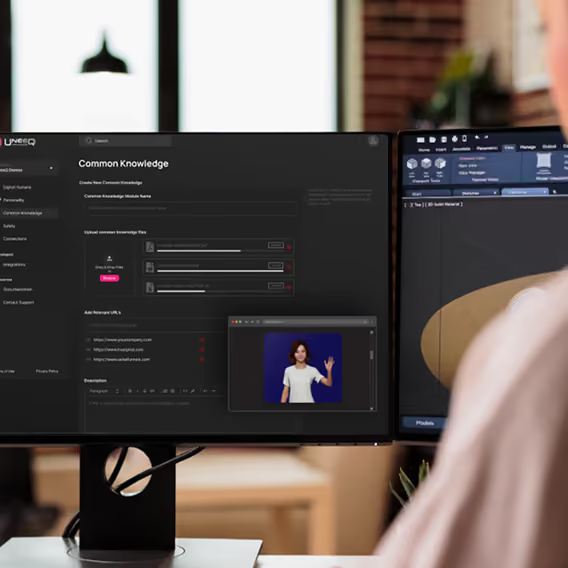
2. Build the persona. Give the AI character a role, a personality, a backstory, and objections. The richer the persona, the more real the practice. Modern platforms will draft one from a plain-language description.
3. Set the rubric. Decide what "good" looks like in your methodology — the behaviors, phrases, and outcomes you want to see — so every session is scored against your standard, not a generic one.
4. Launch and iterate. Roll it out, watch the analytics, and refine. The data will tell you which objections trip people up and which scenarios to build next.
AI roleplay is measurable in a way soft skills training has never been. Every session produces data: performance scorecards against your rubric, team-level dashboards that surface coaching opportunities, and readiness signals that tell leaders who's prepared for the real thing before they're in it.
UneeQ's 3D Analytics goes a layer deeper, measuring the skills that were historically almost impossible to quantify at scale: eye contact, body language, tone of voice, and how a learner actually comes across in conversation. For the first time, an L&D leader can answer "are my people good at difficult conversations?" with data instead of anecdotes.
They can also see how good individuals are at certain skills, such as building rapport, communicating technical information, building trust, being adaptable, and virtually any other soft skill an L&D team finds valuable.
Did you know, UneeQ’s Immersive Training Platform has an endorsement feature? Managers can see who has reached proficiency in a scenario and is ready for the real thing!

Many metrics that measure training are lagging indicators — sales close rates, customer satisfaction rates, etc. Which means you have to wait months to see the fruits of your L&D labor. AI roleplay platforms give you leading indicators. These are more immediate datapoints that show when someone is on the right track, and when they need more direct support.
That's the shift AI roleplay makes possible: training effectiveness stops being a survey question and becomes a metric.
The best AI roleplay software for corporate training depends on your teams, but the evaluation criteria are consistent. Look for:
If a tool checks every box on that list, you've found something worth piloting.
The conversations that decide your business — the renewal call, the tough review, the make-or-break pitch — deserve better than a first attempt with real stakes. AI roleplay gives your people conversations that count, before they actually do.
Explore the Immersive Training Platform or book a demo to see AI roleplay in action.
Answering the most frequently asked questions about AI roleplay.