.png)



Training



Services









What are digital humans? Discover how AI-powered digital humans work, where they're used, and the benefits for training, customer experience, and brands.

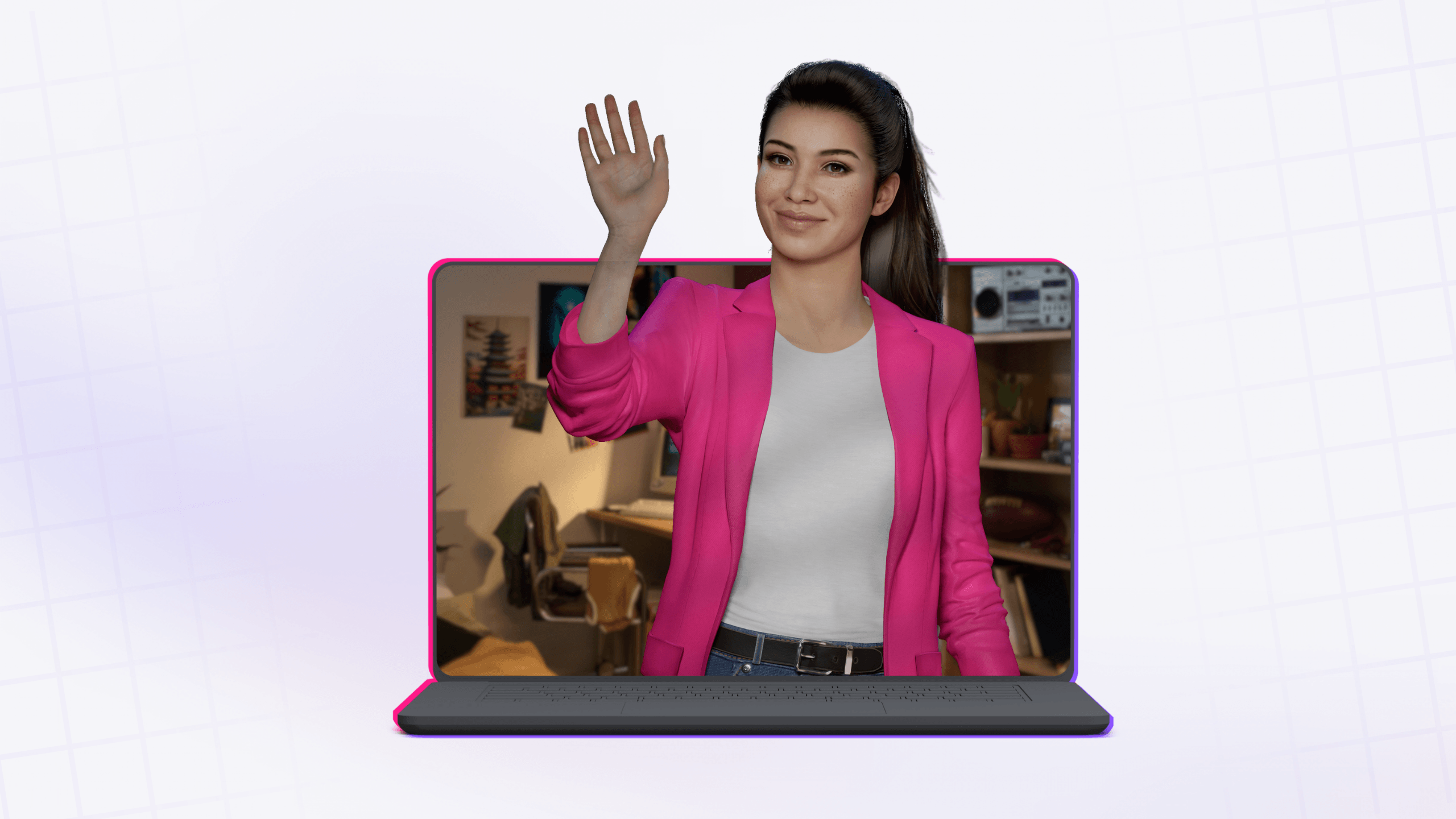
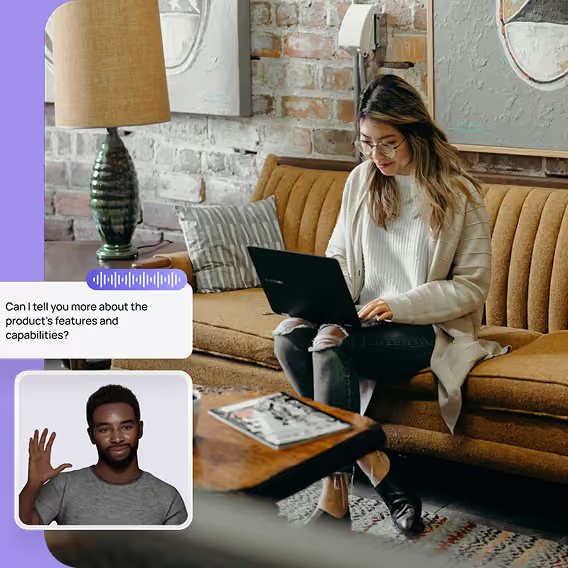
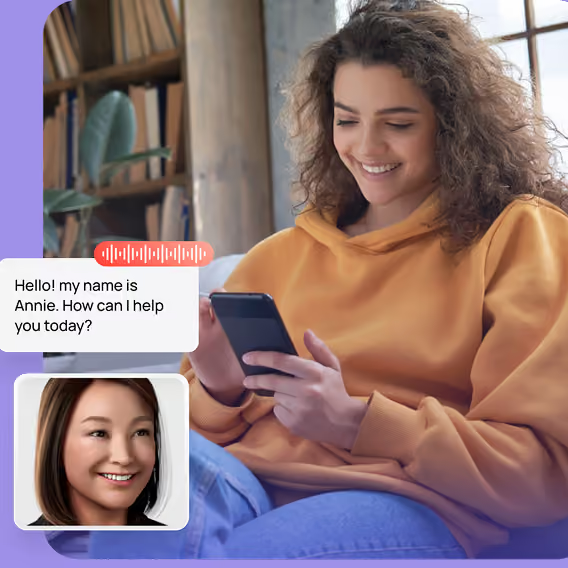
A digital human is an interactive, AI-powered virtual person you can talk to in real time, with a face, a voice, a body, and a personality. Conversation is driven by a large language model (LLM) and grounded in an organization's own data, while technology like UneeQ's patented Synanim™ animation handles lifelike expressions, gestures, and lip-sync. The result is a human-like interface for technology that works at huge scale: answering customers around the clock, welcoming visitors to a website, or letting employees practice high-stakes conversations through immersive training. Not human, not just digital, but somewhere purposefully in between.
“Wait, what are digital humans?” If you work in the industry and have ever been asked what you do for a living, you’ve probably heard a question like this more often than not.
Ten years ago, the answer only increased people’s disbelief. “Why would I want to speak with AI, and why would it need to look human?”
For someone to ‘get it’, they really had to try it for themselves, as our CEO Danny alluded to recently when recalling how someone started crying when speaking with the first digital human in 2016 — happy tears, fortunately!
Today, in 2026, audiences are incredibly familiar with AI. OpenAI alone has almost a billion active users, texting or even speaking with it regularly.
As Accenture put it in 2024: ”Generative AI is upgrading people's expectations of the internet.”
That wording has stayed with me over the past two years. What we expect of technology has soared since large language models blew our minds a few years back. Naturally, we inquisitively look for the next logical step in what AI can be and do.
And if you think the way we interact with AI today will be the way we’ll always interact with AI, you need to learn about digital humans.
In which case, this blog post is exactly where you need to be.
At the simplest level, a digital human is an interactive virtual “person”, driven by various AI systems. You talk to them and they talk back to you in a way that's designed to feel far more natural than the status quo — clicking through menus or typing into a clunky chat window.
A digital human is driven by an LLM (think of that as the knowledge center of the brain). But the interface is humalike, creating the feeling of talking to someone in real life, but making it accessible at huge scale.
If that sounds a little too sci-fi for your tastes, just think what this means in terms of real-life use cases:
So it’s not human (nothing can replace true human connection), but not simply digital — digital humans operate in that middle ground where users benefit from a human interface with technology.
Because a digital human is a “virtual person”, it has a visual presence. Not just a voice, but also a face, a body and a personality. The personality part is actually really important, and where, for me, it gets most interesting.
The best digital humans aren't just a generative AI avatar slapped on a website; the greatest examples offer a conversational experience that helps to make digital interactions feel more, well, alive.
That includes the ability to build rapport, display empathy, and respond appropriately depending on the situation, which is important because of the many different scenarios where digital humans can be used (more on this very soon).
So that's the definition. From there, it's a question of how digital humans are built and how to make them a force for good.
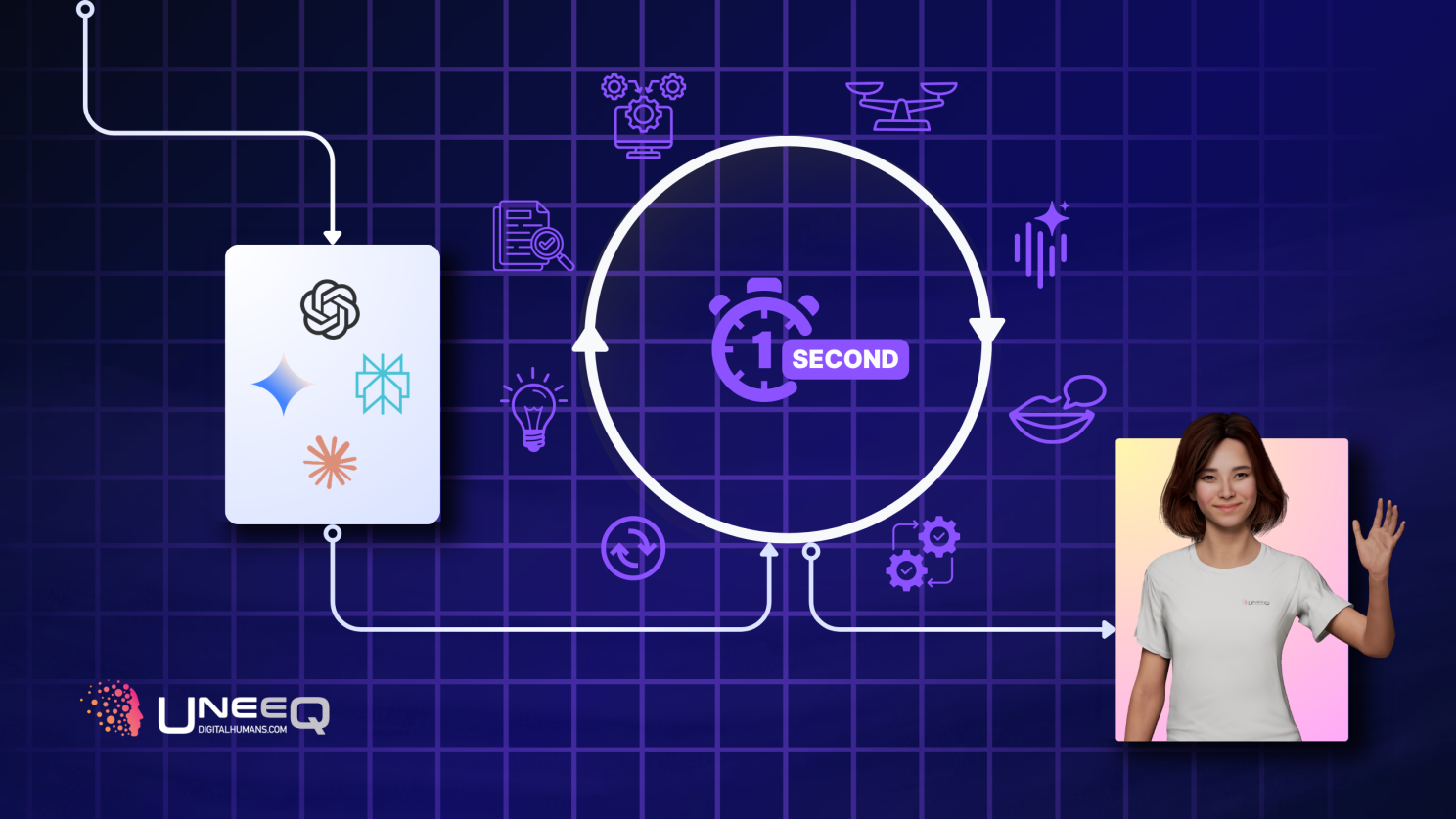
Under the hood, different technologies come together to bring digital humans to digital life.
As mentioned, the conversational side is driven by LLMs (large language models), which most people will recognize from well-known platforms like ChatGPT and Claude. These LLMs are then often paired with an organization's own knowledge base.
In other words, they're not just making plausible-sounding conversation out of thin air. Interactions are instead grounded in the information a business actually wants it to use, whether that's product data, internal documentation, support content or training materials.
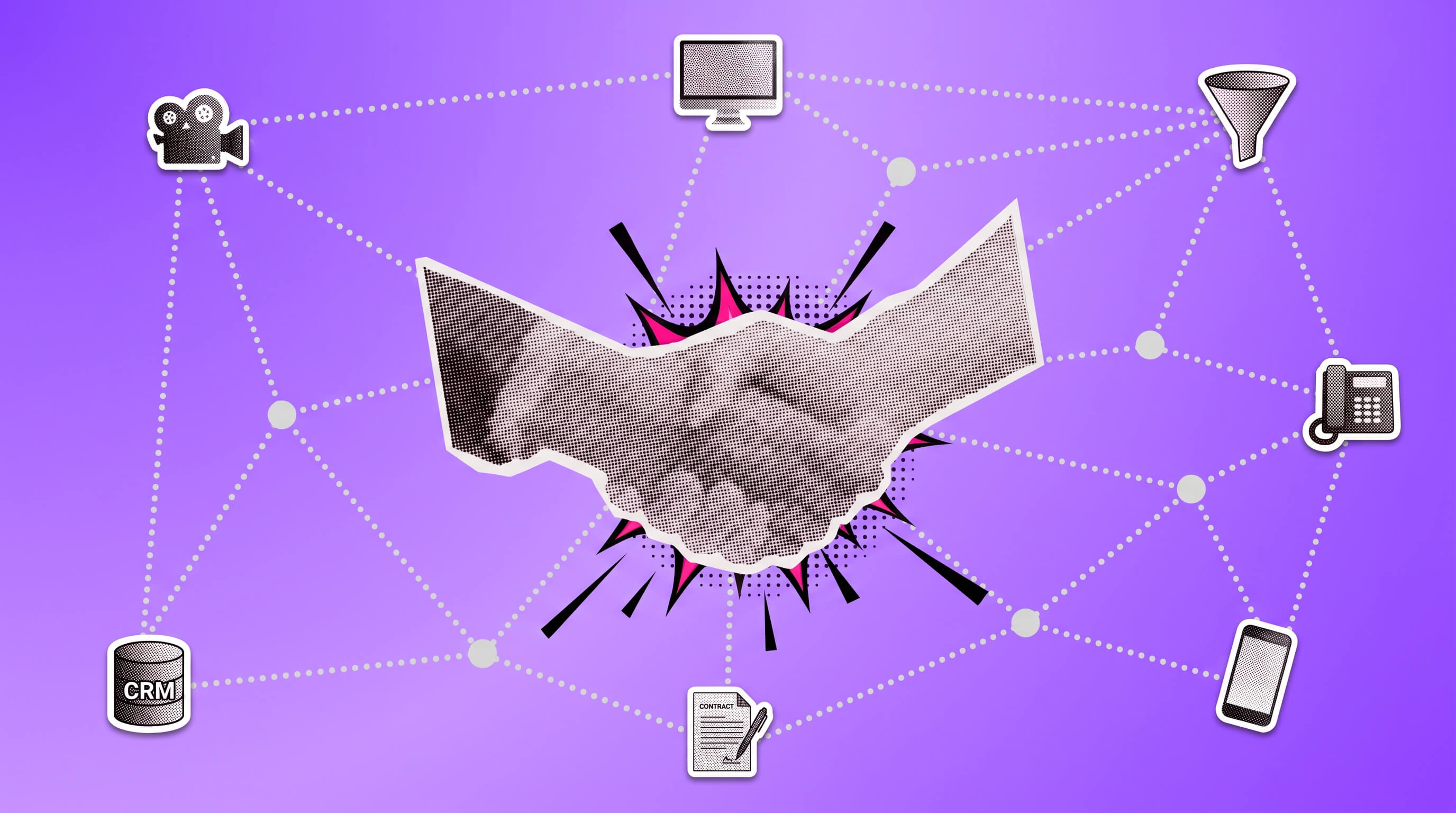
Crucially, digital humans can also connect into third-party platforms and owned data sources. This means they're not just limited to their training data; they can pull in live information from a CRM, knowledge base, and any other reliable sources when they need to fill in gaps in their knowledge.
Then there's the voice. Text-to-speech integration gives digital humans something more natural than blocks of on-screen text, which is pretty important if you're trying to create conversations that feel real.
UneeQ's digital humans, for example, can speak in more than 100 languages, so that experiences are inclusive and available to the widest possible audience.
Now comes the bit people often underestimate: animation and behavior. This is where the best digital humans pull away from the rest.
The words matter, obviously. So does the voice. But if the facial expressions are odd, the mouth-syncing is off, or the gestures feel random, people notice. You can have a strong conversational engine and still end up with an experience that feels flat or, even worse, creepy.
That's why cutting-edge animation, such as UneeQ's patented Synanim™ technology, makes such a difference immersion.
The way a digital human moves, reacts, and represents a brand has a huge impact on whether or not users buy into the interaction. Digital humans can do almost anything a human can do (and more) with a little technical know-how. Just look at how we made Mia, one of UneeQ's digital humans for Deutsche Telekom, complete with custom soccer animations for her breakthrough moment at MWC Barcelona 2026.
All this makes a UneeQ digital human work, and respond with super low latency in less than one second. If you’d like a technical breakdown of the technologies involved in making a digital human work, check out this blog post by our CEO, Danny, on his LinkedIn. From sub-second response times using LLM orchestration to the AI systems that determine how a digital human behaves in real time, there’s lots going on behind the scenes if you’re interested in how a digital human works.
Digital humans long ago broke out of the stage where they’re mostly used in pilots and POCs, so the answer is: lots of places. We named a few digital human use cases above, and people are still finding new and exciting ways to use digital humans.
One of the areas where we feel digital humans can have the biggest impact is immersive learning.
Research shows that around 90% of what people are taught is forgotten within just a month of classroom learning. In fact, almost half of any new information you learn is lost within an hour! With immersive learning, however, people engage in simulated real-world scenarios, allowing them to learn by doing.
This not only improves retention rates and engagement — and we have the data to prove it — but it also gives people valuable 'on-the-job' experience.
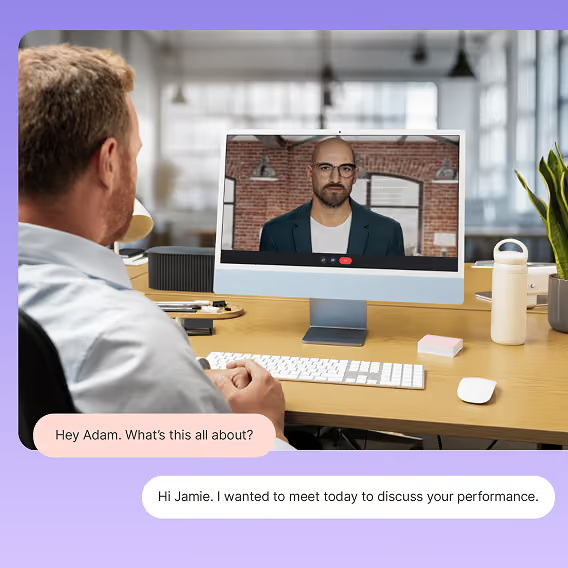
Take AI sales roleplay, for example. A sales rep can practice a pitch or difficult conversation with a digital human, building confidence in their own time without the pressure of getting it wrong in front of managers, colleagues or actual prospects.
There are also better brand experiences to consider. Digital humans can act as polished brand ambassadors who are designed to bring more of the company's identity and personality into customer and client interactions.
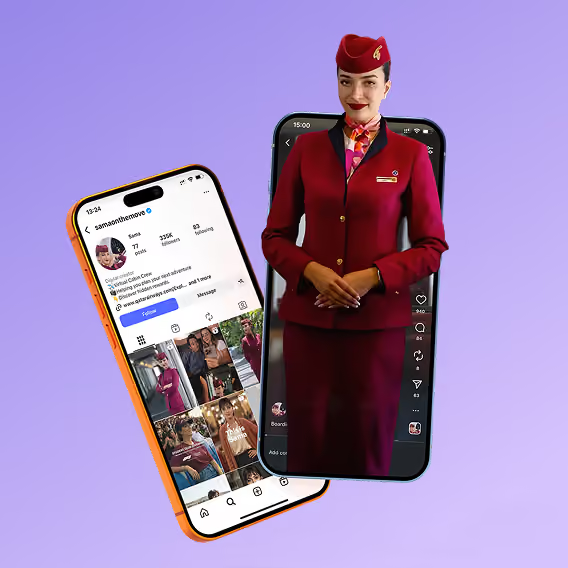
As part of this role, digital humans make excellent website concierges, welcoming visitors and helping them find what they need without forcing them through the usual maze of menus and tabs. Our work with the City of Amarillo in Texas and Qatar Airways are great examples of these kinds of unique digital human experience.
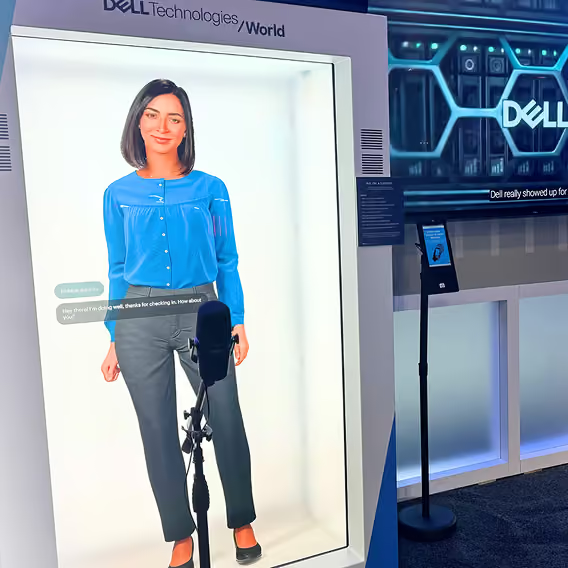
Lastly, digital humans aren't just flexible on how they can be deployed, but also where. Whether it's web, mobile, a kiosk, large screen, or VR — all of these options are available to give organizations the security and control they need.
Training metrics reflect UneeQ Immersive Training Platform data; Brand Engagement and User Experience metrics are amalgamated from a breadth of UneeQ clients. Digital human success metrics © UneeQ, 2026. Please attribute any use to UneeQ and link to digitalhumans.com.
You may be wondering what the difference is between a CGI-created digital human and an AI avatar.
Well, AI avatars can come in two varieties:
The most similar alternative to a digital human is a real-time avatar, so let’s focus on that.
There are now hundreds of real-time AI avatar tools available. Some have been vibe-coded in a matter of weeks, and others are more sophisticated technologies capable of leaving a strong impression on users.
The CGI approach, however, offers more control and security for brands. We dove deep into this in a 2024 blog, but the key points are:
Choosing a digital human vendor comes down to what you personally want and need in a solution. Getting these elements right is essential if you're trying to create experiences that people trust, enjoy, and want to come back to.
You’ll notice how AI quickly became everything, and everything became AI — just ask my washing machine, which claims to be powered by artificial intelligence, although I’ve yet to see any evidence of it.
AI is now table stakes for most organizations. What’s truly innovative now is how brands use AI to bridge the gap between technology and real people.
How they train their staff in scalable ways they couldn’t before; how they serve their customers at 3am without just building another chatbot; how they make technology feel like more than just technology.
At UneeQ, as a provider of enterprise-grade digital humans for both immersive training and brand experiences, we genuinely can’t wait to drive standards even higher as we head towards 2027.
We know that as the market develops, so too do expectations. And from this year onwards, we firmly believe the real test isn't whether your AI is smart, it's whether anyone actually wants to talk to it.