.png)



Training




Services








Still doing live mock roleplay in your sales training? Here's how AI roleplay can make everyone better — managers, reps, and leaders alike.

"Today, we're going to do sales roleplay."
If your gut clenched and your palms got a bit sweaty just reading that, there's a good chance you've heard those words before. You know what comes next too — a series of awkward, stilted scenarios with sales reps and managers who would like to be just about anywhere else. Preferably, making sales.
There's an obvious reason why most people don't like roleplay. It's not exactly fun opening yourself up to judgment in front of your manager or an audience of your peers! But that's not the only reason that roleplay sessions are often met with a cacophony of complaints.
In fact, I can think of quite a few:
Andrew Quinn, former VP of Sales Enablement at Hubspot, agrees. He told us: “In sales, practice equals roleplay. And let’s get real here, most sales managers suck at roleplay.“
So, we're all agreed? Sales roleplay is awful and nobody enjoys it. So we should all stop doing it, right? Well, no.
There’s one important thing to note: when roleplay is done well, there’s nothing like it for improving sales readiness, knowledge retention, and performance.
And we think AI sales roleplay is the way to do it well. But before we explain how and why, let's look at some of the positives of practicing with your peers.

Sales roleplay, a mock sales call, sales rehearsal — there are a lot of terms for practicing live and in-person with your colleagues, coach, or manager. But, whatever you call it, there's a growing body of evidence indicating that (if you can do it well) sales roleplay really works.
Take this study in the Journal of Marketing Education, for example. It found that students who practiced more roleplay consistently performed better in simulated sales meetings and mock interviews with corporate executives.
They were more structured in their conversations, built stronger rapport, handled objections better, and were more effective at closing — all skills that carried over from roleplay into real life.
The Association for Talent Development similarly found the benefits of roleplay: reducing ramp time in new hires by 50% and improving actual deal closure rates by as high as 45%.

So it's not just a case of practice makes perfect, but (to quote Andrew Quinn again) perfect practice makes perfect.
In other words, if you can create great roleplay environments – motivational, structured and with appropriate feedback – you can make anyone a better sales rep.
For a lot of organizations, that can be easier said than done. We touched on some of the problems with roleplay earlier, but it's time to dig a little deeper into the challenges of creating 'perfect' roleplay sessions.
Good sales roleplay should reflect reality — what are some uncommon questions that reps are likely to face? Where do conversations tend to stall? What should you say when a prospect pushes back? How do you learn to read the room?
Sadly, sales roleplay often lacks authenticity. It’s impossible for learners to fully focus on immersing themselves in a mock sales scenario when their friends, colleagues, or bosses are in the room. It’s not completely unproductive, but it’s far from an ideal situation, ranging from too serious but lacking real-world simulation to not serious enough, resulting in a few too many giggles.
There's also rarely enough time for extensive feedback or one-to-one support, particularly in groups.
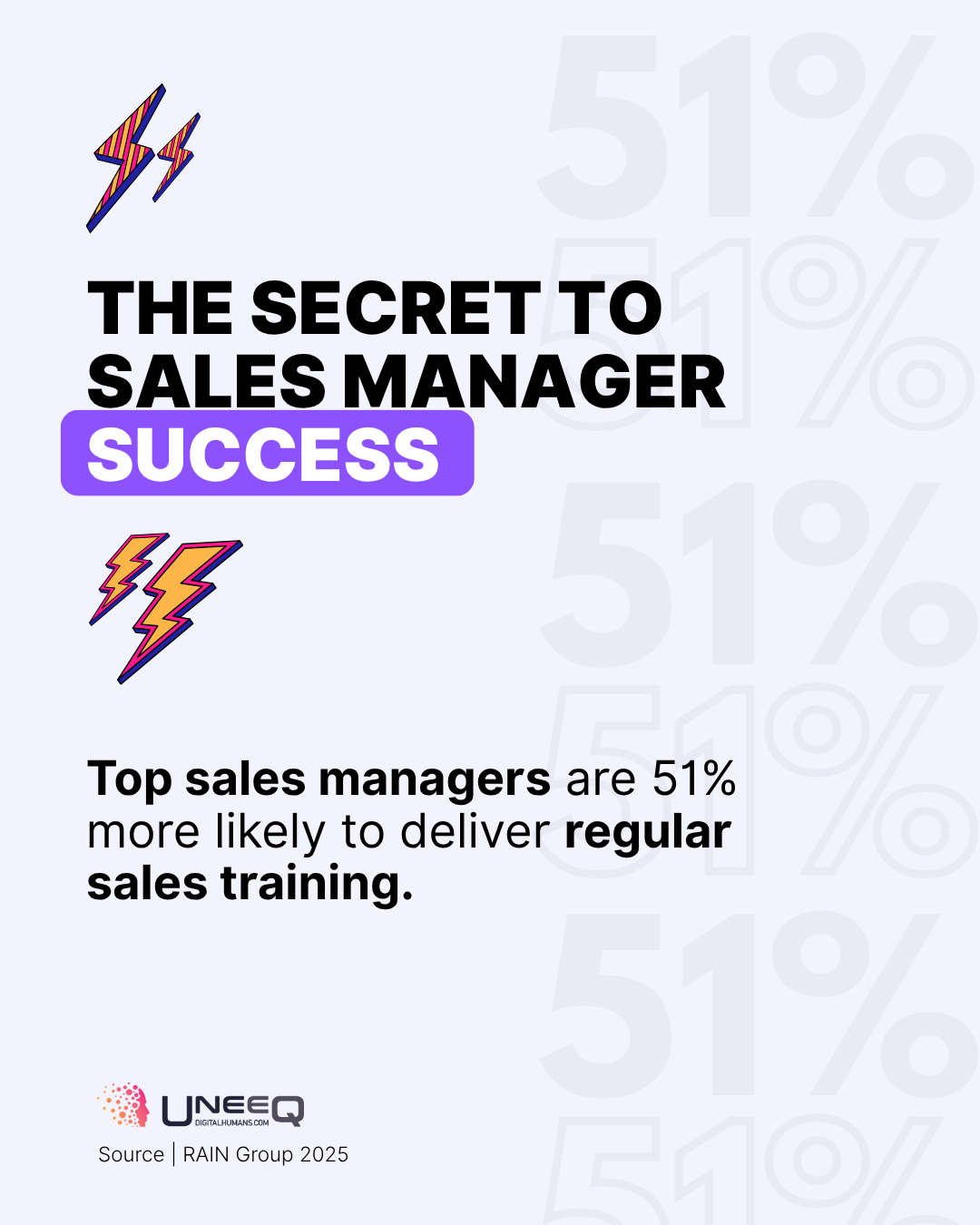
This is where sales managers can really make or break roleplay sessions. Almost three-quarters (74%) of top-performing companies say coaching is the most important aspect of their sales managers’ roles.
But front-line managers don't always get the support they need to make this happen. In fact, only 21% of their time is spent training reps effectively, with 19% of their time, on average, spent on admin and just 12% on sales training.
All this means roleplay often lacks realism and consistency. It's squeezed between meetings, delivered by managers who are stretched thin, and under-valued by employees.
Which is precisely why we firmly believe that AI-powered sales roleplay can make a huge difference.
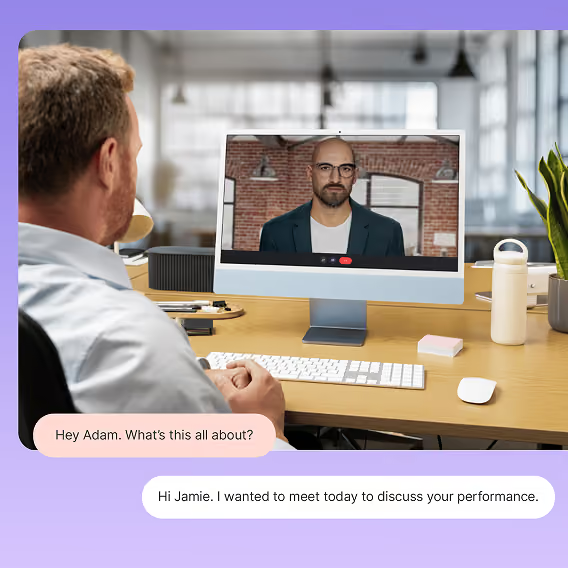
AI sales training changes the roleplay dynamic completely. Instead of rushed, awkward sessions, reps can improve their skills through lifelike conversations as often as they need, in a psychologically safe environment, without an audience watching.
With UneeQ's Immersive Training Platform, for example, reps aren't rehearsing with their colleagues — people who are prone to laughing during a wrong answer, or even back out of the session at the last minute. They don’t feel the odd anxiety of practicing with their manager either, causing reps to focus more on how they come across to their boss rather than actually learning.
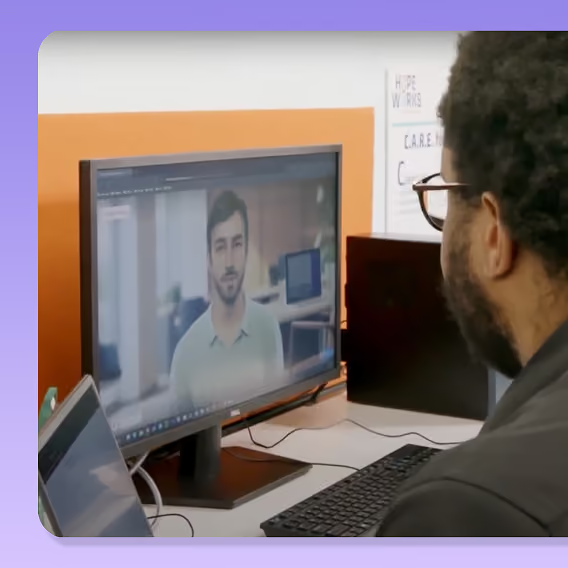
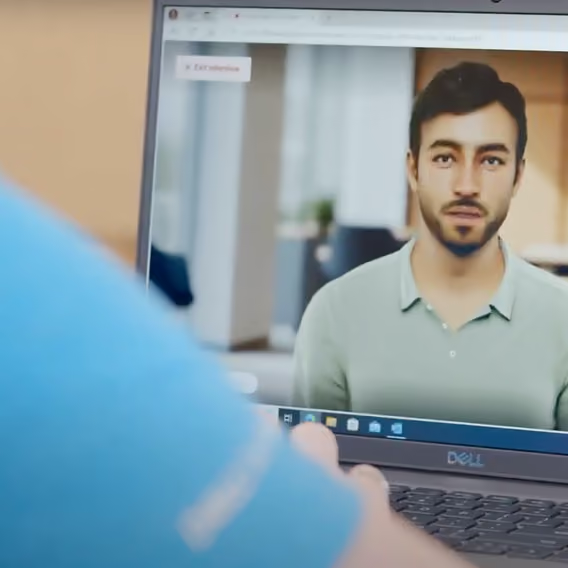
With immersive learning, reps practice selling to responsive, emotionally intelligent digital humans — AI that acts like one of your real buyers. They challenge assumptions, show their emotions, and raise the kinds of objections that stall your real deals.
If a rep fumbles, they can learn from it and go again — and again, and again — without actually losing a deal. There's no ticking clock and no first or second-hand embarrassment. It's perhaps no surprise, then, that 90% of enterprise users say our platform feels less stressful than traditional roleplay, and 85% of managers say it saves them significant time.
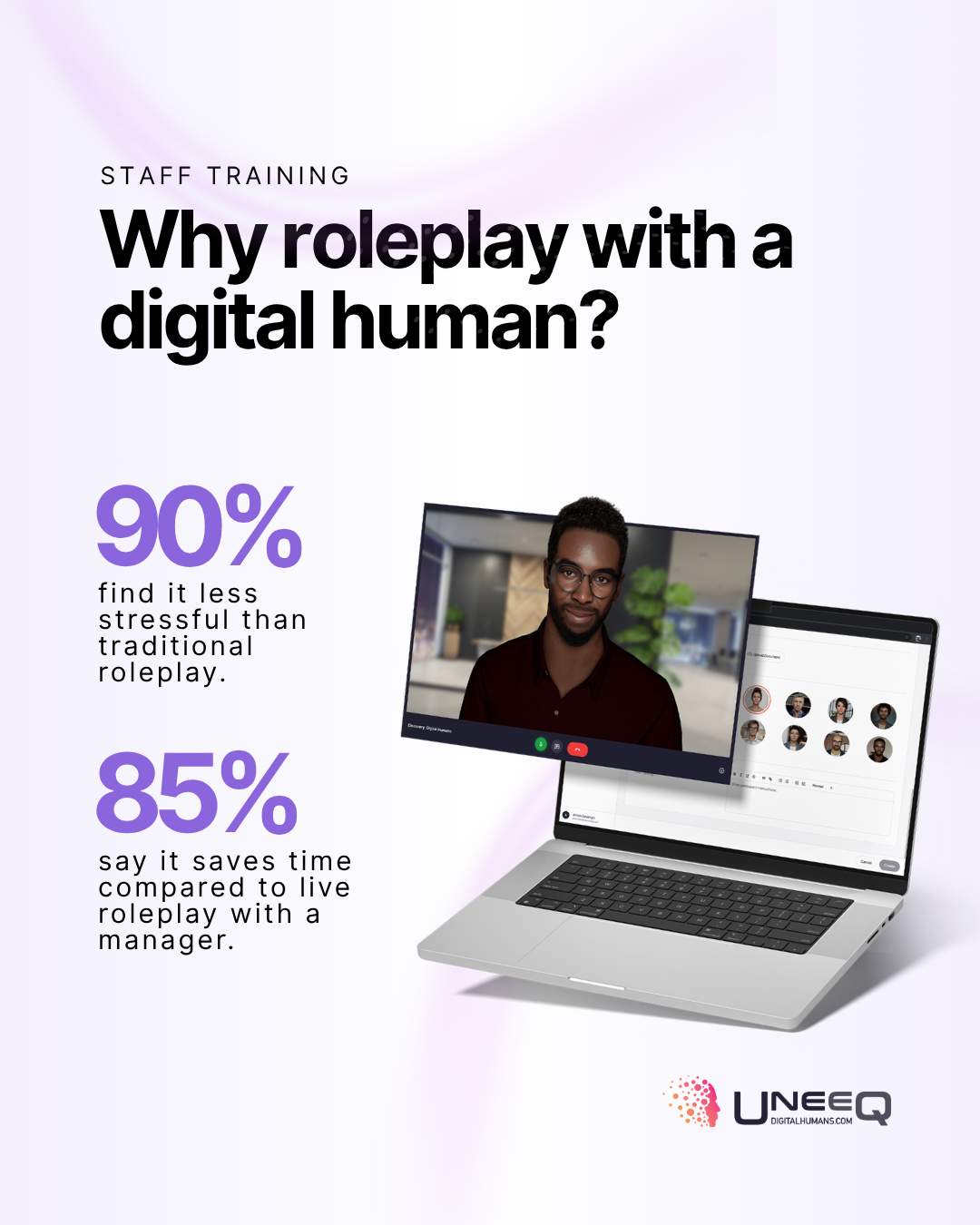
That's because sales managers are no longer stuck trying to squeeze group sessions around the rest of their responsibilities. They let AI do the actual roleplay — to a higher standard. Then, with new, impartial, and consistent training performance data on hand, managers can spend their time actually coaching reps.
Practice stops being performative and starts becoming productive.
Let's summarize and compare the various benefits and downsides of live roleplay vs AI roleplay, and see how they match up to the real thing.
| Factor | Real sales conversation | Live roleplay (peer or manager) | AI roleplay |
|---|---|---|---|
| Realism | The real thing. Maximum realism — but the stakes are also real. | You're pretending your teammate is a skeptical CFO. It rarely clicks. | Face-to-face practice with lifelike digital humans who react and push back in real time — no pretending required. |
| Stakes | Every mistake costs you a real prospect, a real deal, or a real relationship. | Low stakes, but high social pressure — nobody wants to look bad in front of peers. | A judgment-free space to mess up, try new lines, and try again. |
| Comfort & psychological safety | High anxiety — especially for new reps. 75% of reps still prefer it, because they avoid roleplay altogether. | Awkward and performative. Most reps endure it rather than engage with it. | 90% of users find it less stressful than traditional roleplay. Practice without the social cost. |
| Frequency of practice | Limited by pipeline. You only get as many reps as prospects will give you. | A few times a quarter, if you're lucky. Scheduling kills the cadence. | Unlimited. Practice 10 times before breakfast if you want to. |
| Scheduling | Dictated entirely by the prospect's calendar. | Logistical saga. Someone always drops out five minutes before. | Available 24/7. Practice at 6am or 10pm. No calendar invites needed. |
| Cost per session | A bad call can burn a qualified prospect worth thousands in pipeline. | Multiple people's time — manager, peer, observer. Adds up fast. | One platform, unlimited reps practicing at once. No extra bodies required. |
| Consistency & scale | Every prospect is different — great for variety, bad for training benchmarks. | Quality depends on the individual manager. Doesn't scale cleanly across a global org. | Every rep gets the same high-quality scenario, whether they're in Austin or Amsterdam. |
| Feedback | Delayed, indirect, or non-existent. You find out you lost the deal weeks later. | Varies wildly — some managers are brilliant coaches, others give vague notes. | Instant, objective scorecards after every session, plus trend analytics over time. |
| Human mentorship | Not really its purpose — this is about winning deals, not coaching. | Where live roleplay genuinely wins. Great managers spot nuance and share war stories. | Not a replacement for mentorship. AI handles the reps so managers focus on coaching that matters. |
| Reading the room | Maximum signal — body language, energy shifts, the moment a prospect goes quiet. | Some signal, but filtered through the awkwardness of pretending. | Lifelike digital humans simulate facial expressions, pauses, and emotional nuance. |
| Best used for… | Closing deals. Not for learning — the cost of mistakes is too high. | Mentorship moments, debriefs after real deals, building coaching culture. | Frequent, low-stakes practice reps — the kind that actually builds skill and confidence. |
Cheaper, faster, better, more realistic, more data; it saves you time, and reps prefer it.
So, what do you think? Is AI sales roleplay better than doing it face-to-face with a colleague or manager?
If we haven’t yet convinced you, we’d love to show you.
UneeQ’s platform is built to simulate the face-to-face conversations sales reps experience every day. You can create realistic scenarios in minutes; reps have access to immersive roleplay around the clock; and at the other end, you get a wealth of performance data — structured insights that allow managers to coach reps on what really improves sales performance.
For enterprise sales teams, it’s the closest thing to the real deal.
To see how this could work for your team, book a demo with ours. We’d love to show you how good sales roleplay can really be.