.png)


Training

Services







So much workplace training is passive. But real growth happens through active practice. Here’s how to tell the difference.

"'Effortless' is a myth … I had to work very hard to make it look easy."
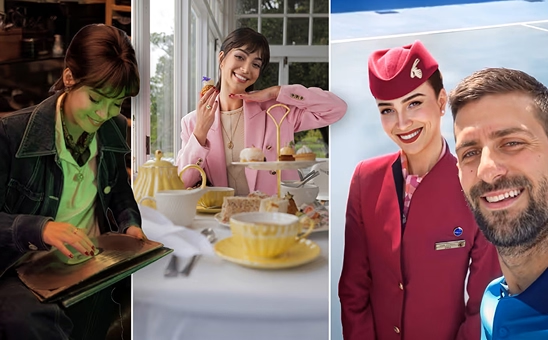
Tennis legend Roger Federer, speaking recently at a Dartmouth College graduation ceremony, admitted that it had always bothered him when people described his skills as 'effortless'. He said it ignores the dedication and long hours spent practicing.
It's a common story in sports, though; underneath what looks like raw talent is usually a less exciting tale of practice, practice, and more practice!
And it's not just athletes. Musicians, ballet dancers, singers, surgeons, trial lawyers, pilots – there are many professions where day-to-day practice is mandatory for performing at the highest levels.
That's why we think practice matters more than 'training'.
What's the difference? We see practice as learning by doing, whereas a lot of training is passive in nature. Let's look at why it's an important distinction.
Michael Phelps won gold and set a new world record in the 200m butterfly at the 2008 Beijing Olympics, despite his goggles filling entirely with water. He was able to finish the race blind by counting his strokes because it had become second nature through endless practice.
So how much do elite athletes practice? A lot. On average, soccer players spend approximately 85% of their time in practice, compared to just 15% in matches. In other sports, the gap is even wider. Gymnast Simone Biles said she practiced 32–34 hours a week, all for just three to four minutes of competition.
That's just shy of 99% of her time in training. By comparison, how much time do you think most employees spend practicing for the big moments in their career?
According to Training Magazine, the average worker receives 40 hours of formal training a year. If you work 40 hours a week, 52 weeks a year, that's just 2% of your time spent training.
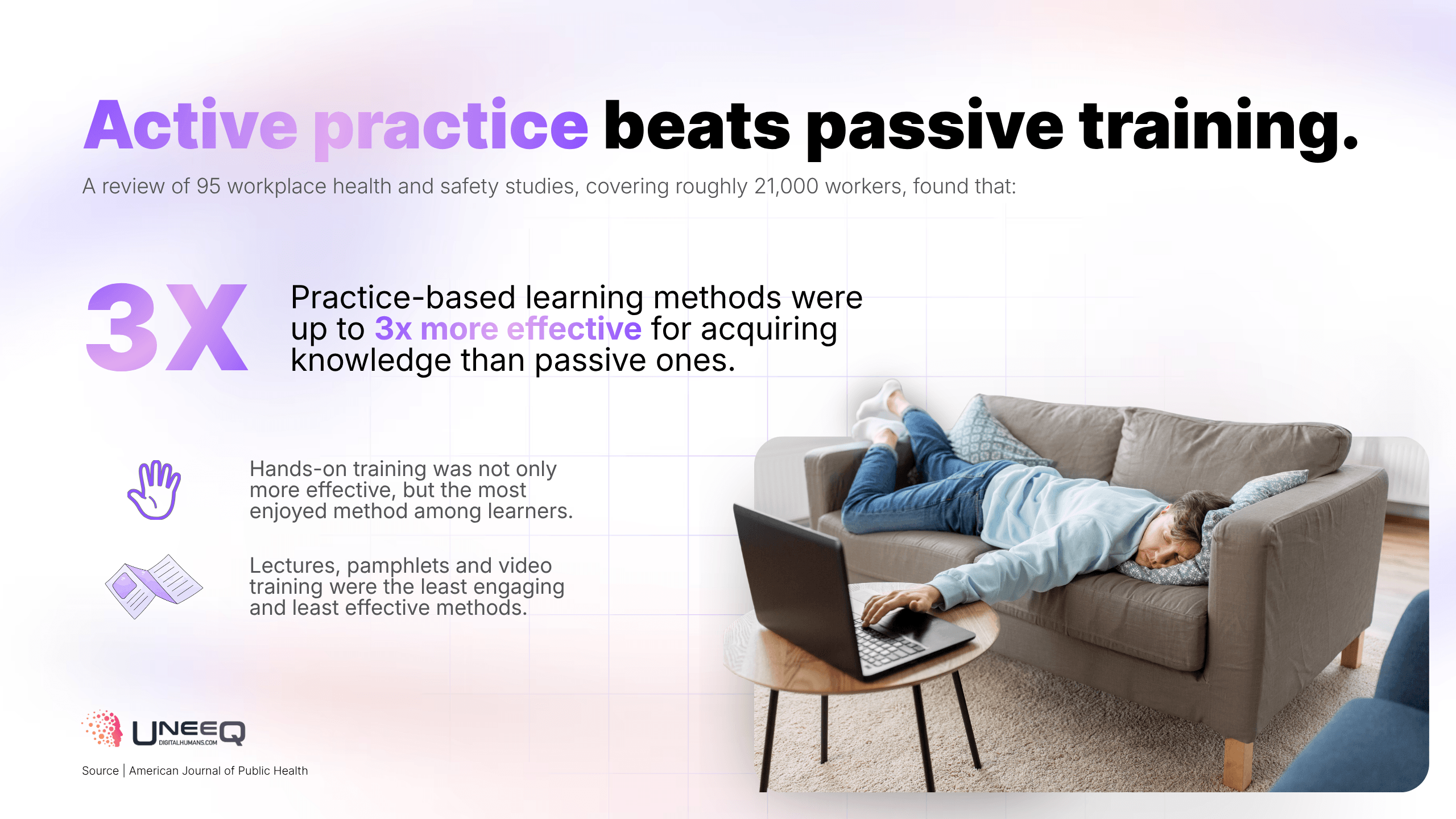
And how much of that training is practicing the skills you need to perform well in your job day to day? For most employees, 'training' means watching videos, sitting in meeting rooms listening to lectures or taking multiple-choice quizzes.
Usually, a much smaller part of training is dedicated to improving skills in more practical ways, such as peer-to-peer roleplay.
In a typical month, professional athletes train 95% of the time. Everyone else trains 2%. Guess which approach builds champions.
Hover or tap a block to see what it involves.
Athletes treat practice as the main event and get steady reps all month long. Everyone else gets one short burst, then heads straight back into live work. That’s the problem Immersive Training Platform is built to close — to let everyone practice like a pro.
Figures are illustrative of the training‑to‑performance ratio in elite sport versus everyday work.
But does extra time practicing even make a difference? The science says yes. And the effect is bigger than you might think.
In the landmark study behind the famous "10,000 hours" idea, researchers found that deliberate practice explained 48% of the variance in how well people performed (in this case, violinists were studied). Put simply: nearly half the gap between the best and everyone else came down to how much people practiced.
So, practice really does make perfect. Or, at the very least, a whole lot better.
What's more, most people prefer more active learning styles to passive methods. For example, 75% of sales reps say they like 'learning by doing', while just 32% enjoy in-class training.
Of course, training can include practice – but it so rarely does. For reasons of cost, time, and resources, actual practice like peer-to-peer roleplay happens much less frequently than highly scalable but passive learning, such as video training.
For people working in sales, customer service, medicine, or a host of other professions, it's not feasible to spend 99% of your time in training like Simone Biles!
But we can try to close some of the gap. Practicing more regularly can still benefit performance, especially when only 2% of time is currently being spent training and only a fraction of that 2% is learning by doing.
Another reason is budget. Peer-to-peer roleplay is one way to practice on-the-job skills, but it's costly to have trainers, managers and employees all away from their desks at the same time.
Many people also find this type of roleplay embarrassing, unrealistic, and inconsistent, despite studies showing that it works. In fact, the Association for Talent Development found that sales roleplay can reduce ramp time for new hires by 50% and improve deal closure rates by as much as 45%. Yet any sales manager will tell you they simply don’t have the time.
This is where AI roleplay can make a real difference.
Imagine if Simone Biles only learnt via video. It’s safe to assume her well-earned 11 Olympic medals and 30 World Championship medals would have been won by someone who practiced more.
But the limitations of practice – the cost, resources, and staff – don’t exist anymore. AI roleplay gives people somewhere to practice the essential skills for their job without needing a manager, trainer or colleague to be available.
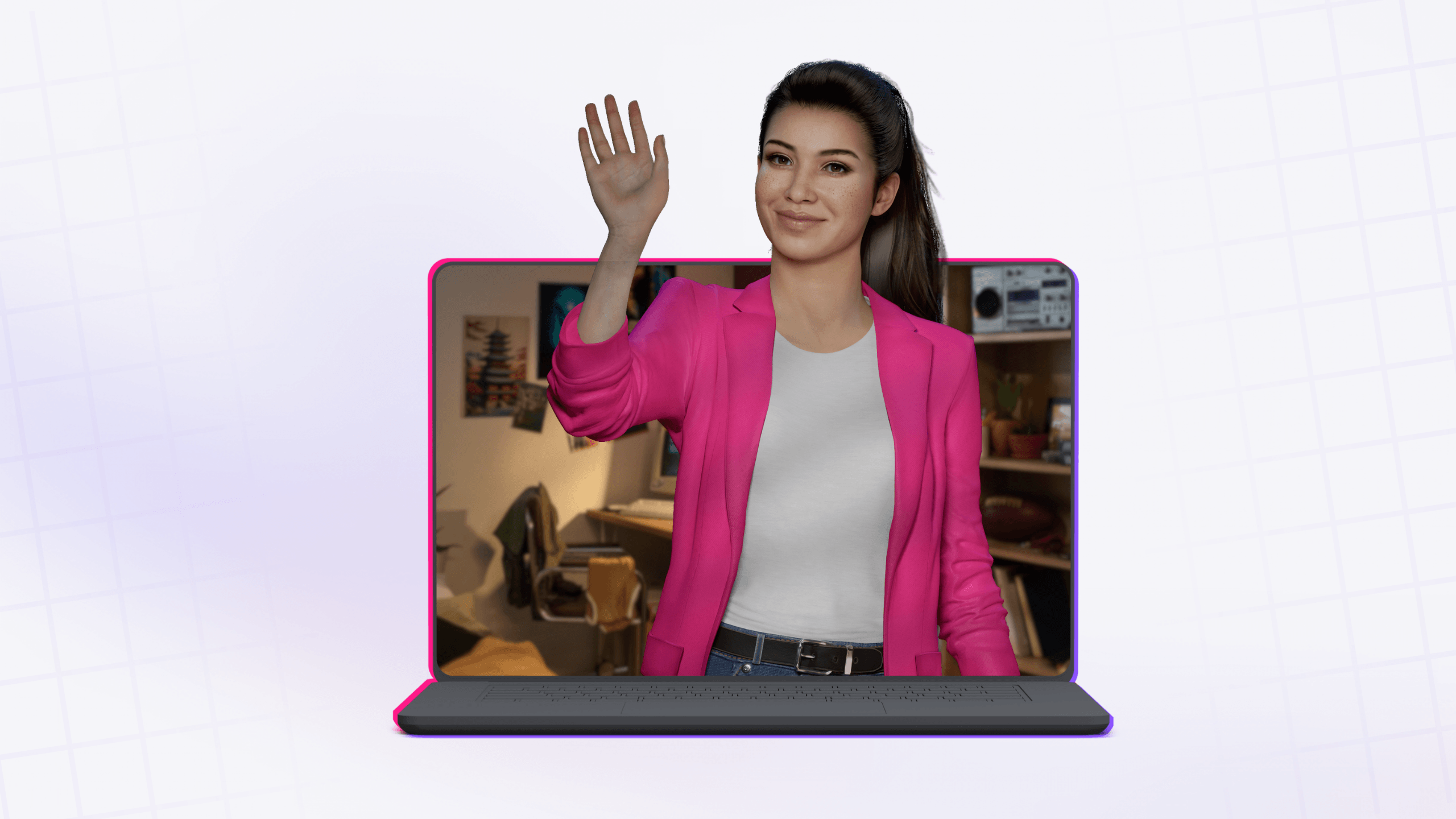
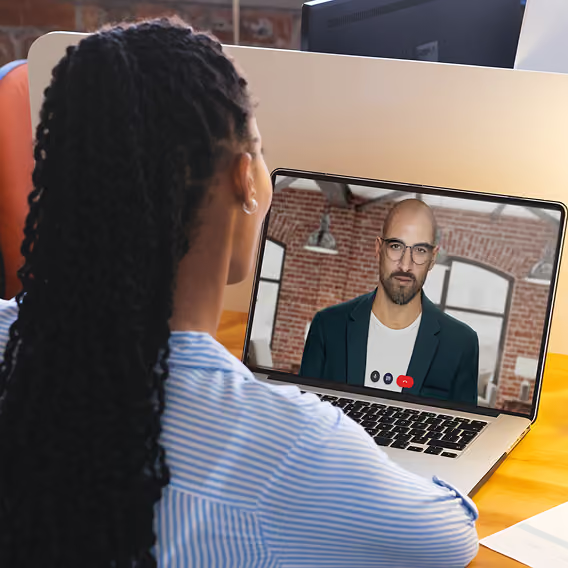
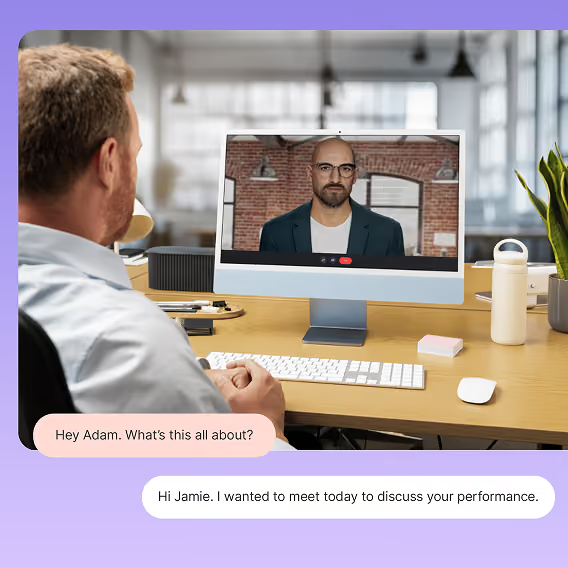
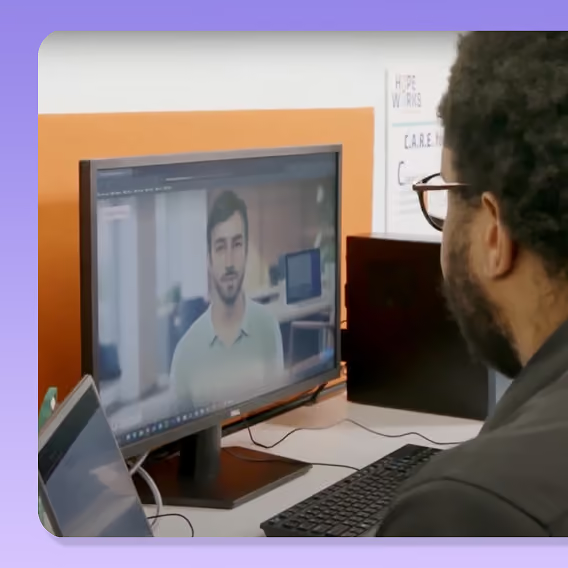
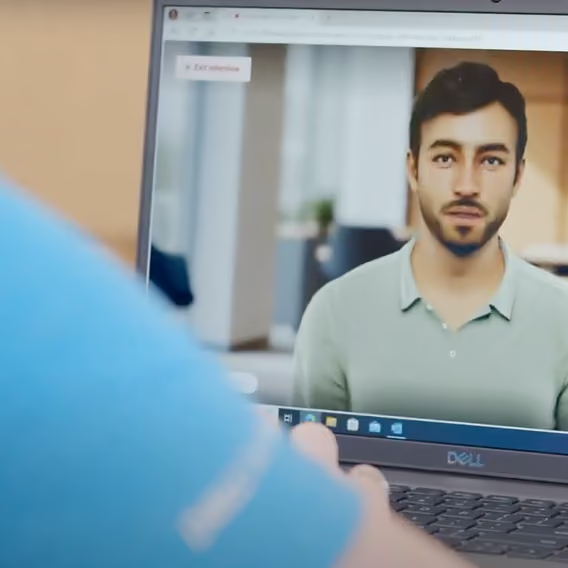
With UneeQ's Immersive Training Platform, employees can instead rehearse real conversations with a digital human, including handling an angry customer, responding to a difficult sales objection, explaining a complex product, or showing empathy in a sensitive moment.
Importantly, learners have the room to make mistakes, try again and build confidence before the stakes are real (and expensive). Let's face it, the 30-year veteran at your company has seen it all; but for them, practice meant making mistakes in real life, and some of those mistakes probably had consequences for the bottom line.
Our platform can also design new scenarios in a matter of minutes, which means learners are always being encouraged to listen, respond, and think on their feet to fresh challenges.
And because this type of roleplay is powered by AI, it can happen at scale. That makes it cost-effective, consistent, and convenient for employees to complete whenever they have a free slot in their calendar.
Ultimately, people can practice when they need to, as often as they need to, and wherever they are.
To see how this could work for your team, book a demo with ours. We'd love to show you how important practice can be for improving the performance of your people.