.png)



Training

Services








Immersive learning is the next big thing in learning and development. But which skills are best trained immersively? Let's take a look.

We've all heard the phrase 'practice makes perfect'. It's certainly true for playing the piano, learning a language, or improving your golf swing – skills that rely on lots of repetition and feedback.
But, as Andrew Quinn expressed to us, practicing in itself doesn’t make perfect. The type of practice has to have value.
Take sales, for instance. Reading and memorizing lines of a script might feel like practice. But is it productive?
Better sales practice involves learning active listening and adaptability, so reps are prepared for different buyers with challenges that don’t always fit the script.
To Andrew's point, it's actually the right type of practice that makes perfect.
Which brings us neatly on to immersive learning.
With immersive learning, people can develop both technical and interpersonal skills in realistic environments, getting much closer to ‘the right type of practice’ — the type of training that builds real, valuable skills in a realistic environment.

Traditional training is often a passive affair. You turn up, you sit down and you listen to a seminar or lecture about what you're supposed to be learning. Maybe there's a Q&A, a bit of groupwork, or an end-of-session quiz.
If you’re lucky, there might be a video you can watch and almost instantly forget.
But on the whole, the process isn't meant to be interactive. You're there to absorb information and (hopefully) remember it for later. Most people won’t.
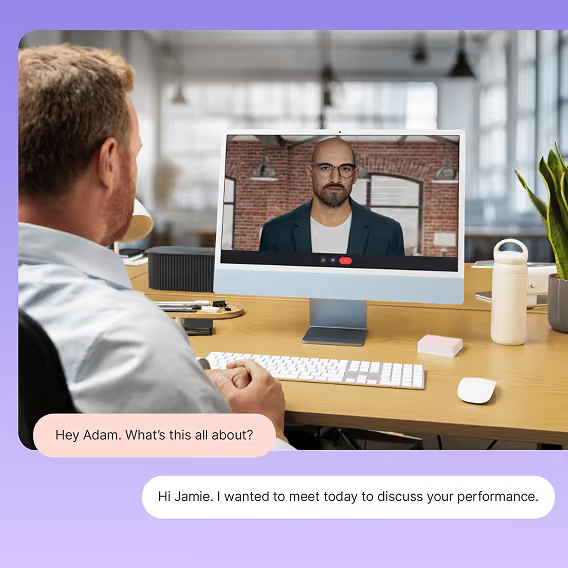
Immersive learning focuses on ‘doing’ instead. Learners are dropped into realistic scenarios, simulating the ones they face when they're on the job. Think leaders practicing how to speak to an employee about their performance by simulating the feeling of giving someone critical feedback.
Training is much more likely to stick if learners get hands-on experience in an engaging, interactive environment.
And where does AI come in? It helps take immersive learning a step further by making situations dynamic and interactive. Instead of following a fixed script or doing awkward roleplay with a colleague, AI can respond in real time to what you say and how you say it — and scale across your teams.
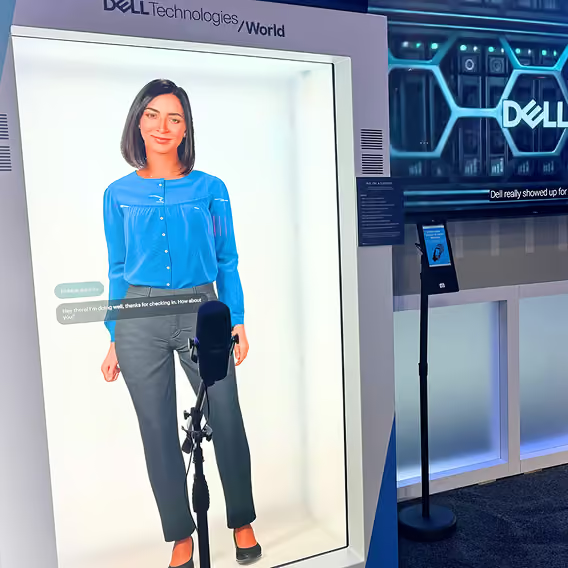
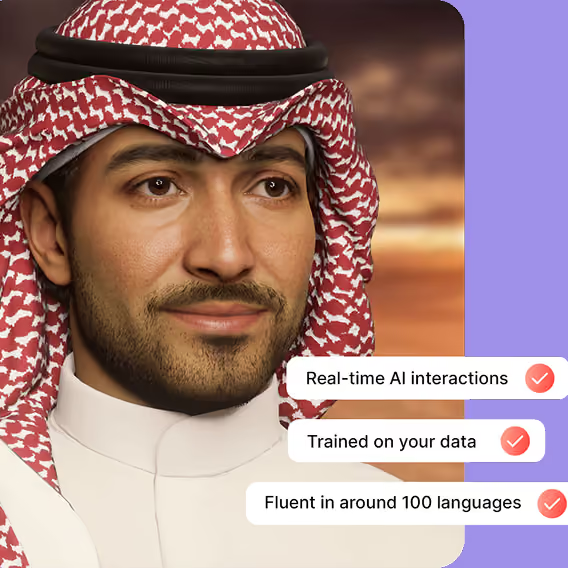
Take digital humans, for example. They can accurately simulate the face-to-face conversations you'd have in your job, whatever that may be. A medical practitioner can practice giving patients bad news; a retail assistant can refine how they handle complaints; and a sales rep will be able to perfect their pitches, upselling skills and discovery calls.
Which brings us on to the skills that are best developed through immersive learning.
Soft skills are notoriously hard to teach through slides or passive learning because they usually rely on experience, not theory. You can't learn empathy, negotiation, reading body language, or active listening simply by hearing about them – you have to live them.
This is where immersive learning excels.
By placing people in realistic situations (and using AI to adapt those situations in real-time) immersive training replicates the pressure, unpredictability, and nuance of human interactions.
What's the plan when a sales conversation goes off script? How should you provide feedback to a member of your team without crushing their confidence? These moments require a combination of judgement, composure and emotional intelligence. It's fair to say that a multiple-choice PowerPoint presentation quiz probably won't cut it.
Instead, practicing these skills in a safe but authentic environment allows people to make mistakes, reflect, and try again — something traditional training rarely enables. What's more, making mistakes during training has been shown in studies to enhance learning better than trying to avoid them.
Put simply, immersive training doesn't just tell people what good communication or leadership looks like; it lets them feel it and apply it until it's instinctive.
Also, traditional training can be … well, pretty boring. And when something isn't engaging, it becomes forgettable.
Research shows that approximately half of the knowledge you learn in a classroom-like environment will be forgotten in just an hour. A month later, 90% of what you were taught is gone.
People who train in an immersive way, however, are 1.5 times more focused than classroom learners, according to PwC. They also learn four times faster and have 40% higher confidence.
Sounds great, right? Okay, let's see what 'practice makes perfect' actually looks like in practice.

Most sales managers know what good selling looks like — the right tone, level of persistence, expressions of empathy and understanding. None of that comes from a script. And coaching these soft skills is notoriously difficult and time-consuming.
Sales managers spend around a fifth of their work time training their teams, despite it being their most important responsibility according to 74% of high-performing businesses.
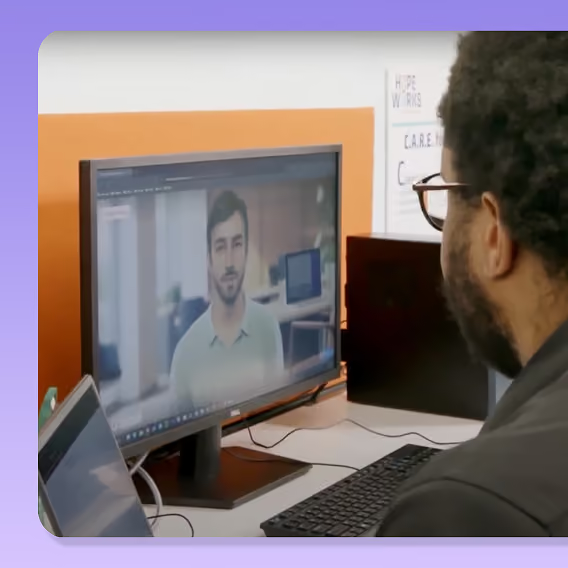
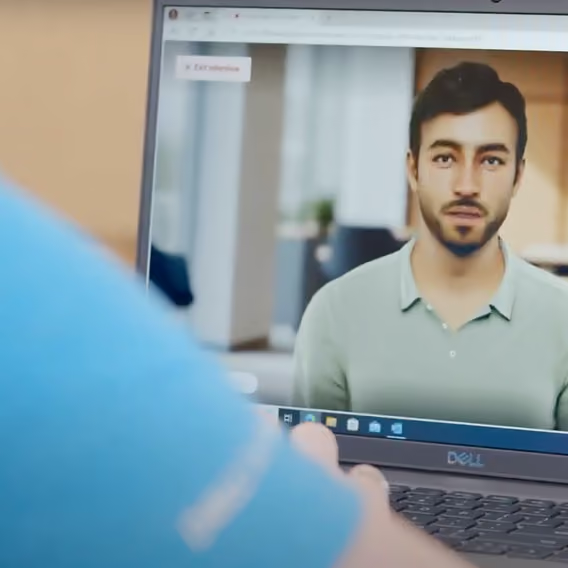
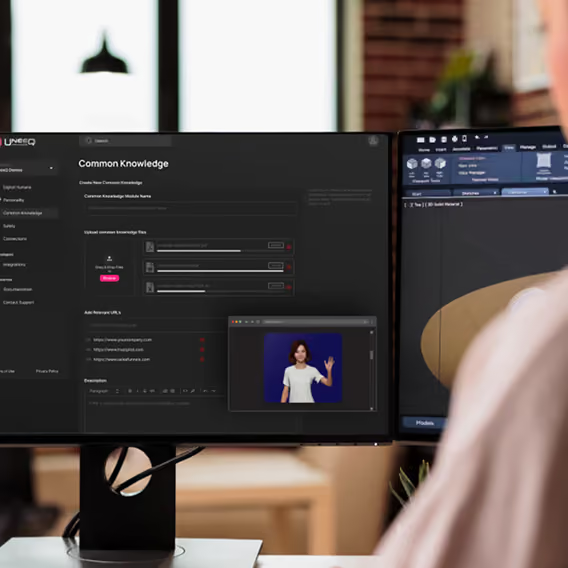
Brands have turned to immersive sales training to help. UneeQ’s Immersive Training Platform, for instance, uses digital humans to simulate realistic sales conversations, which reps can use to practice anytime, anywhere.
Managers can choose what reps are assessed on, including how well they listen vs. speak, how well they show empathy and understanding, and how accurately they pitch products or services.
The AI then manages the roleplay side that has historically taken so much time and bandwidth from a manager or coach. So much so, in fact, 85% of our clients have reported significant time savings by using Immersive Training Platform compared to traditional learning and development.
For managers, data is training gold. LXP platforms like ours let managers track progress, identify patterns, and tailor feedback without losing hours to shadowing calls or running roleplay sessions themselves.
The result is a more consistent, scalable way to build the skills that really matter in sales — the human ones.
Practice doesn’t make perfect if practice is imperfect — if it’s not the right type of practice.
If you’d like to see how immersive training can improve your team’s soft skills (regardless of what industry you’re in), we’re here to help.
Explore how UneeQ's Immersive Training Platform can help your team bridge the gap between learning and doing. Book a demo today.