
.png)




Training










Services









How do you get better at sales discovery calls? Scratch that: how do you become GREAT at it? It just takes a little practice.

If you’re looking for some inspiration for practicing sales discovery calls, we’ve got a slightly different role model for you. Truman Capote.
Few writers have wielded words as deftly as Capote. His professional work speaks for itself. Everyone's heard of Breakfast at Tiffany's, and the 1966 non-fiction book In Cold Blood is often credited as the world's first true crime novel.
But Capote's talent for communication extended well beyond the page. He also excelled in the art of conversation. Quick-witted, disarming, and sometimes withering in his comebacks, the Louisiana native was a fixture at dinner parties and talk shows alike during his heyday in the 1960s and '70s.
In Capote's own words: "The thing I like to do most in the whole world is talk."
Capote is selling himself a bit short. He didn't just talk; he listened. When writing In Cold Blood, he got to know dozens of locals in Holcomb, Kansas, eventually building up 8,000 pages of research notes over six years. For Capote, conversation wasn't just a one-way street – building up a warm dialogue with sources was key to teasing out the information he needed for his work.
Which brings us to sales performance. In my experience, the best salespeople are the best conversationalists. Reading off a script simply doesn’t cut it – you need to create a natural rapport. And this relationship starts in discovery calls.
Sales can be won or lost in discovery. They can be won by reps who know how to both listen and ask the right questions, or lost by reps who dominate the conversation.
And stats back this up. Research shows that top reps spend less than half their time talking; the majority of their time is spent listening.
Don't worry if you've not quite found that winning balance yet. I believe that the most effective types of sales training can take your teams to the next level in discovery calls. Anyone can improve with enough practice.
Before I explain how, let's start with where most sales reps are going wrong.
I've done (and seen) my fair share of discovery calls throughout my career, ranging all the way from the great to… the not so great. Here's where I think a lot of calls go wrong.
Discovery is about finding just the right number of questions to ask leads. Your goal is to identify your potential customer's pain points, so that you can pitch your solution as the right solution. Failing to ask enough questions means it'll be difficult to work out where your product or service fits in their organisation, but you also don't want to turn the conversation into an interrogation.
Easier said than done, you might think, so what's the 'Goldilocks' number that's just right? Every industry is different, but research shows that around 11 to 14 well-targeted questions are usually the sweet spot – although it's lower for C-Suite executives (4 to 8 questions) because they're usually more pressed for time!
I touched on this earlier, but it bears repeating. Sticking too closely to a script can kill the conversational vibe. While preparation is important, a discovery call has to feel unrehearsed. Asking follow-up questions based on what a prospect has said, or even (sometimes) repeating their last words back to them, can be great ways to keep conversations open and flowing.
Oh, and for the record, PowerPoint slides can be a quick way to kill a discovery call. One firm found that using a slide deck causes success rates of securing a follow-up call to drop 17%! Why? Because you've moved from conversation to presentation.
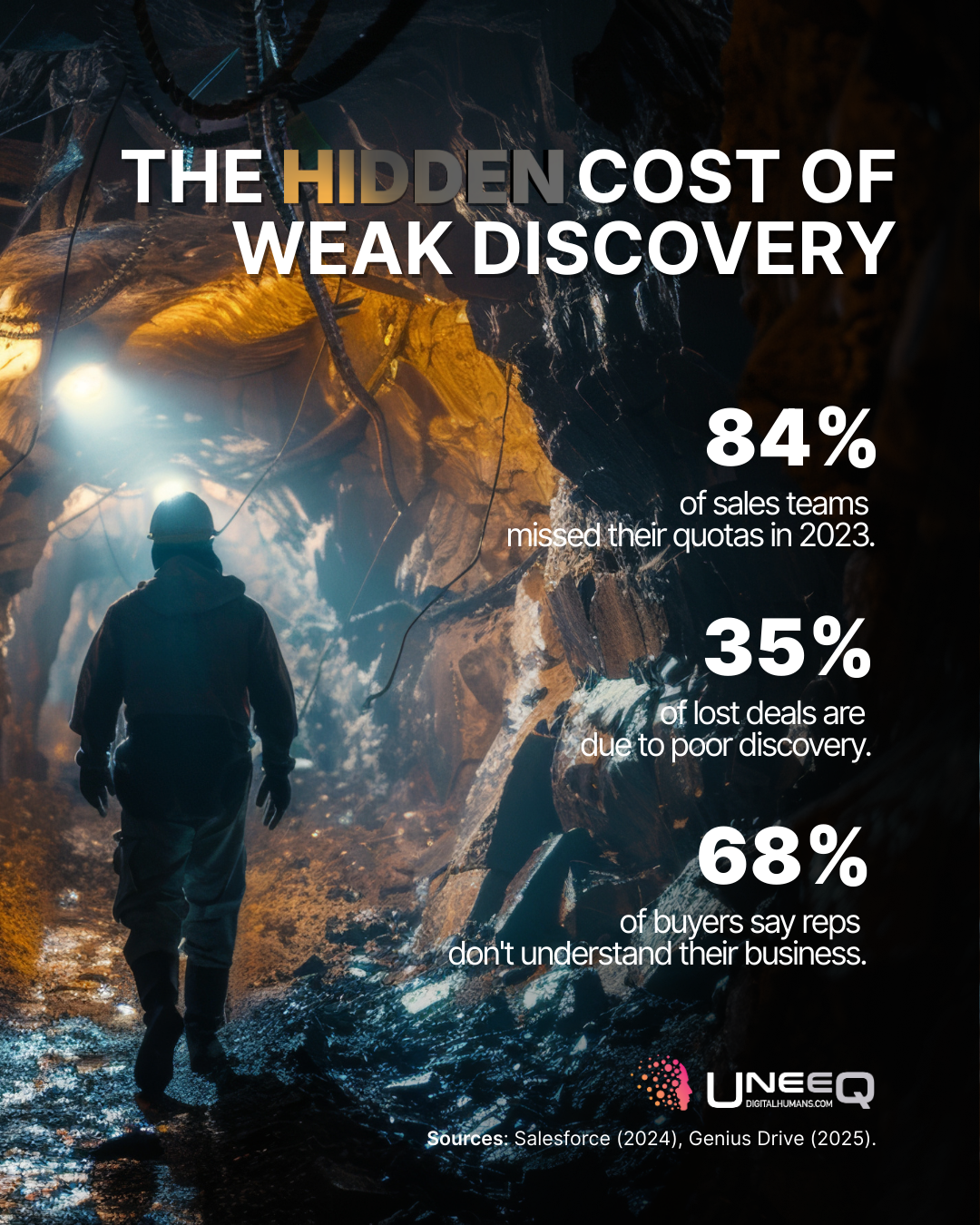
A whopping 84% of businesses say an aggressive or pushy rep was the main reason for having negative experiences during a sales call, according to Crunchbase figures. A hard-sell approach is often off-putting for prospects, and this can be especially true in discovery calls when it's still early in the process and you're trying to establish rapport.
Rather than telling a prospect what they need or launching straight into a sales spiel, encourage them to talk about the challenges their organisation is having, and why they're having them.
The words you use can also make a real difference. Language like "it sounds like you're experiencing [X]" and "If I'm understanding you correctly …" can make a caller feel like you're really listening.
One of the best new tools for sales teams is (you may not be surprised to hear) AI. LLM tools like ChatGPT, Claude, Gemini, and a whole heap of others are great resources for unearthing great discovery questions.
We recently packaged together the prompt we’ve found helps to get great discovery questions out of AI models, so your team can practice their pitches before their sales calls and/or use these questions to dig deeper into your buyer’s motivations and pain points.
You can steal our prompt for a great AI roleplay sales discovery call below.

Earlier, I talked about Truman Capote's talent for communications, and to many, he's the quintessential conversationalist. A complete natural.
But what many people don't know is that Capote's wit and repartee weren't quite as off-the-cuff as he liked people to think. In fact, ahead of every party or event, he'd write up a list of stories to tell and practice them until he'd nailed the timing perfectly.
"He really worked at entertaining them," said Capote's biographer, George Plimpton.
There are a couple of lessons here for sales reps. First, communication is a skill, and like any skill it can be improved with training. Second, even the best conversationalists practice, and they must continue to do so if they want to stay at the top of their game.

Put simply, everyone can get better with a little training.
Unfortunately, practicing discovery calls on your pipeline can burn your pipeline or lead to reputational damage. Burned pipeline means missed quotas, and missed quotas mean lost sleep for sales leaders.
So why not practice your sales pitch with an AI instead?
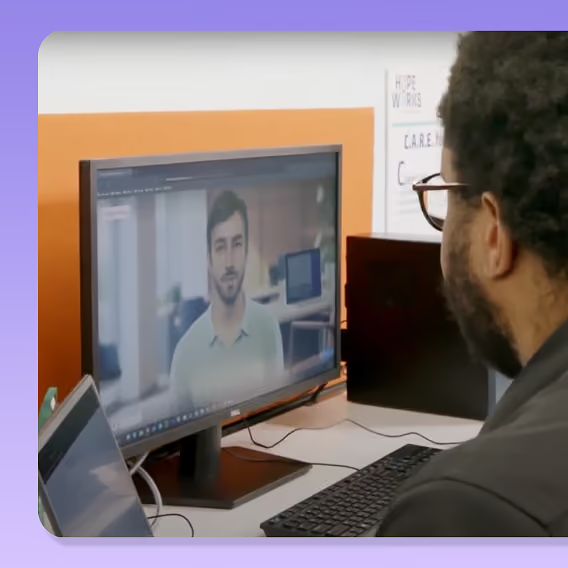
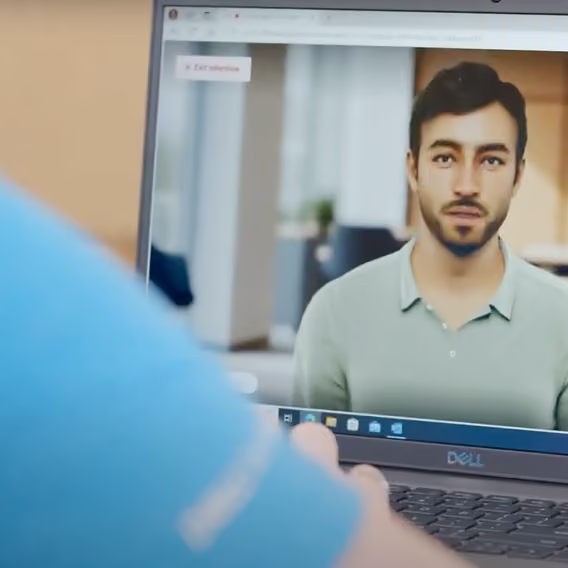
With UneeQ's Immersive Training Platform, reps can authentically rehearse discovery calls through conversations with realistic digital humans built on generative AI.
Synanim™, our digital human animation system, controls the digital human's behavior in real time, so they're able to respond appropriately. In other words, your reps will know right away if they're striking the right chord or hitting a bum note.
Our AI sales roleplay platform record each interaction, compiling analytics that can be scored against predefined goals. For example, you can see exactly how much time each of your reps spends talking versus listening to make sure they're getting the balance right during discovery calls.
It means you’ll quickly know which of your reps are amazing at discovery, who has potential, and who needs much more coaching.
These analytics also help you see when your reps are taking a more transactional approach to sales, rather than a consultative one.
So, if you'd like to discover where you're going wrong with discovery (and how to fix it), give immersive learning a try.