.png)


Training

Services







Soul Machines vs. UneeQ: A practical comparison for enterprises evaluating digital human technology in 2026
If you're researching digital human platforms right now, there's a good chance you already know about UneeQ and Soul Machines. The latter New Zealand-founded company helped shape the digital human industry alongside UneeQ, and for years they were one of the leading names in the space.
This guide offers a straightforward comparison between UneeQ and Soul Machines to help enterprise decision-makers understand their options. We'll cover technology, deployment flexibility, immersive learning capabilities, and the practical considerations that matter when choosing a long-term digital human partner.
UneeQ and Soul Machines share more than a founding year. Both companies trace their roots to the pioneering Nadia project for Australia's National Disability Insurance Scheme (NDIS)—a groundbreaking digital human voiced by Cate Blanchett, designed to help people with disabilities access government resources. Co-created by UneeQ (then known as FaceMe) and The University of Auckland (which later birthed Soul Machines), Nadia proved that digital humans could serve meaningful, accessible purposes.
Since then, the two companies have taken very different paths. Soul Machines pursued celebrity digital twins and a self-service studio model. UneeQ focused on building a comprehensive Digital Human Operating System with proprietary animation technology, enterprise-grade deployment flexibility, and dedicated solutions for both immersive learning and brand engagement.
The table below compares key capabilities across both platforms based on publicly available information. Given Soul Machines' current status, some details may have changed since their services were suspended.

For enterprises in healthcare, financial services, government, and other regulated industries, where your data lives is just as important as what your digital human can do. UneeQ's Digital Human OS supports full on-premise deployment, hybrid configurations, and cloud hosting across AWS, Azure, Google Cloud, and more—with geographic data residency options for regional compliance.
Soul Machines operated primarily as a cloud-based platform (according to public information). On-premise deployment was not prominently offered, which could be a deal-breaker for organizations with strict data sovereignty requirements.
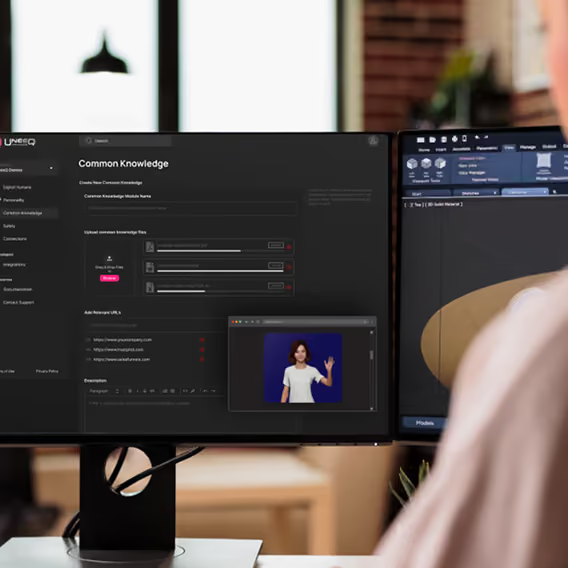
UneeQ's Digital Human OS is built on open architecture. Bring your own LLM (OpenAI, Anthropic, Google, or custom models), connect your existing chatbot or NLP engine, integrate your CRM, LMS, or knowledge base, and even enhance your existing Unreal Engine MetaHuman with UneeQ's proprietary Synanim™ animation. The platform is designed to maximize your existing technology investments rather than force you to start from scratch.
Soul Machines also offered LLM-agnostic capabilities and integrations with platforms like Zapier, ServiceNow, and Salesforce. However, UneeQ's integration ecosystem extends significantly further—particularly with LMS platforms, SCORM export, multiple TTS providers, and MetaHuman compatibility—giving enterprises more flexibility to work within their existing tech stack.
Both companies invested heavily in making their digital humans feel alive. Soul Machines' patented Digital Brain technology used neural network-based approaches to simulate human cognition and emotional response—an impressive technical achievement.
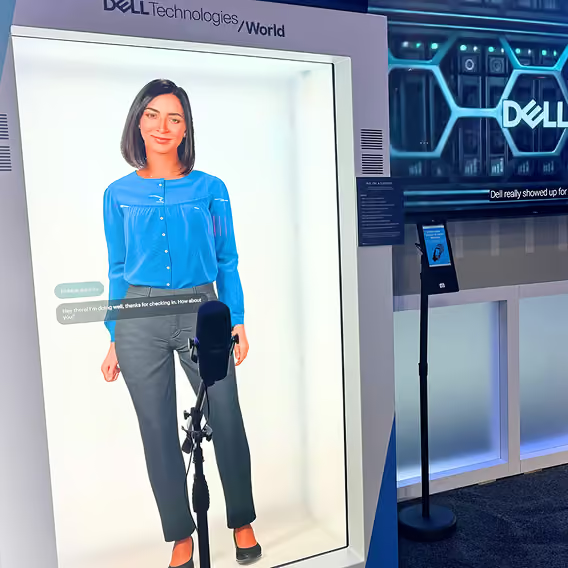
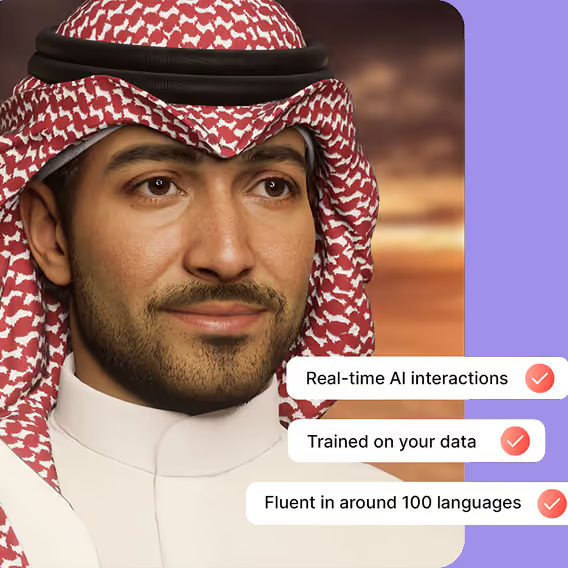
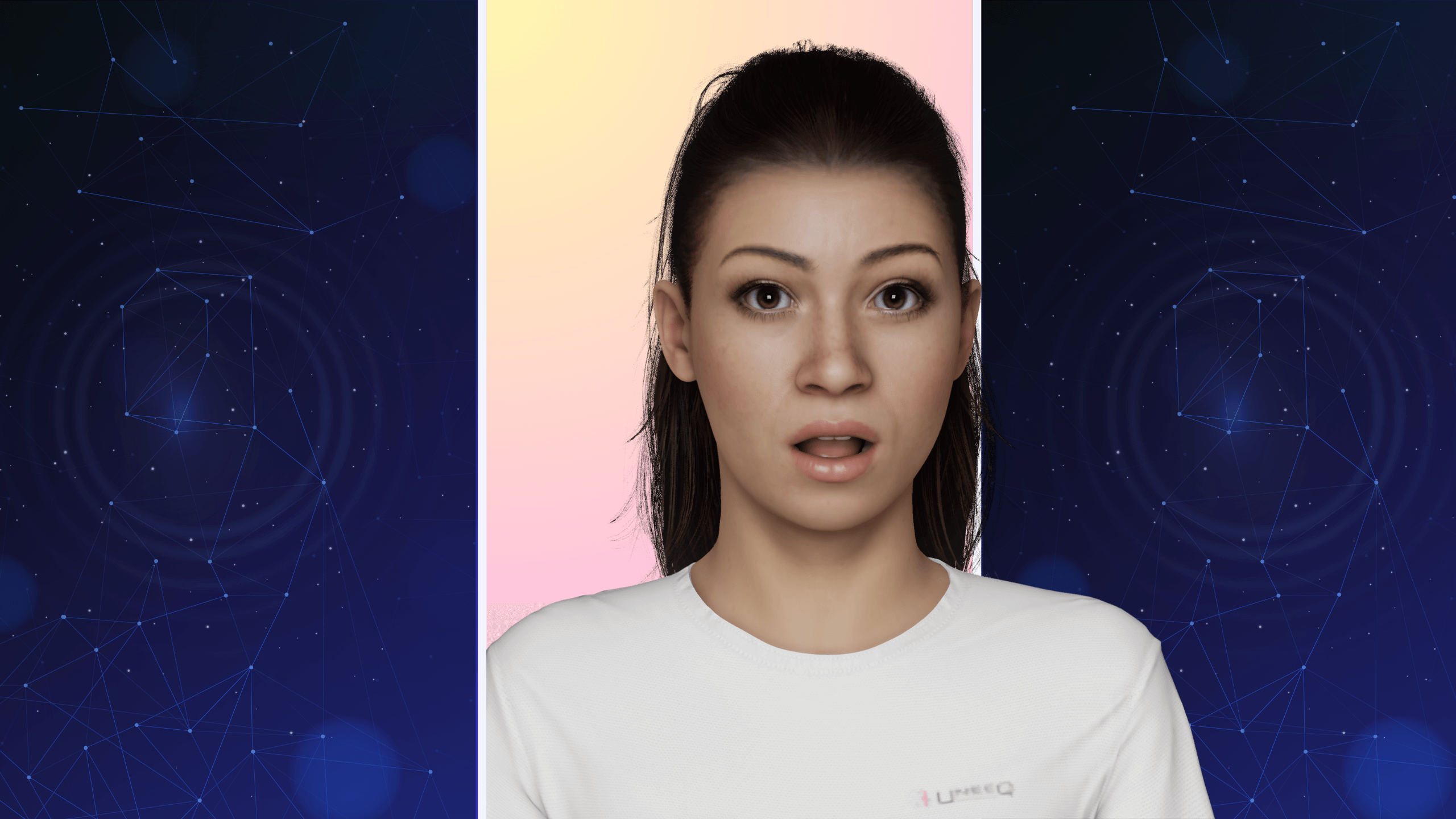
UneeQ's proprietary Synanim™ technology takes a different approach, using real-time CGI rendered in Unreal Engine to create lifelike facial expressions, micro-expressions, natural gestures, and full-body mobility. The result is digital humans that feel authentically human without crossing into the uncanny valley—with sub-1 second response times and 4K Ultra HD rendering quality.
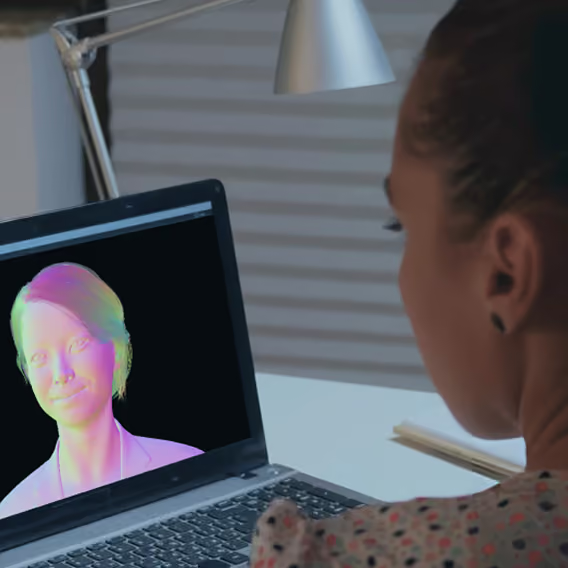
Both companies use sophisticated CGI created by expert artists, not deepfake, gen AI, or GAN technology. This avoids the trust issues and discomfort that overly realistic deepfake-based approaches can create.
One of the biggest differences between the two platforms is UneeQ's approach to packaging use cases for enterprise use, including a dedicated Immersive Training Platform. While Soul Machines referenced training use cases—including English practice and presentation preparation assistants—they didn't offer a purpose-built immersive learning solution with the depth enterprises need.
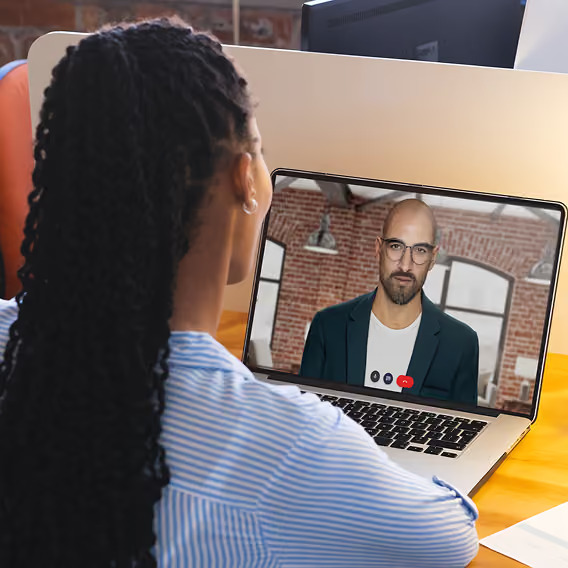
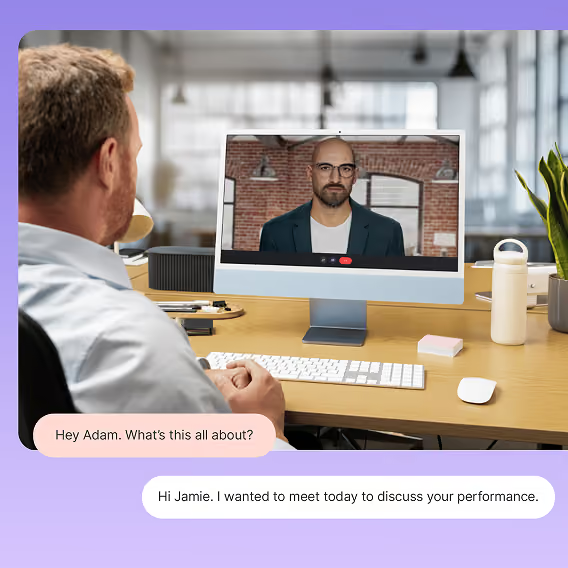
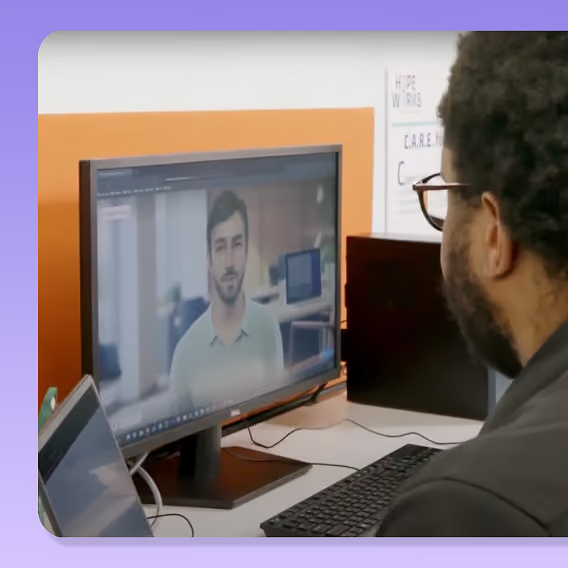
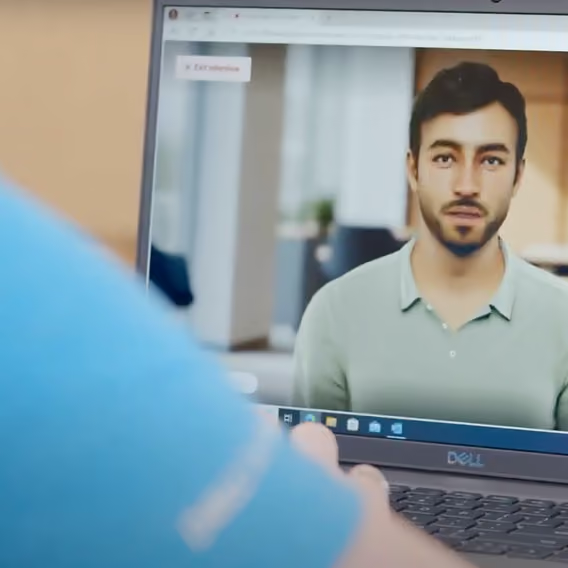
UneeQ's Immersive Training Platform is specifically designed for enterprise skill development. Sales teams practice discovery calls and objection handling with AI buyers who respond like real prospects. Customer service teams rehearse difficult conversations in psychologically safe environments. Leaders build soft skills through realistic practice of performance reviews, conflict resolution, and coaching conversations. And students can practice realistic job interview training to make their transition into the workforce smoother.
Soul Machines' approach leaned toward self-service through their Soul Machines Studio platform, which allowed users to create and deploy digital humans using templates and customization tools. It was accessible and relatively quick to get started.
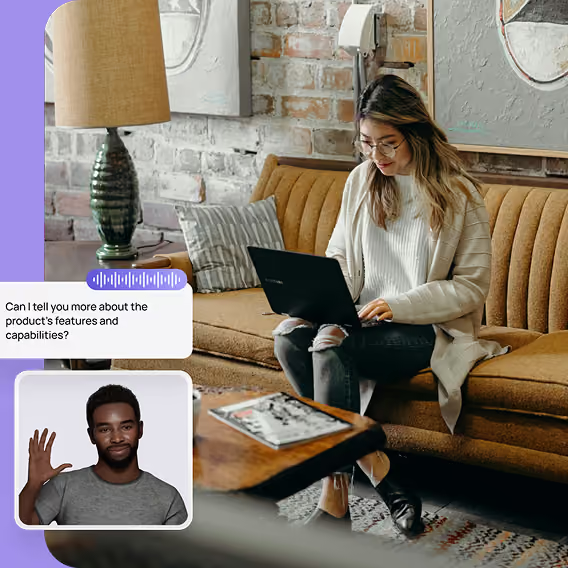
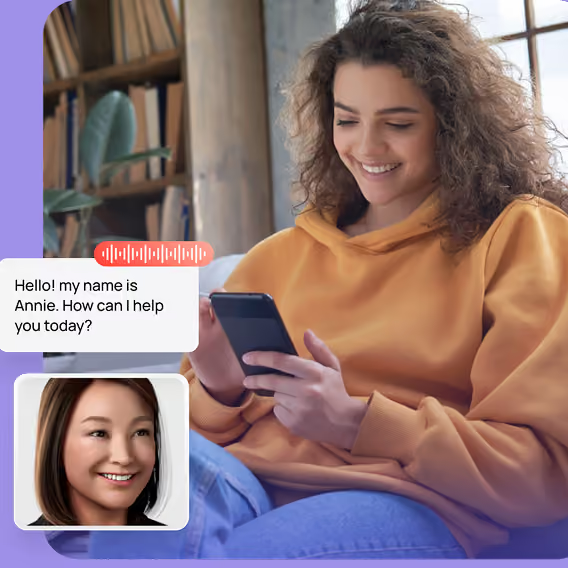
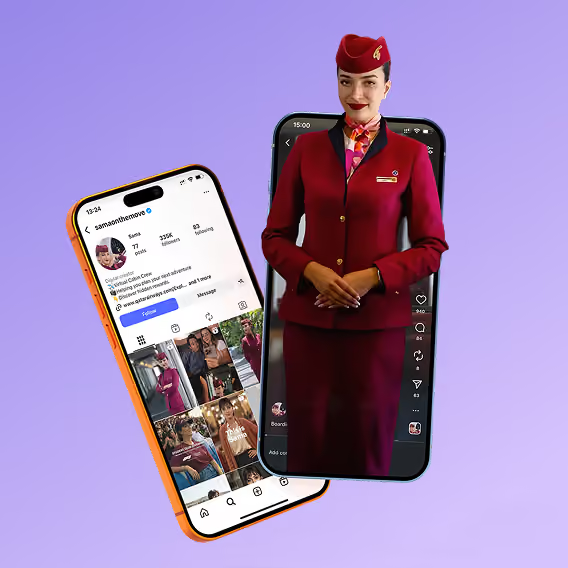
UneeQ takes a different approach for brands that need more. UneeQ Studio operates as a full-service digital human agency, providing end-to-end partnership from initial brand strategy and character development through deployment, ongoing content creation, and social media management. For organizations like Qatar Airways, Saudi Tourism Authority, and Deutsche Telekom, this white-glove service means getting a bespoke digital brand ambassador without needing to build the expertise in-house.
Both approaches have their place. For the buyer, the right choice depends on how much of their own (and their team's) time, resources, and expertise they want to put into their digital human project, and for what size of outcome.
Soul Machines' receivership highlights an often-overlooked consideration: what happens to your digital human if your provider goes away?
UneeQ's position is clear: customers own their digital human. Built on open standards, your custom avatar can be taken with you if you ever choose to leave the UneeQ platform. There's no vendor lock-in. Your investment remains your asset.
Soul Machines' Terms and Conditions included restrictions on transferring, distributing, or using the services to develop competing products—typical for SaaS platforms, but potentially concerning when a provider's future is uncertain.

UneeQ has helped organizations transition from other digital human platforms and understands the practical challenges involved. Here's what a typical migration path looks like:
For customer engagement deployments: UneeQ Studio works with your team to understand your brand, audience, and existing digital human experience. A stock digital human can get you back online quickly while a bespoke ambassador is developed to match your brand's specific identity and personality.
For immersive learning use cases: If you were exploring immersive learning with Soul Machines, UneeQ's Immersive Training Platform can be configured for your specific scenarios, personas, and methodologies. Scenario setup takes minutes, and the platform integrates with your existing LMS.
For existing integrations: UneeQ's Digital Human OS connects with your CRM, knowledge base, analytics, and conversational AI investments. You don't need to rebuild what you've already built—the open architecture means UneeQ enhances your existing tech stack rather than replacing it.
Soul Machines helped define the digital human industry, and their contributions to the field are genuine. Their receivership is an unfortunate development for their team, their customers, and the broader digital human ecosystem.
Ready to explore what UneeQ can do for your organization? Request a demo today. We'll answer your questions and show what's possible.