.png)



Training


Services









When you think about it, enterprise L&D is different to how we learn almost everything else in life. Here's how immersive training changes that.
.png)
Remember your last corporate training session? The one with 47 slides, a pixelated stock image of two businesspeople shaking hands, a cheesy training video filmed in the '80s, and a quiz that asked, "Is good customer service important? (a) Yes (b) No."
Yeah, that one. Chances are, the only thing you still remember from that training or onboarding experience is how quickly you wanted to get back to work.
Just think about that. More than half of the US workforce say they don't like their jobs. And yet they'd rather do it than sit in another training seminar.
But that's not the only way to conduct employee training. Another option is immersive learning—a form of training that's designed to be more interactive, engaging, realistic, and effective than traditional techniques.
The goal of immersive training is to teach people how to actually do things, not just read about them.
Let's unpack what immersive training is, why it works, and what makes it the hottest learning and development (L&D) trend for 2026.
No one learned how to drive by only taking the written part of their test. At some point, we all had to spend time behind the wheel. That's because we understand that the practical part is too important to miss out. In fact, it gives you experience—something you can't get from textbooks.
So why does so much employee training fail to put people behind the wheel?
Customer service, sales, and even leadership training involve the same traditional types of learning, video or text-based learning. Then you're pushed into a vehicle, shoved out onto the highway, and expected not to have a car crash.
Alternatively, immersive training is about the practice: putting people's skills to the test so they can learn in a safe environment—where brand, customers, sales pipeline, and employee satisfaction aren't at stake.
However, when you hear the words "immersive learning" you probably think of VR headsets or AR training rooms. In 2026, that's not the case.
Realism is the not-so-secret ingredient of immersive learning. Instead of passively absorbing information from a PowerPoint, you're dropped into realistic scenarios where you have to make decisions, react, and adapt—just as you would in the real situation.
Importantly, mistakes won't lead to lost customers, lost confidence and lost opportunities… or worse.
Now, when people hear 'immersive learning', they often imagine someone in a VR headset waving their arms around like they're hailing a virtual cab.
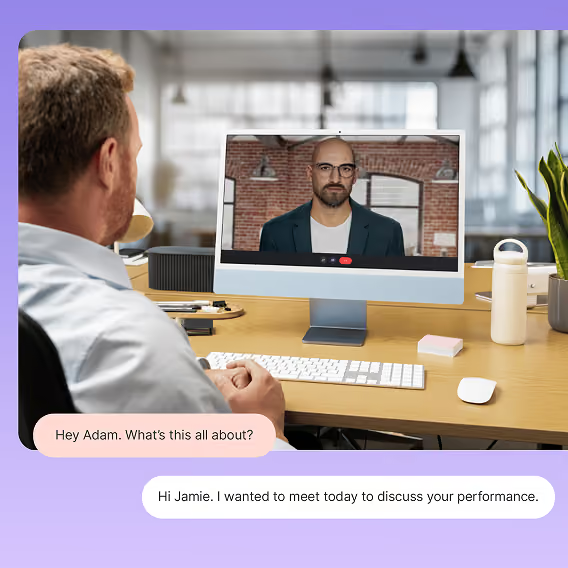
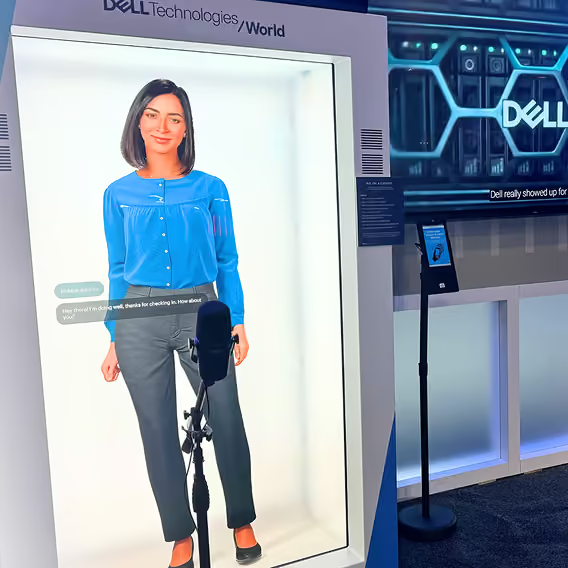
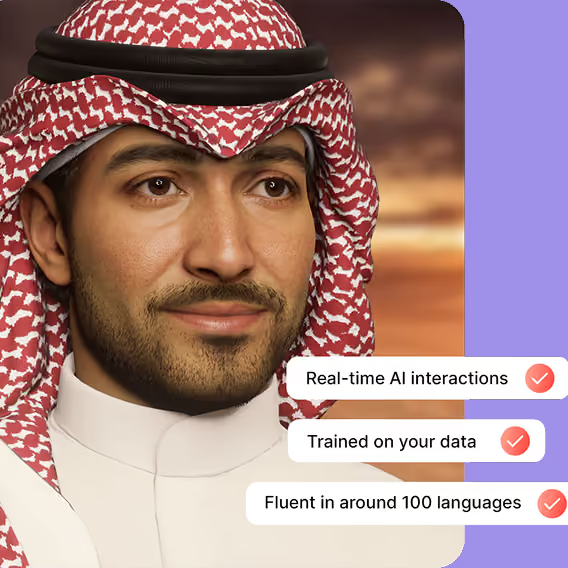
We like VR, but until every organization can afford headsets for their employees. And let's face it, until they are as light as our sunglasses, they're prohibitive. Fortunately, immersive training can also be more straightforward than that, such as AI roleplay with a digital human.
That's because what makes immersive training powerful isn't just the tech; it's the experience. You're learning by doing. And when you become fully engaged in what you're doing, you're more likely to remember training, build muscle memory for soft skills, and replicate it in real life afterwards (we'll get to the evidence of this shortly).
So what is immersive training used for? There are countless use cases, but here are some of the ways that key industries are utilizing these methods:
The quick answer is 'yes'. And it's becoming more and more effective as companies use the advantages of AI to find better ROI on their training spend.
Research shows that 'simulation-based' learning can result in better knowledge retention, greater confidence, fewer real-world errors, and much improved focus.
What's more, learners love it. A PwC study found that people were nearly four times as emotionally connected to material in an immersive learning environment as those taught in a classroom.
.png)
And why does it work? It's a little complicated, but a growing body of evidence shows 'learning by doing' rewires the brain in a way that book learning doesn't.
Oxford University research found that people who started learning juggling experienced changes in their white matter, which is responsible for the brain's communication network. The faster those signals travel, the quicker we can process, recall and use what we've learned, and that goes for anything, not just juggling.
In fact, immersive learning can help elevate both practical and soft skills training to the next level. And at UneeQ, we've helped a number of enterprise organizations do just that.
Research conducted with our clients shows how immersive learning with a digital human can dramatically improve both the effectiveness of training and how much users actually enjoy the learning experience, as the table below shows.
| Digital humans | Traditional learning | |
|---|---|---|
| Training effectiveness | 95% | 78% |
| Information recall | 82% | 44% |
| User recommendations | 94% | 31% |
| Features | Immersive learning | Traditional learning |
|---|---|---|
| Engagement | Active participation | Passive listening |
| Realism | High, scenario based | Low, theory based |
| Scalability | High | Low and costly |
| Feedback/Analytics | Deep, data-driven | Minimal |
| Knowledge retention | High | Moderate |
| Accessibility | 24/7 across devices | Limited and scheduled |
If traditional learning is like taking a written driving test, it's time to get your staff behind the wheel for practical, real-life scenarios.
UneeQ's Immersive Training Platform brings learning to life with digital humans that feel genuinely real—not robotic, not scripted, just authentic conversations that build real-world skills.
Whether you're training sales teams to perfect their pitch, preparing service reps for difficult customers, or helping leaders master those tough conversations, our platform creates psychologically safe practice environments where confidence actually grows.
It means employees can save the car-crash conversations for training, and be better prepared during the real thing.
It took us 10 years of experience and R&D to make immersive learning this effective. And we can show you how it could start, making your team better in 10 minutes.
Grab a free demo and discover why the world's leading enterprises choose UneeQ when training really needs to feel real.