
.png)




Training








Services









We've compared, contrasted, and reviewed the top-rated learning experience platforms for 2026. Which are the best LXP solutions for your L&D goals?
%20reviewed%20for%202026.jpg)
Definition: A Learning Experience Platform (LXP) is learner-centric software that uses AI and machine learning to deliver personalized training content based on individual skills, roles, and career goals. Unlike traditional Learning Management Systems (LMS) which are administrator-focused, LXPs put employees in control of their own development.
Let's be honest: your team has forgotten 70% of last quarter's training already. According to the Ebbinghaus Forgetting Curve, new information can be forgotten within hours without proper reinforcement. That compliance module everyone had to complete? Gone. The product update webinar? A distant memory.
The problem isn't your employees. It's that traditional learning management systems were built for administrators, not learners. They're great at tracking who completed what box-ticking exercise, but terrible at actually making knowledge stick.
The market has noticed. According to Facts & Factors, the global LXP market was valued at $508.5 million in 2020 and is projected to reach $2.18 billion by 2026, growing at a 25.3% CAGR. Organizations are investing in learner-centric platforms because traditional approaches simply don't deliver results.
We've rounded up the best LXPs for 2026, from collaborative learning platforms to immersive AI roleplay solutions. Whether you need to onboard new hires faster, upskill your sales team, or finally make leadership training stick, there's a platform here for you.
Research consistently shows that learner-centric, experiential approaches dramatically outperform passive content consumption:
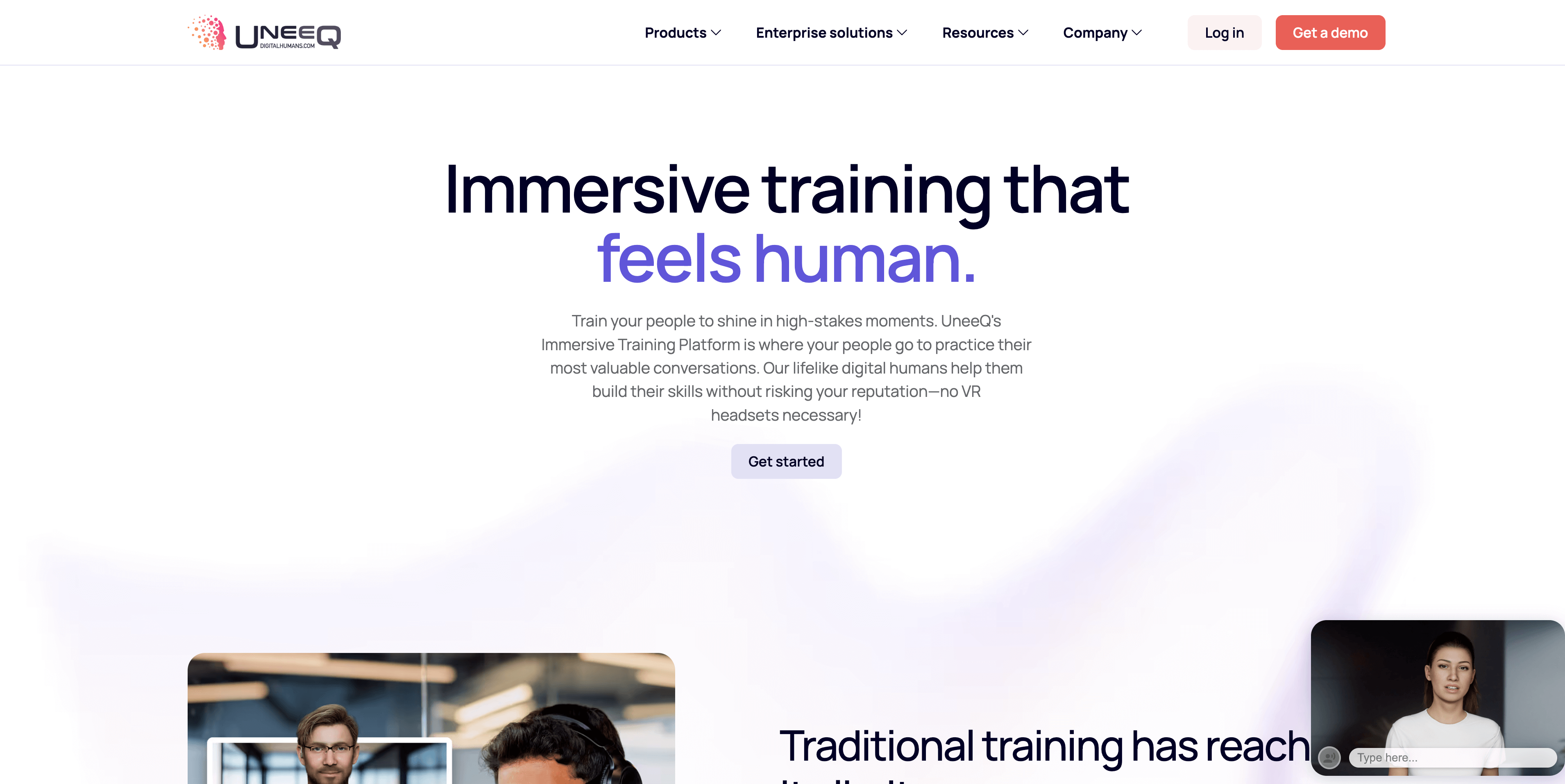
Here's an uncomfortable truth: reading about having difficult conversations and actually having them are completely different experiences. You can watch a hundred videos on delivering feedback, but when you're sitting across from someone whose performance is slipping, that theory evaporates faster than your confidence.
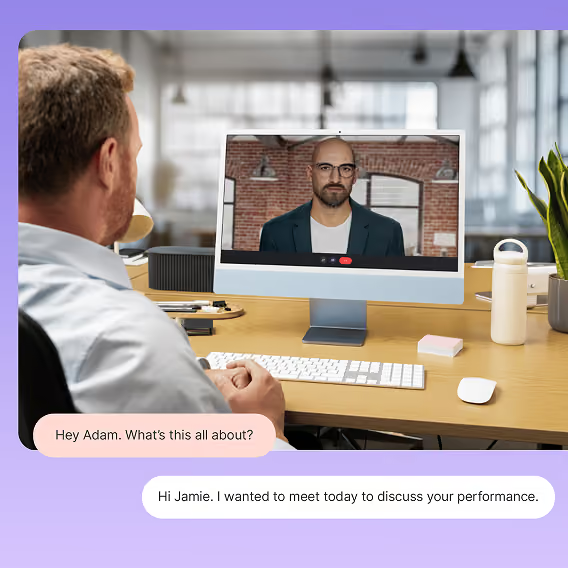
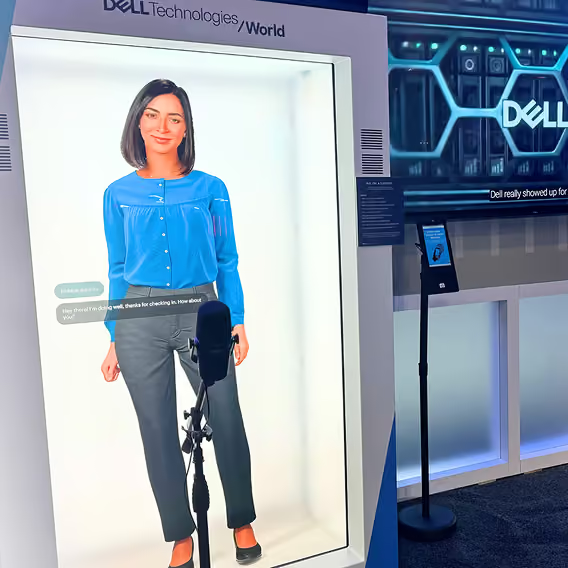
UneeQ Immersive Training Platform solves this with AI-powered digital humans who look, act, and respond like real people. Practice difficult conversations with an AI employee who pushes back. Roleplay sales objections with a digital buyer who doesn't let you off easy. Get comfortable with high-stakes situations before the stakes are actually high.
"If it's not immersive, you're not really practicing. Voice-only AI training misses 93% of communication — the facial expressions, body language, and emotional cues that make or break real conversations."
UneeQ training results: Key metrics
According to UneeQ's research on immersive learning effectiveness:
What makes UneeQ different?
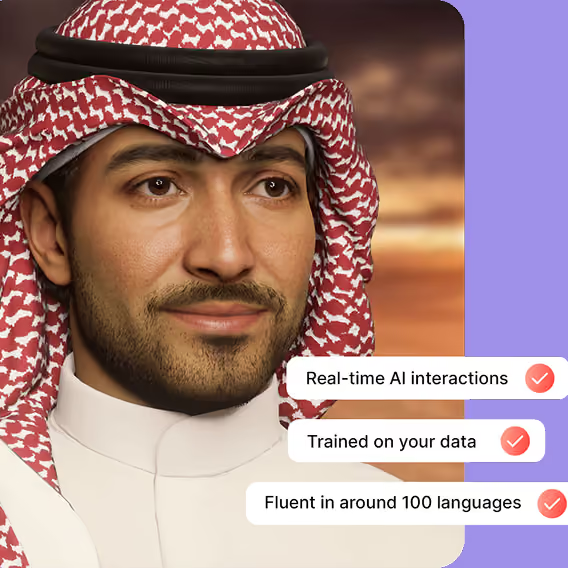
UneeQ's digital humans aren't just chatbots with faces. They express emotions, read your body language through video, and respond with realistic facial expressions and reactions. This matters because communication is predominantly non-verbal — training without visual cues leaves learners unprepared for real interactions.
Key features:
Pricing:
Contact UneeQ for custom pricing based on team size and deployment needs. Free demos available for qualified organizations.
Best for:
Organizations serious about behavioral change: sales teams who want reps practicing on AI instead of burning pipeline, customer service teams preparing for emotional situations, and leaders who need to master difficult conversations before having them with real employees. UneeQ is a flexible solution, able to be tailored for virtually any use case and industry. If your training needs to create confidence through repetition, not just check compliance boxes, UneeQ delivers.
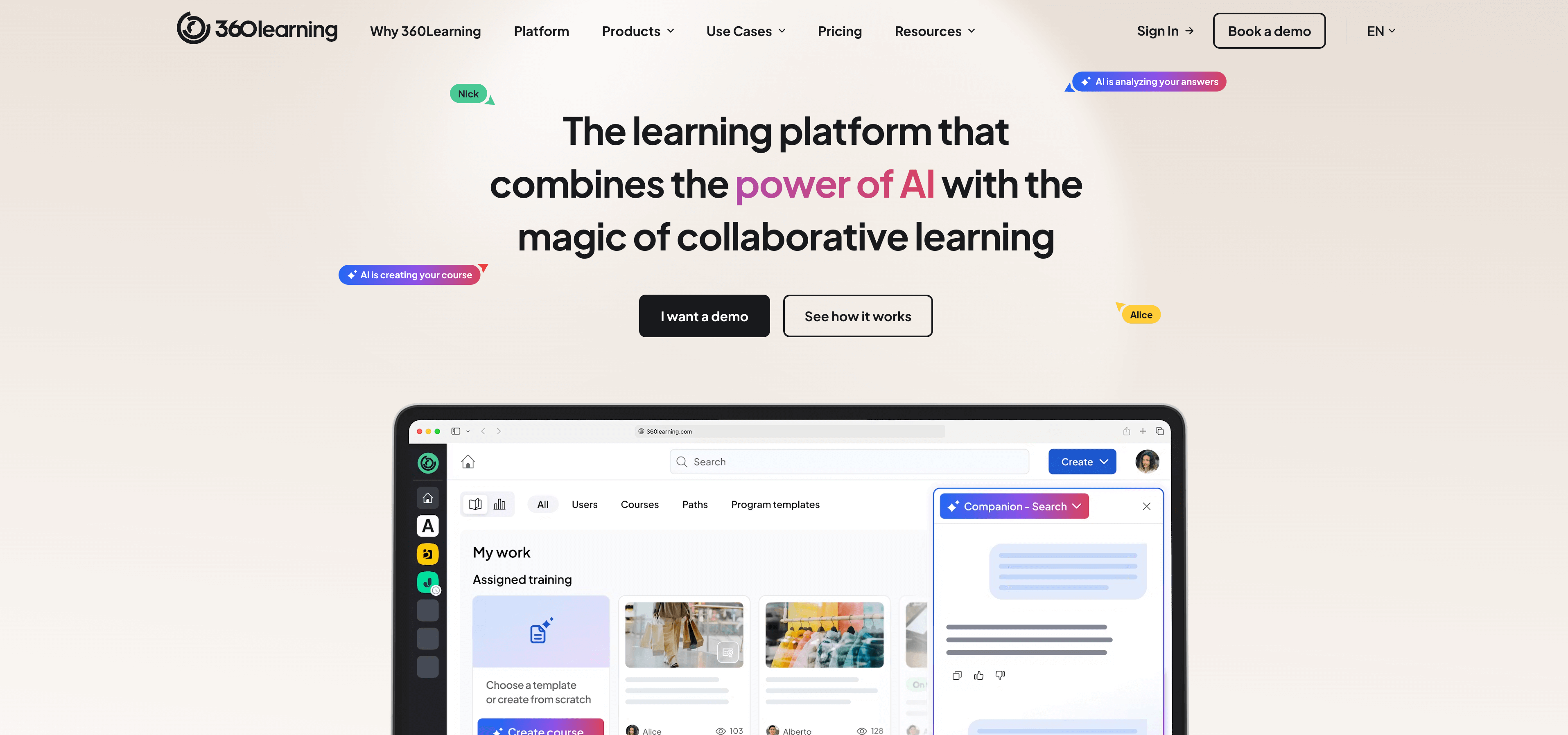
360Learning flips the traditional L&D model on its head. Instead of a small team of instructional designers creating all content (slowly), 360Learning lets subject matter experts across your organization build and share courses. It's collaborative learning that actually scales.
What makes it special?
The platform combines LMS administrative features with LXP learner engagement in one system. The real magic is the collaborative authoring tool: anyone can create courses using an intuitive drag-and-drop interface, which means training can keep pace with how fast your business actually moves.
Key features:
Pricing:
Team plans start around $8/user/month. Enterprise pricing available on request.
Best for:
Organizations that want to democratize content creation and tap into internal expertise. Particularly strong for fast-moving companies where the L&D team can't keep up with the pace of change.

Degreed is the heavy hitter of enterprise LXPs, focused on one mission: helping organizations identify, build, and measure workforce skills. It aggregates learning content from everywhere — including your internal resources, external providers, and the open web — into one searchable platform.
What makes it special?
Degreed's AI-driven skill mapping connects learning directly to capability building — a great tool for the growing trend of skills-based learning. Employees see exactly which skills they need to develop for their current role or desired career path, and the platform serves up relevant content automatically.
Key features:
Pricing:
Enterprise pricing only.
Best for:
Large enterprises with mature L&D functions who want to connect learning directly to skills and talent strategies.
Docebo started as an LMS but has evolved into a comprehensive learning suite with serious LXP capabilities. Its AI features — including auto-tagging, content recommendations, and virtual coaching — help large organizations scale learning without scaling their L&D headcount.
What makes it special?
Docebo's strength is handling complexity. Multi-audience portals, extended enterprise training (customers, partners, franchisees), and robust compliance features make it a workhorse for organizations with diverse learning needs.
Key features:
Pricing:
Enterprise pricing based on active users. Generally considered premium pricing.
Best for:
Global enterprises needing to train multiple audiences (employees, customers, partners) with compliance requirements and complex organizational structures.
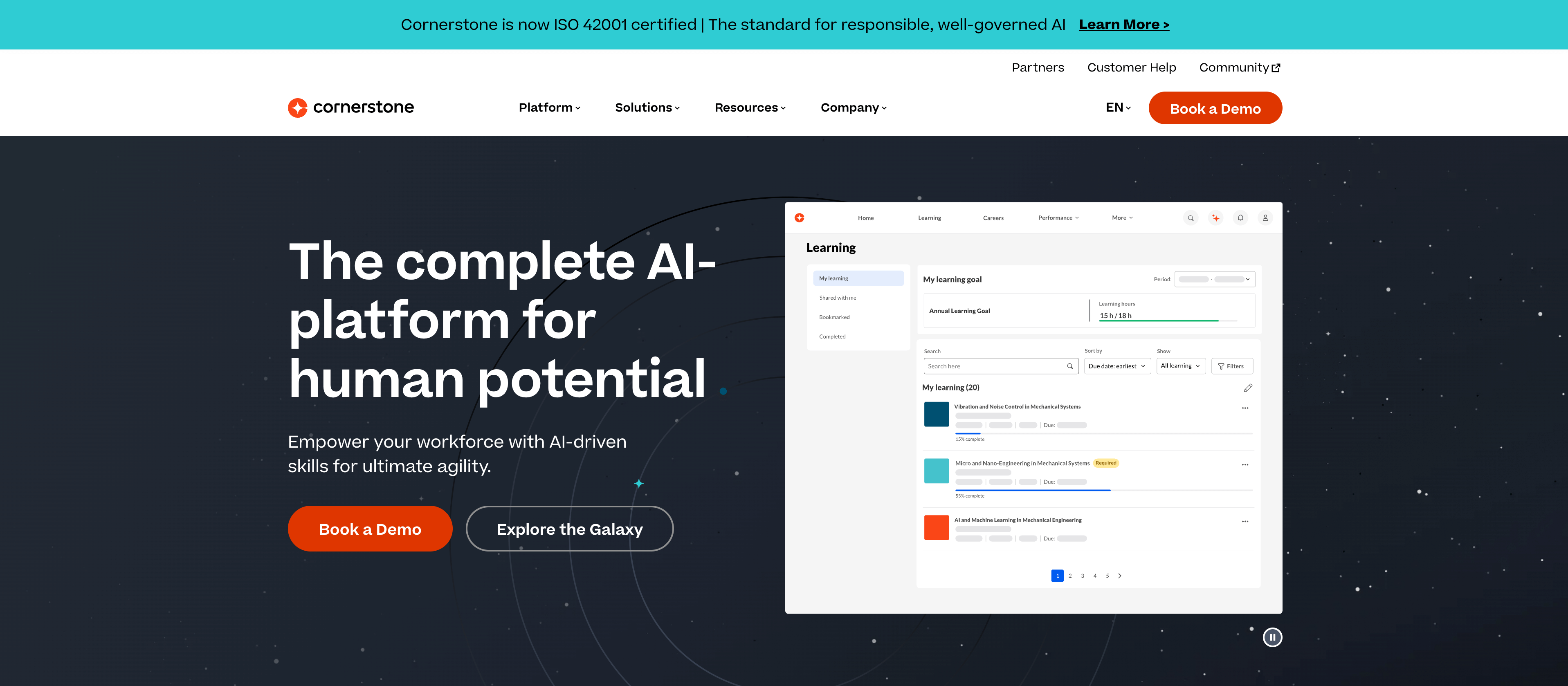
Cornerstone acquired EdCast to beef up its LXP capabilities, and the result is a platform that excels at connecting learning to career development. The focus on adaptive learning paths and skills intelligence makes it particularly strong for organizations investing in internal mobility.
What makes it special?
Cornerstone LXP creates personalized learning experiences based on individual skills assessments, career aspirations, and role requirements. The platform learns from user behavior to improve recommendations over time.
Key features:
Pricing:
Enterprise pricing only. Contact for quote.
Best for:
Organizations prioritizing internal mobility and career development, particularly those already using Cornerstone's broader talent suite.
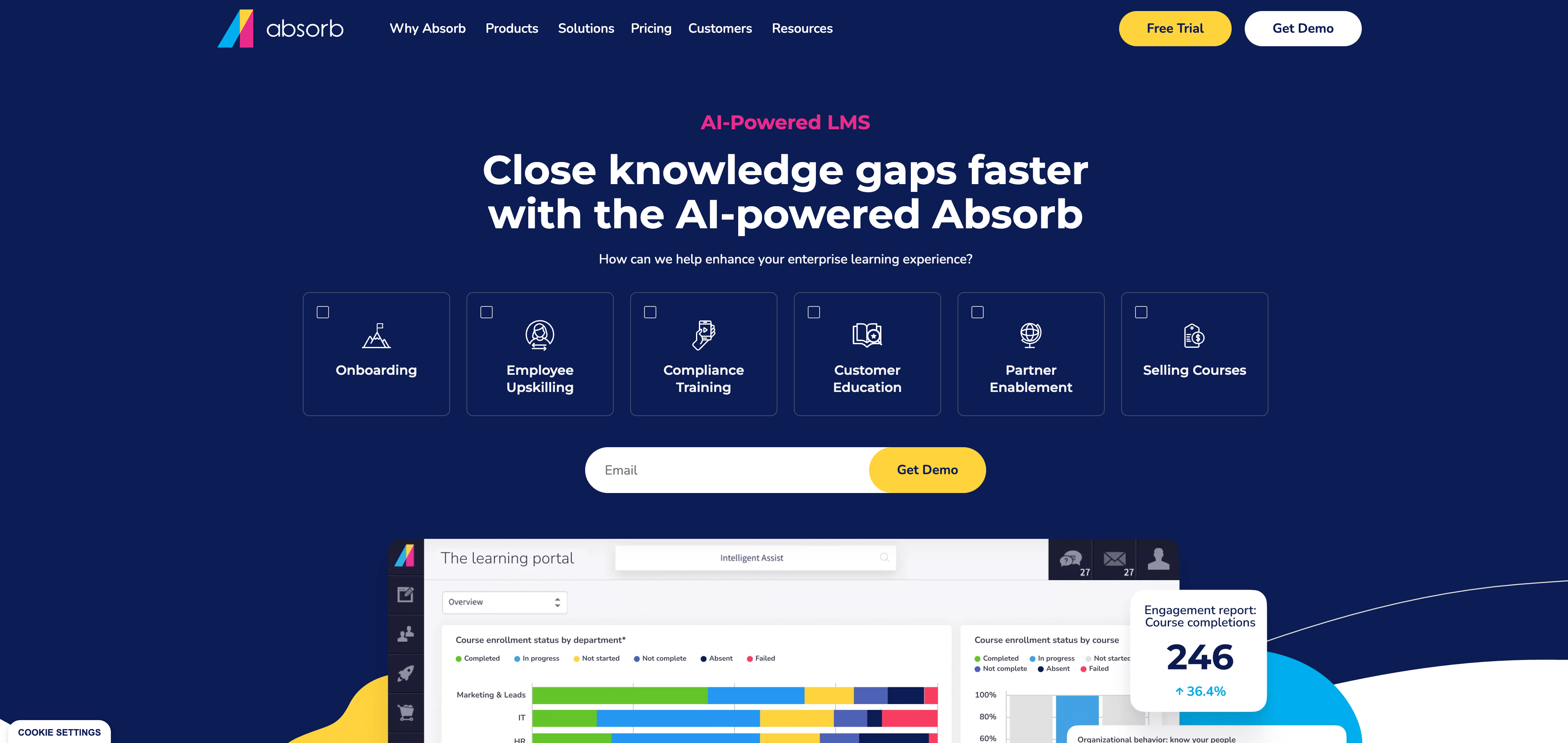
Absorb successfully bridges the gap between traditional LMS functionality and modern LXP capabilities. It's the platform for organizations that need structured training programs AND engaging learner experiences without managing two separate systems.
What makes it special?
Absorb's intuitive interface works for both administrators and learners. Admins get comprehensive tools for course creation and progress tracking. Learners get AI-driven discovery, personalized learning paths, and mobile access that makes continuous learning practical.
Key features:
Pricing:
Tiered pricing based on active users. More accessible than some enterprise alternatives.
Best for:
Mid-market to enterprise organizations wanting the best of both LMS and LXP worlds without managing multiple platforms.
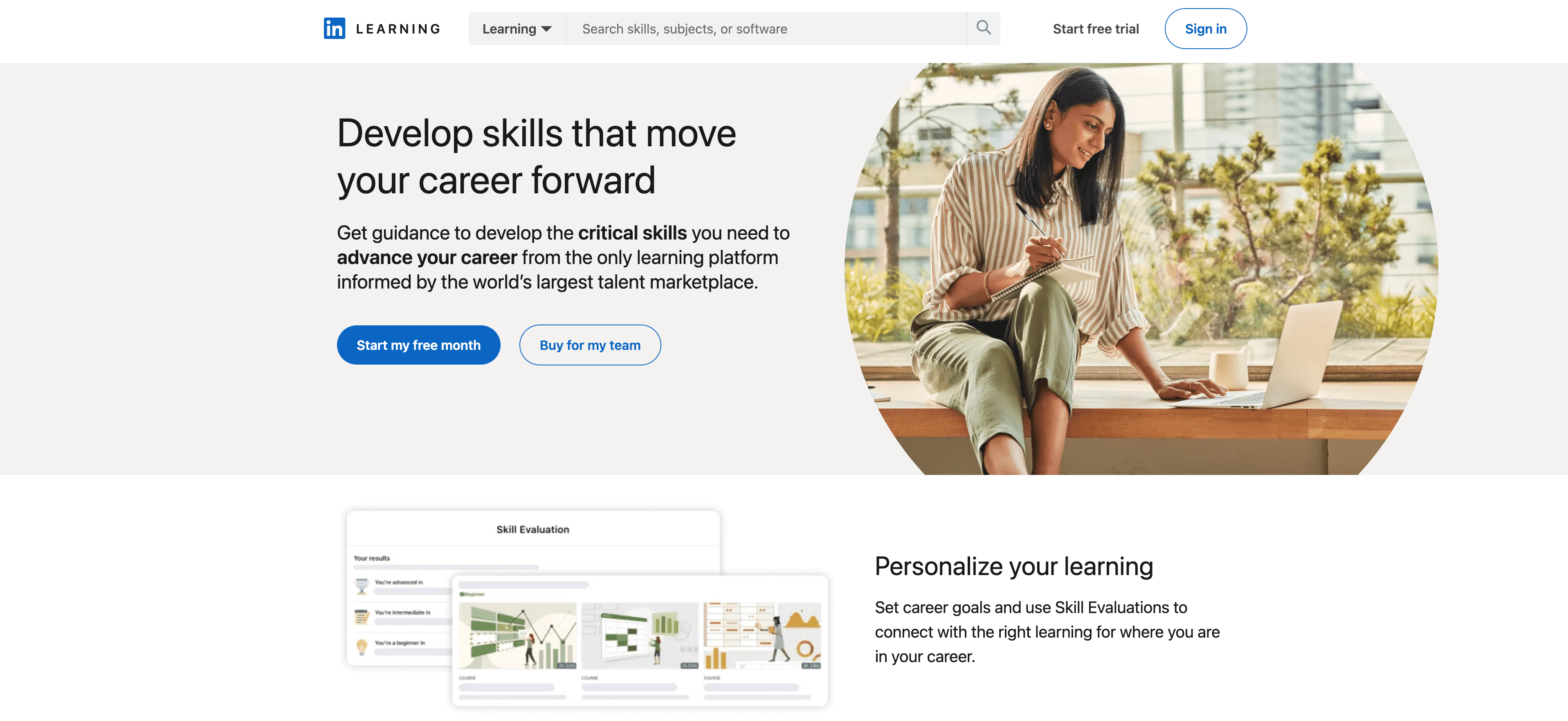
LinkedIn Learning brings its massive library of 21,000+ expert-led courses to enterprise teams. The integration with LinkedIn profiles and career data creates unique personalization opportunities, and the content quality is consistently high across business, technology, and creative skills.
What makes it special?
The LinkedIn ecosystem integration is the differentiator. Course recommendations factor in your job title, career aspirations, and what skills are trending in your industry. Completed courses appear on LinkedIn profiles, adding external motivation for learners.
Key features:
Pricing:
Enterprise pricing typically $20-30/user/month depending on organization size.
Best for:
Organizations wanting high-quality off-the-shelf content for professional development without investing in custom course creation.

Udemy Business gives organizations access to Udemy's extensive marketplace of practical, skills-focused courses. The 2025 addition of AI-powered roleplay features adds interactive practice for soft skills development, making it more than just a course library.
What makes it special?
Udemy's marketplace model means content is constantly being created and updated by working professionals. The new Role Play feature lets learners practice communication skills through AI-powered conversation simulations with immediate feedback.
Key features:
Pricing:
Team plans start around $30/user/month. Enterprise pricing available.
Best for:
Organizations wanting practical, immediately applicable skills training with a constantly refreshed course library.
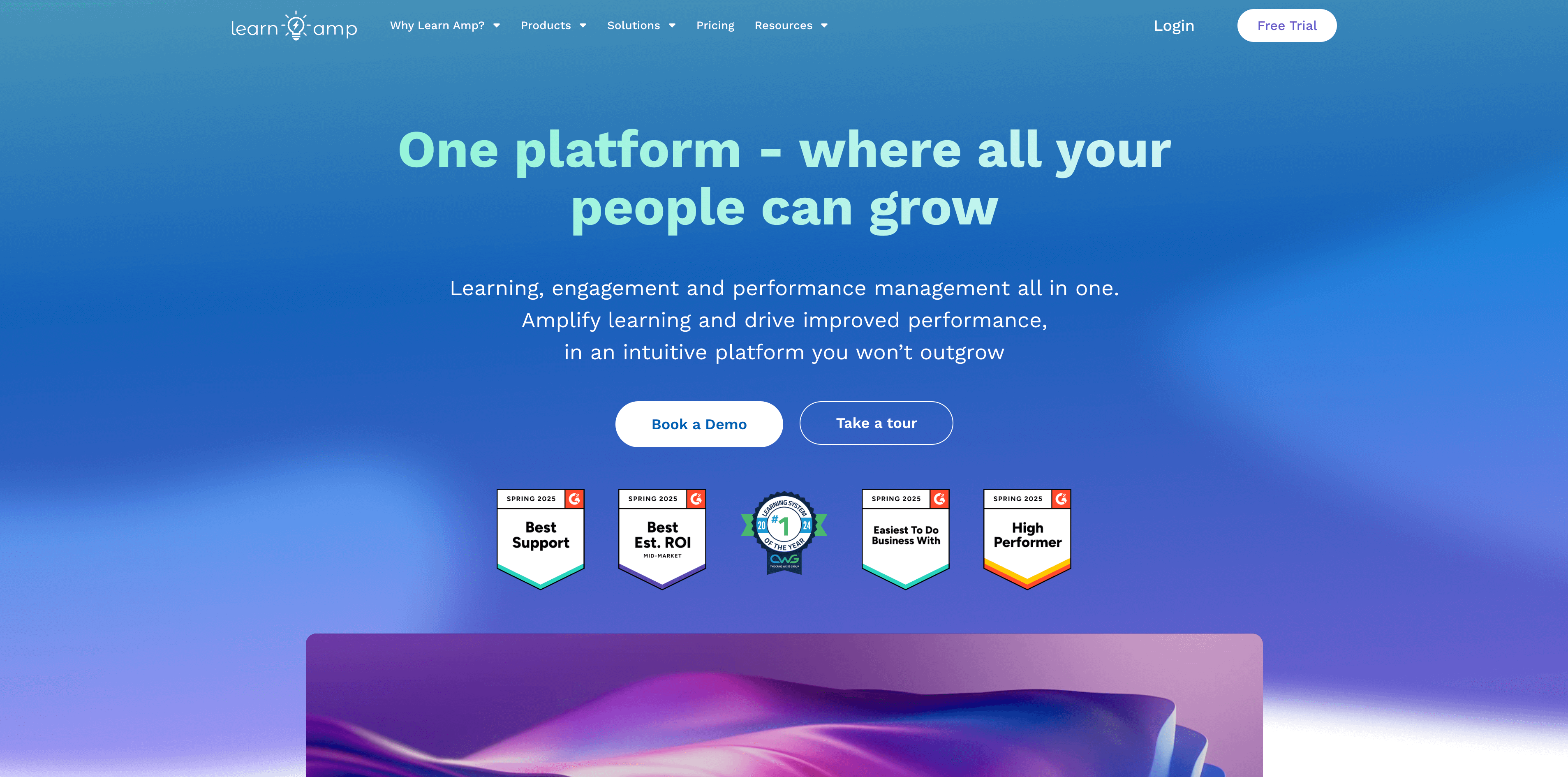
Learn Amp combines learning management, knowledge sharing, and employee enablement into one unified platform. It's designed for mid-sized organizations that want to connect learning directly to performance and engagement metrics.
What makes it special?
The integration of learning with goals, feedback, and performance tools creates a complete employee development ecosystem. Social learning features let employees share knowledge and learn from peers, while managers get visibility into team development.
Key features:
Pricing:
Tiered pricing based on features and users. Contact for quote.
Best for:
Organizations wanting to unify learning with performance management and employee engagement in a single platform.
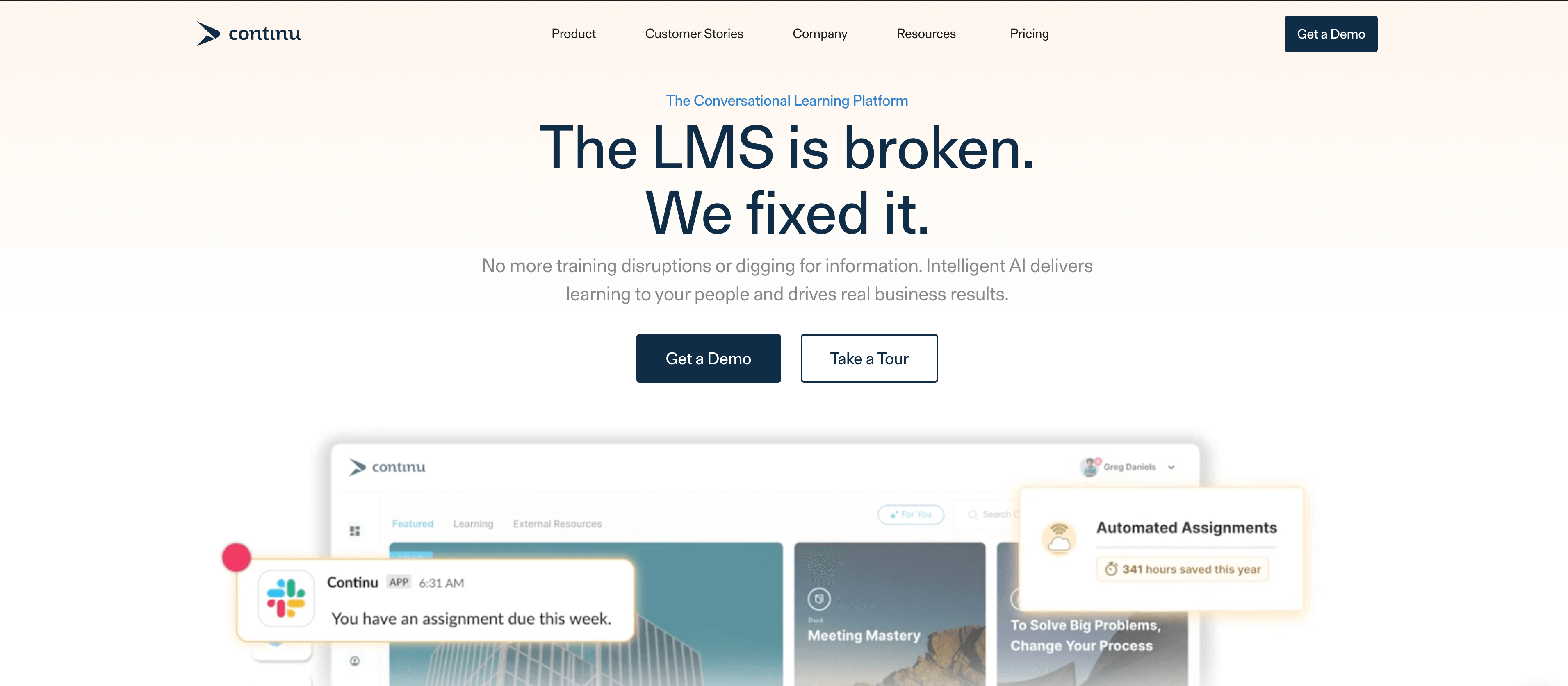
Continu blends LXP personalization with LMS functionality in a clean, modern interface. It's designed for companies that are scaling and need a learning platform that can grow with them without becoming an administrative burden.
What makes it special?
Continu's strength is making sophisticated learning programs manageable for lean L&D teams. Automation features handle the repetitive work, integrations connect with existing tools, and the user experience keeps learners engaged without constant administrator intervention.
Key features:
Pricing:
Pricing based on company size and features. More accessible than enterprise-only platforms.
Best for:
Growing companies and mid-market organizations wanting a modern LXP that's powerful but doesn't require a dedicated admin team.
A Learning Management System (LMS) is administrator-focused, designed for assigning courses, tracking completions, and managing compliance training. A Learning Experience Platform (LXP) is learner-focused, using AI to personalize content recommendations, aggregate learning from multiple sources, and enable self-directed skill development. Many modern platforms combine both capabilities.
For sales training that changes behavior, UneeQ Immersive Training Platform offers AI-powered roleplay with digital humans that simulate real buyer conversations. This approach delivers 82% retention compared to 44% for traditional methods. For sales teams primarily needing product knowledge and methodology content, platforms like Udemy Business or LinkedIn Learning provide extensive course libraries.
LXP pricing varies widely based on features and scale. Entry-level platforms like 360Learning start around $8/user/month. Mid-market solutions like LinkedIn Learning and Udemy Business range from $20-30/user/month. Enterprise platforms like Degreed, Cornerstone, and Docebo offer custom pricing based on organization size and requirements. Immersive training platforms like UneeQ provide custom pricing based on deployment needs.
Soft skills like communication, leadership, and conflict resolution are best learned through practice, not passive content. Immersive platforms like UneeQ Immersive Training Platform allow employees to practice difficult conversations with AI-powered digital humans that respond realistically. For content-based soft skills development, 360Learning's collaborative approach and LinkedIn Learning's expert-led courses are strong options.
Yes, most enterprise LXPs offer integrations with HRIS platforms (Workday, SAP SuccessFactors, ADP), single sign-on providers, content libraries, and collaboration tools like Slack and Microsoft Teams. Platforms like Degreed, Cornerstone, and Docebo are particularly strong in enterprise integrations. Check specific vendor documentation for supported integrations.
Organizations implementing LXPs report measurable improvements in training effectiveness. According to industry research, companies with strong learning cultures see 30-50% higher employee retention (LinkedIn). Simulation-based training can reduce ramp time by 50% and improve knowledge retention by 60% compared to passive methods (PwC). Specific ROI depends on use case, implementation quality, and organizational adoption.
Yes, many LXPs include compliance training features like mandatory course assignments, completion tracking, certification management, and audit trails. Hybrid platforms like Absorb LMS and Docebo are particularly strong for organizations needing both compliance management and engaging learner experiences. However, for organizations focused purely on compliance, a traditional LMS may be more cost-effective.
The best learning experience platform depends on what you're actually trying to achieve. If your biggest challenge is making knowledge stick and changing how people behave on the job, immersive practice with platforms like UneeQ creates the repetition and confidence that traditional training can't match.
If you need to scale content creation, collaborative platforms like 360Learning let your subject matter experts become course creators. For connecting learning to skills and career development, Degreed and Cornerstone offer enterprise-grade solutions.
The common thread? Modern LXPs put learners in control and make development engaging rather than obligatory. They measure actual capability, not just course completion. And they integrate with how people actually work, delivering learning in the flow of their day rather than pulling them away from it.
Whatever platform you choose, remember: if your training isn't changing behavior, it's just entertainment. Choose the LXP that helps your people actually get better at their jobs.