
.png)



Training








Services








Here are some of the common scenarios your reps can practice in Immersive Training Platform if they want to make cold calling their hottest skill.
.png)
Hands up if you're not the biggest fan of cold calls? No judgments here. You're certainly not alone – a whopping 61% of sales reps say cold calls are the least favorite part of their job. It certainly doesn’t help that practicing cold calling is so notoriously flawed and difficult to arrange.
So almost two-thirds of sales reps would rather do any other part of their jobs.
Updating the CRM system? Nope, that comes a distant second at 10%. If you're a sales director, think about it: that means your sellers would rather be doing data input than picking up the phone.
So why all the hate? Well, there's a lot of reasons why reps don't like cold calls, but one of the most obvious is rejection.
For every 59 cold calls answered, only one will lead to either a further appointment or a referral, according to Baylor University. That's a lot of rejection. Worse, BDRs can struggle to develop their skills, especially if they're falling at the first hurdle a lot.
Fortunately, it doesn't have to be that way. Sales roleplay is a great way for reps to get to grips with cold calls. And in 2026, you don’t have to wait for your manager’s of colleagues’ calendars to miraculously become clear; reps can use AI sales roleplay to practice cold calling whenever they need, for as long as they like.
Here are some of the common scenarios your reps should be practicing in Immersive Training Platform if they want to make cold calling their hottest skill.
Every BDR knows that voice. The polite but immovable wall between you and the person you actually want to speak to.
The best reps are able to make a gatekeeper feel valuable but ultimately get past them to lock in time with decision-makers. Perfecting that craft takes practice.
Quickly building rapport with gatekeepers is a must. Gatekeepers need to feel comfortable introducing you to their boss, so establishing a consultative sales approach goes a long way in building trust. Reps should practice being persistent (but courteous), confident, and honest. A little charm and humility can go a long way!
Note, these are all reliant on your sales team’s soft skills, so you may want your practice scenarios to train reps conversational muscles more than their product knowledge at this stage.
Roleplay in Immersive Training Platform can help reps learn how to ask smart questions to get the information they need, whether that's job titles and company hierarchy, the best time to call back, or direct lines to the decision-maker.
Every so often, sales reps will be pitching to a true subject matter expert. These are the people who keep up with industry trends, know multiple products inside out, and already have a clear idea of what they're looking for. That means your reps really need to know their stuff and be able to think on their feet.
To prepare for these situations, BDRs need to be tested not only on their technical knowledge of the product or service, but also the value proposition for the prospect. What are you offering that others aren't?
This kind of pressure-cooker roleplay builds both composure and credibility. It throws reps truly in the deep end, so it pays if they know how to swim.
A good roleplay scenario designed to impress an expert should be difficult by design. The AI prospect should know their industry inside out, and could even have a confronting or even

Let's face it, very few people trust calls from an unknown number. Indeed, a staggering 92% of people think unidentified calls are probably fraudsters. And that’s not a great assumption for people to make at the start of your call.
But even when the person on the other side of the line knows a rep is legit, warming them up during a cold call is tricky, especially as decision-makers are already time-poor.
The trick to dealing with sceptics is active listening and pivoting a pitch to address their specific concerns without getting flustered. Converting a skeptic isn't usually about pushing harder, it's about digging deeper to find out why they're hesitant and what your service can do to help.
Every salesperson gets it sooner or later (and more likely sooner rather than later!). A rude contact. Whether it's a weary sigh, a sharp tone, or being cussed-out, the prospect makes it pretty clear they're not in the mood to chat.
Can your reps pause, breathe, and respond with calm professionalism instead of matching that energy? Reps need to know how to maintain their composure in these circumstances and potentially turn the situation around. For example, a simple strategy is to ask: "I appreciate I caught you at a bad time. Would there be a better time to call?"
Plan for the worst, hope for the best.
By embedding roleplay into your AI sales training, BDRs learn that an angry or abrupt "no thanks" isn't personal, it's just one call. With enough immersion in these hostile environments, reps can learn resilience, practice de-escalating, re-engaging when appropriate and brushing themselves off when a prospect truly isn't interested.
Some prospects make it clear pretty quickly that a caller has seconds, not minutes, to pique their interest.
So how do you 'get to the point' with a 'get-to-the-point' kind of prospect? This is where a BDR's ability to be concise and give a brisk elevator pitch becomes invaluable.
No rambling intros, no company history – just a tight half-minute or so that gets right to the heart of what your organization offers. It means leading with value, rather than features, and being prepared with case studies and other social proof once the prospect is ready to learn more.
Can sales trainers simulate this pressure during roleplay? Absolutely. Just create a blunt persona and flesh out their character — they’re time-poor and prefer information that’s to-the-point.
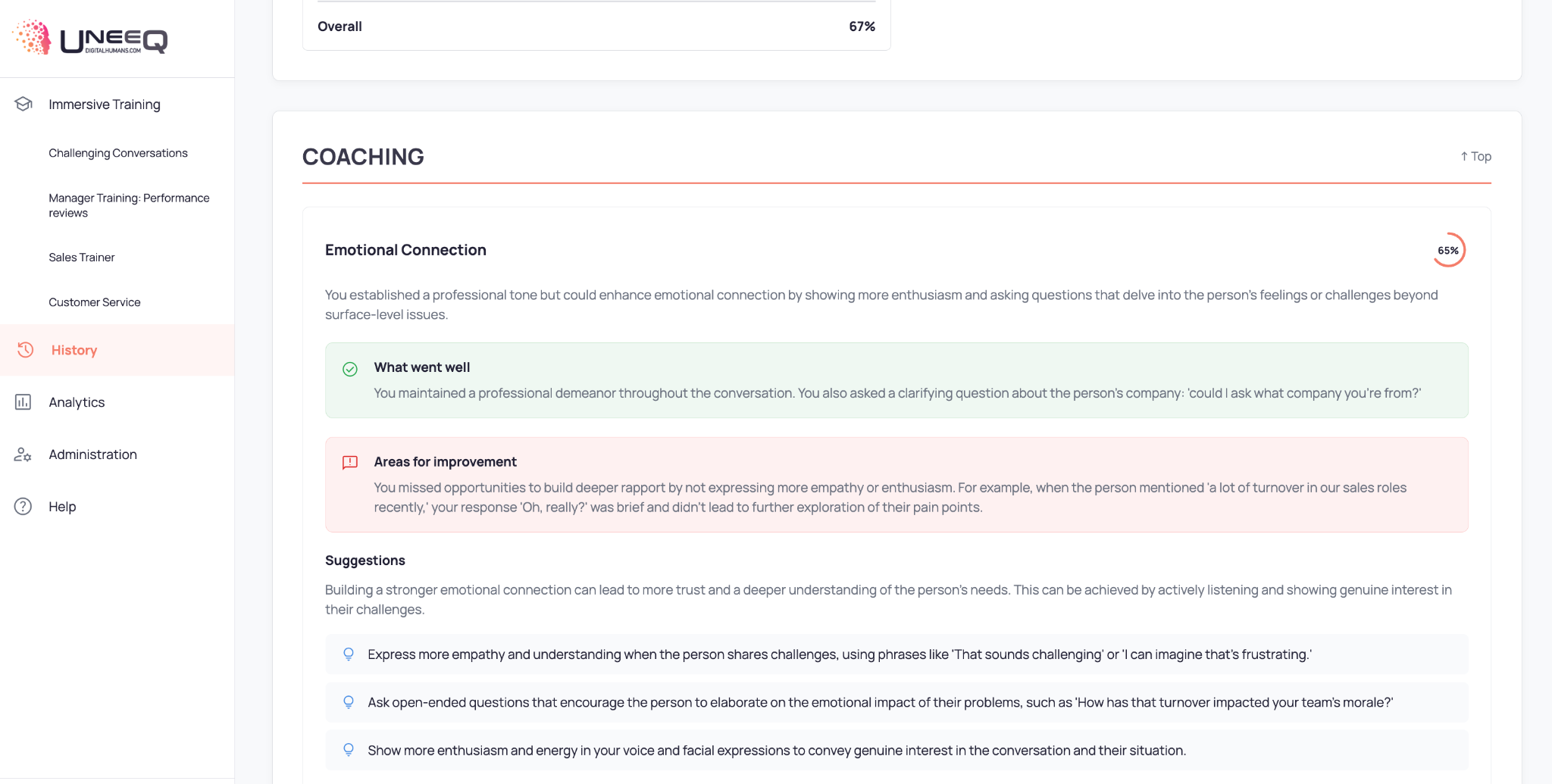
Sales coaches should also look at some particular analytics if they’re faced with time-poor prospects. Sellers should avoid monologuing by practicing their pitch until they can deliver it in a couple of sentences. The trap here though is that reps shouldn’t speed through their pitch in a bid to save time at the expense of clarity and confidence, so keep a close eye on that ‘talk speed’ metric, too.

A good rule of thumb for sales reps is to spend about half their time listening and half their time talking. That's not always easy, especially when a prospect is giving nothing back! Reps need a way to break past one-word replies and awkward silences.
Instead of pressuring, they should learn to pull at threads gently — use open questions and small prompts to invite lengthier responses from the prospect. Patience and curiosity can often succeed where persistence fails if decision-makers are particularly cautious or reserved.
The aim is to revive conversations. Remember, a quiet prospect isn't necessarily a disinterested one. After all, they're still on the call, so it's about bringing them out of their shell and opening up a proper dialogue.
Sales is a skill. And like any skill (from flying an airplane to hitting a home run) it needs to be practiced.
And the best practice is immersive. There’s a reason cold calling is a sales rep’s least favorite thing to do — it’s high-pressure, it requires exceptional soft skills, and the only way to do it is, well, to do it. Right?
Today, in 2026, that’s not the case.
Immersive learning helps to train sales reps by placing them in an environment that’s the closest thing to the real deal. If your reps have a place to perfect their pitch before game time, the more they can rely on their muscle memory when the pressure of a real call begins.
UneeQ’s Immersive Training Platform does just that for enterprise sales teams, providing realistic face-to-face practice so reps can build confidence, sales managers can save time on individual roleplay, and sales leaders can start to see performance rise across the business.
Want to see how it works? Book a demo with our team; we’ll be happy to show you more.