.png)



Training




Services








Looking for the best AI sales coach in 2026? We compare six leading AI sales training platforms.

What’s the best AI sales coach? Only a few years ago, the question would have been a rather baffling one. If you were to design your ideal sales coach to help your team improve their close rates, you’d be talking about a real person. And that person might be rated on their experience, creativity, and a knack for motivating people.
But today, what organizations look for in an AI sales coach is something very different. You want a tool that’s engaging, effective, always available, scalable, customizable, and flexible to work for your team.
The end goal is the same — improving your sales team’s performance. But your requirements have very much changed.
So let’s break it down. Let’s look at what an AI sales coach is, what you should look for in an AI coaching platform, and we’ll even make some recommendations on six of the best sales coaching tools available and working in 2026.
An AI sales coach is a software platform that uses artificial intelligence to help sales reps build, practice, and refine the skills they need to close deals, without burning real prospects in the process.
Most AI sales coaches fall into one of two camps:
The first is post-call coaching. These platforms listen to recorded sales calls, transcribe them, analyze what the rep said (and what the buyer said back), and surface coaching moments. Think conversation intelligence, talk-to-listen ratios, objection heat maps. Useful — but the learning happens after the deal is already won or lost.
The second is pre-call practice. These platforms let reps rehearse conversations before the real ones. They use AI to generate realistic buyer personas, run simulated discovery calls, demos, objection-handling drills, and cold calls, and then score the rep's performance. The best of them give feedback instantly, so reps can try again and get better — the way athletes train, not the way knowledge workers typically learn.
The most effective sales teams use both — they practice before real calls with realistic roleplay and learn what went well and wrong after those calls too. The important part is reinforcing learning with continuous practice and feedback. It's the most effective way for reps to improve their soft skills as well as their technical knowledge.

A few stats worth sitting with:
Roleplay works. It always has. What's changed is that AI now lets you do it at scale, without awkward peer roleplays, without burning a Monday-morning sales meeting on it, and without the uncomfortable dynamics of practicing in front of your boss.
Not every AI sales coach will fit every team. Before you start demoing, think about the following.
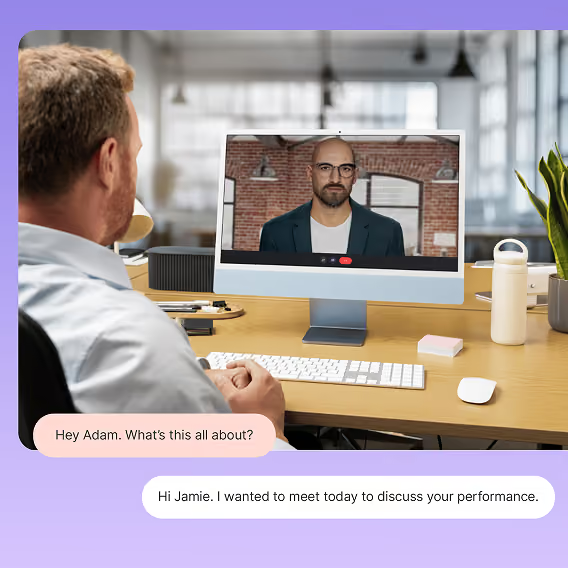
Realism of the simulation. If your reps sell over the phone, a voice simulator is probably enough. If they sell face-to-face — on video calls, in boardrooms, at industry events — you need a platform that can simulate that. Body language, facial cues, reading the room: these are skills reps can only practice if the simulation shows them a face.
Scenario customization. Your buyers aren't generic. Neither is your product, your sales methodology, or the objections your reps actually face. The best AI sales coaches let you build scenarios that match your real ICP, your real deal dynamics, and your real playbook — not a template library that looks like every other SaaS company's template library.
Psychological safety. Reps need a space to fail, try again, look silly, and get better without it going on their record. If the platform feels like surveillance, reps won't use it. If it feels like a flight simulator, they will.
Depth of analytics. Completion rates aren't skills. Look for platforms that measure the things that actually predict sales performance — handling of objections, discovery depth, tone, pacing, empathy, confidence — and that give managers a clear view of where each rep needs coaching.
Scalability across the business. Sales isn't the only team that benefits from AI roleplay. Customer service, leadership, HR, and L&D can all use the same technology. Platforms that serve multiple learning domains give you more return on a single buying decision.
Enterprise readiness. If the platform can't clear your security review, it doesn't matter how good the product is. Look for SOC 2, GDPR, flexible deployment options, BYO-LLM flexibility, and compatibility with your existing LMS, CRM, and enablement stack.
Effectiveness you can measure. Ask vendors for outcome data. Training effectiveness, knowledge retention, user recommendation, manager time saved, reduction in time-to-first-deal. If they don't have the numbers, they probably don't have the outcomes either.
In no particular order, here are six of the most notable platforms in the AI sales training space right now, what each one is good at, and where each one fits best.

The voice-roleplay specialist.
Hyperbound has built a strong reputation for AI voice roleplay, especially for cold calls, discovery, and objection handling. Their buyer personas are trained on a large library of real B2B sales conversations, which gives the voice simulations a grounded, realistic feel. They've recently added a deal-level intelligence layer that tries to connect practice back to live pipeline.
Best for: SDR and BDR teams running high volumes of phone-based outbound where voice and tonality are the main skills being drilled.
Consider if: Most of your reps' customer-facing conversations happen on video or in person, Hyperbound's voice-first approach will only cover part of what they actually need to practice.

The pitch and discovery trainer.
Second Nature focuses on helping reps rehearse the core sales conversation — pitch delivery, discovery questions, product messaging. It's known for being user-friendly and quick to set up, with a library of ready-made scenarios that many teams can get going with fast.
Best for: Teams that want to standardize pitch delivery and messaging consistency across a distributed rep base, particularly in tech and SaaS.
Consider if: Your sales cycles involve complex, emotionally charged conversations beyond the pitch — renewals, tough negotiations, executive-level stakeholder management — Second Nature's scope is narrower than a full conversation simulator.

The full revenue enablement suite.
Mindtickle is less a dedicated AI sales coach and more a broad revenue readiness platform that includes AI roleplay as one feature alongside content, certifications, coaching workflows, and analytics. It's well established in the enterprise, recognized by the major analyst firms, and popular with teams that want one vendor for the whole enablement stack.
Best for: Large enterprises that want to consolidate training, certification, content management, and coaching into a single platform.
Consider if: You're specifically looking for the deepest, most realistic practice experience, Mindtickle's roleplay is a feature within a suite rather than the main event. If roleplay realism is the priority, specialized platforms tend to go deeper.
The speech and delivery coach.
Quantified.ai focuses on analyzing how reps speak — tone, pacing, filler words, clarity, confidence. It's got meaningful traction in regulated industries like financial services and healthcare, where message accuracy and delivery polish matter. Strong analytics on the verbal and vocal side of a pitch.
Best for: Teams where compliance-heavy messaging needs to land cleanly and consistently, or where the primary coaching focus is improving how reps come across on a call.
Consider if: Your reps need to practice the full arc of a sales conversation — reading buyer emotion, handling objections in real time, adjusting to the room — speech analysis only covers one layer of the skill stack.

The CRM-native option.
Salesforce has added AI roleplay capabilities inside Agentforce, its broader AI agent platform. The appeal is obvious: if your sales org already lives in Salesforce, adding roleplay feels like a zero-procurement, zero-integration decision. Scenarios lean on CRM data, and coaching ties back into the Salesforce ecosystem.
Best for: Teams deep in Salesforce that want a lightweight, bundled way to introduce AI roleplay without adding a new vendor.
Consider if: You need high-fidelity simulation, custom buyer personas with real behavioral depth, or training across multiple learning domains (customer service, leadership, L&D), Agentforce's roleplay is built for breadth, not depth. It's a feature inside a CRM — not a purpose-built training platform.

The most immersive face-to-face AI sales coach.
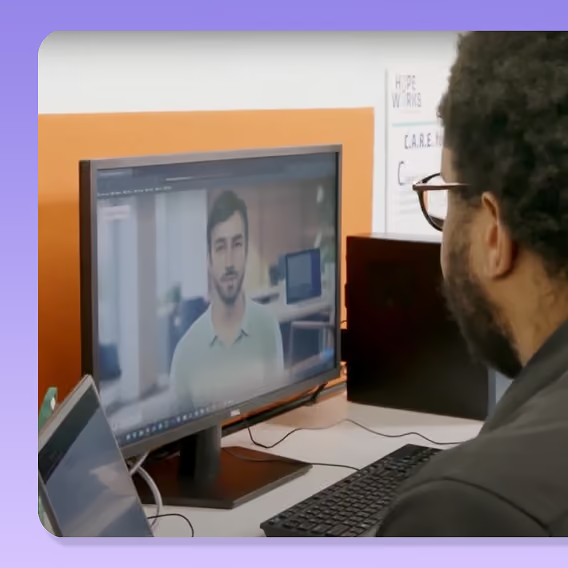
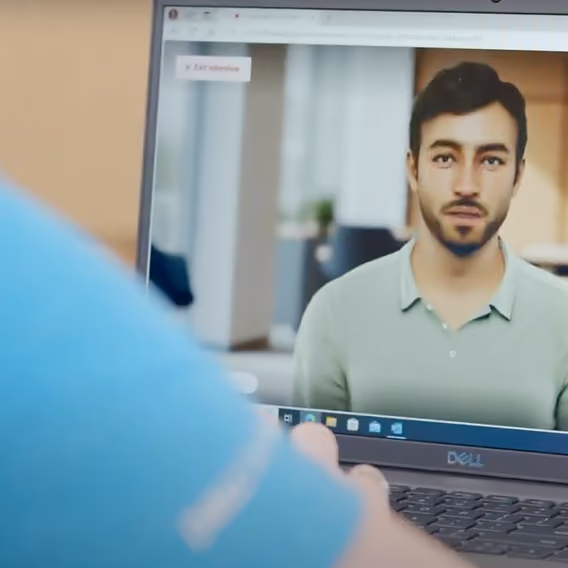
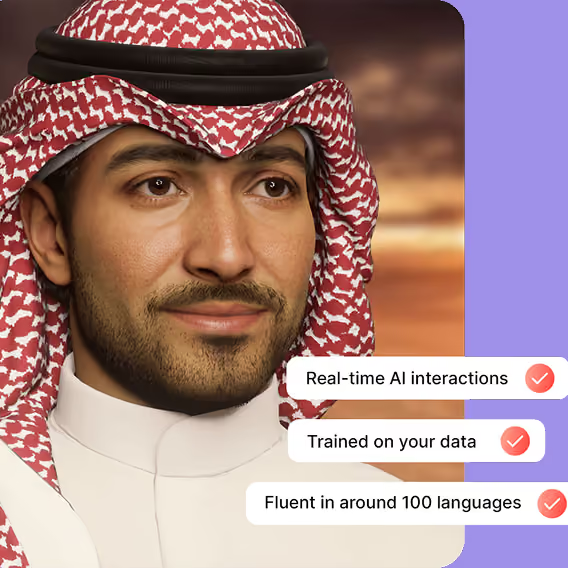
UneeQ is the only AI sales training platform on this list built around true face-to-face simulation. Reps practice real sales conversations on video, with emotionally intelligent digital humans who respond with facial expressions, gestures, and realistic emotional cues — the kind that actually matter in enterprise selling, where most deals are decided in meetings, not phone calls.
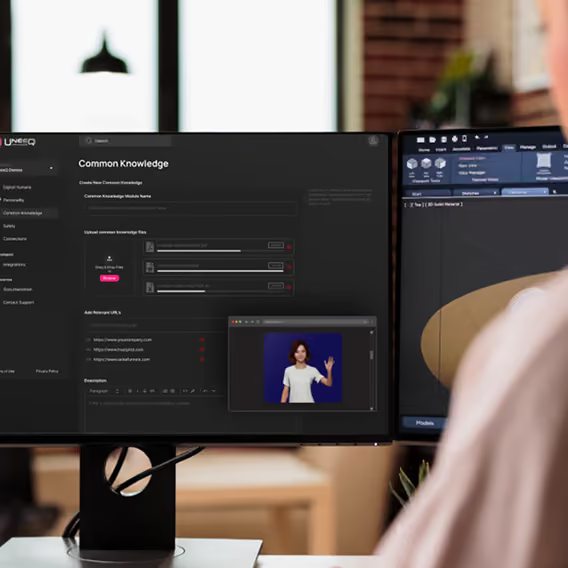
Scenarios are highly customizable. You can build AI buyers that match your specific ICP, sales methodology, product context, and the objections your reps genuinely face. And because every scenario is a face-to-face interaction, reps practice the soft skills that separate good reps from great ones: reading the room, responding to emotion, handling pressure, building trust.
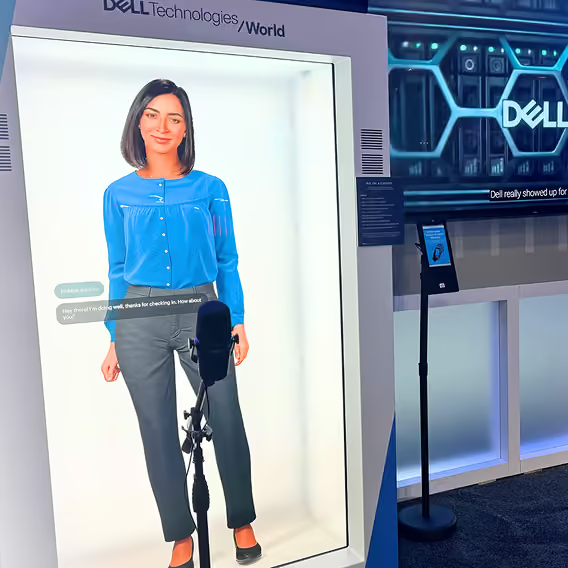
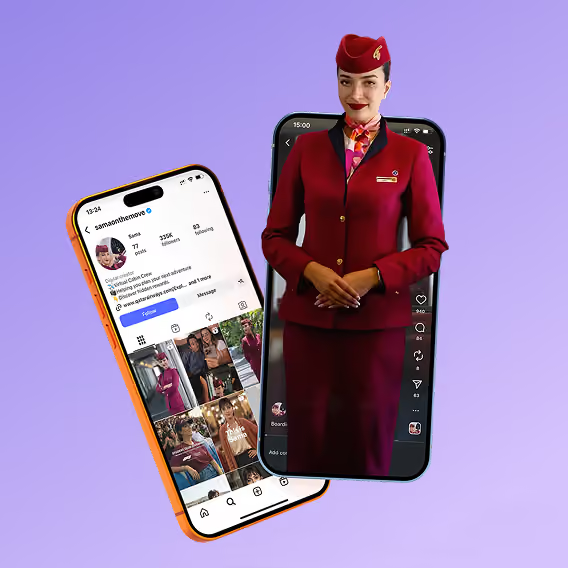
Underneath it all is UneeQ's Digital Human Operating System (proprietary Synanim™ animation technology and intelligent LLM orchestration) built on ten years of R&D and leading the digital human industry. The same platform powers digital human experiences for Qatar Airways, Deutsche Telekom, Dell, Pearson, and many Fortune 500 organizations.
What sets it apart on measurement: UneeQ's 3D Analytics go beyond call transcripts to quantify the soft skills that have historically been almost impossible to measure at scale — empathy, tone, emotional responsiveness, confidence, presence. Sales leaders get clear, actionable data on where each rep needs coaching, and proof that training is translating into performance.
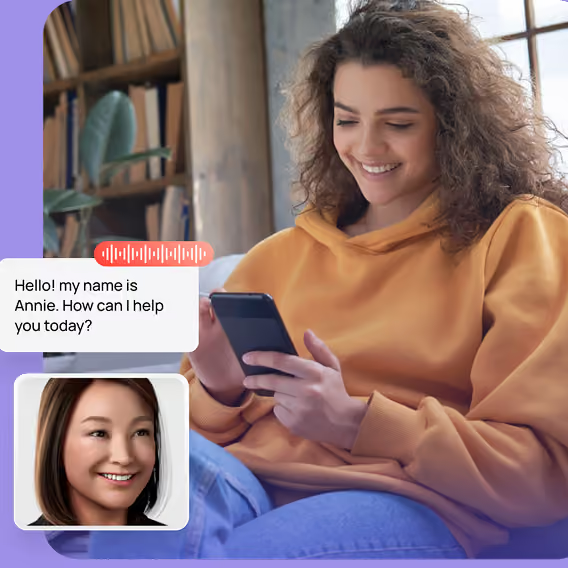
And specifically on AI coaching, learners get access to their own AI buddy. After each training session, they can see their training performance analytics and they can chat through their performance with an AI coach who can dig deeper into what went right and what could be improved upon. It means reps get instant feedback while they're in the learning mindset, making them more likely to retain information and feedback that will make them more formidable at their jobs.
The results enterprises see:
Best for: Enterprise sales teams whose reps have face-to-face customer conversations (on video, in meetings, at events, etc.) and who care about measuring sales skills at depth. Also strong for organizations that want one platform to serve sales, customer service, leadership development, and L&D across the business.
Consider if: Your reps exclusively sell over the phone with no video or in-person component, UneeQ's face-to-face realism isn't essential for your use case — a voice-first platform would cover you.
A side-by-side look at six of the leading AI sales coaching and training platforms in 2026 — how they simulate conversations, who they're built for, and where each one is strongest.
| Platform | Simulation type | Best for | Scenario customization | Soft skills analytics | Multi-domain use | Enterprise readiness |
|---|---|---|---|---|---|---|
| Platform Hyperbound | Simulation type Voice only | Best for High-volume phone outbound for SDR and BDR teams | Scenario customization Custom personas, trained on real B2B calls | Soft skills analytics Voice and tonality scorecards | Multi-domain use Sales only | Enterprise readiness Standard SaaS-grade |
| Platform Second Nature | Simulation type Voice with on-screen avatar | Best for Pitch delivery and messaging consistency | Scenario customization Template-led, some customization | Soft skills analytics Delivery and messaging accuracy | Multi-domain use Primarily sales | Enterprise readiness Standard enterprise SaaS |
| Platform Mindtickle | Simulation type Voice roleplay within a broader suite | Best for Consolidating training, content, and certifications | Scenario customization Configurable within suite framework | Soft skills analytics Readiness and skill-gap tracking | Multi-domain use Sales and revenue teams | Enterprise readiness Enterprise-proven, analyst-recognized |
| Platform Quantified.ai | Simulation type Voice and speech analysis with avatars | Best for Regulated industries (finance, healthcare) | Scenario customization Good for speech-based scenarios | Soft skills analytics Tone, pacing, filler words, delivery polish | Multi-domain use Sales, customer service, communications | Enterprise readiness Enterprise-grade, used in regulated sectors |
| Platform Salesforce (Agentforce) | Simulation type Text and voice roleplay | Best for Teams already deep in Salesforce | Scenario customization Limited to Salesforce-native data and templates | Soft skills analytics Basic CRM-linked coaching data | Multi-domain use Sales within Salesforce ecosystem | Enterprise readiness Salesforce-grade security and compliance |
| Platform UneeQ Immersive Training Platform | Simulation type Face-to-face video with emotionally intelligent digital humans | Best for Enterprise teams with face-to-face customer conversations | Scenario customization Fully customizable — your ICP, methodology, objections, personas | Soft skills analytics 3D Analytics: empathy, tone, emotional responsiveness, confidence, presence | Multi-domain use Sales, customer service, leadership, HR, L&D | Enterprise readiness SOC 2, GDPR, flexible deployment, BYO-LLM, LMS and CRM integrations |
To quote Moe Szyslak: "Alright, here's the 411, folks". Every AI sales coaching platform on this list is good at something. The question isn't which is best overall, it's which is best for the specific way your team sells.
If your reps mostly sell on the phone, a voice roleplay tool will do. If you want to consolidate enablement into one suite, go with a broader platform. If you just want CRM-native convenience, Agentforce is the easy path.
And if your reps sell face-to-face, if you care about realism and engagement, and if you want to measure the skills that make great salespeople, UneeQ's Immersive Training Platform is the choice for you.
Practice makes permanent. Just make sure your team is practicing the right thing.
Quick answers to the questions sales leaders ask most when they're evaluating AI sales coaching platforms.