.png)




Training





Services









L&D teams may be put off by the cost of VR. But there are other ways to immersive people in training, beyond the headset!
When you think of immersive learning, you might think of virtual reality (VR). And while that’s one type of immersive training, that kind of supposition can hold back learning and development teams — because while all great applications of VR are immersive, not all immersive learning is VR.
Virtual reality has come a long way over the years. But it arguably all started with training.
In the 1930s, engineers in the United States developed one of the first VR simulators, designed to help pilots learn how to fly in challenging conditions. There were no screens; just a metal box, flight controls, and the type of mechanical movement of the simulator that could make a trainee pilot feel like they were flying under real duress.
From there, clever people created the first VR headset way back in the 1960s, which was so heavy it was impossible for users to wear comfortably, so the device had to be suspended from the ceiling!
Because of this unwieldy, slightly frightening set-up, it received the ominous nickname of The Sword of Damocles after the Greek legend.
Today, some VR headsets weigh barely more than 3.5 ounces, and the experiences they offer are incredibly immersive. It's all about stunning visuals, fluid motion tracking and richly detailed environments.
This continues to make VR a powerful tool for training. And not just in high-precision training scenarios like piloting or surgery simulations — VR can (and has) been used in everything from workplace safety demos to customer service training.
If your organization has enterprising learning and development (L&D) teams, they've no doubt already experimented with or are currently benefiting from immersive training using VR in some way. It's cool, it's fun and it's interactive.
But it's not perfect. In fact, it’s extremely limiting to getting ROI on learning and development.
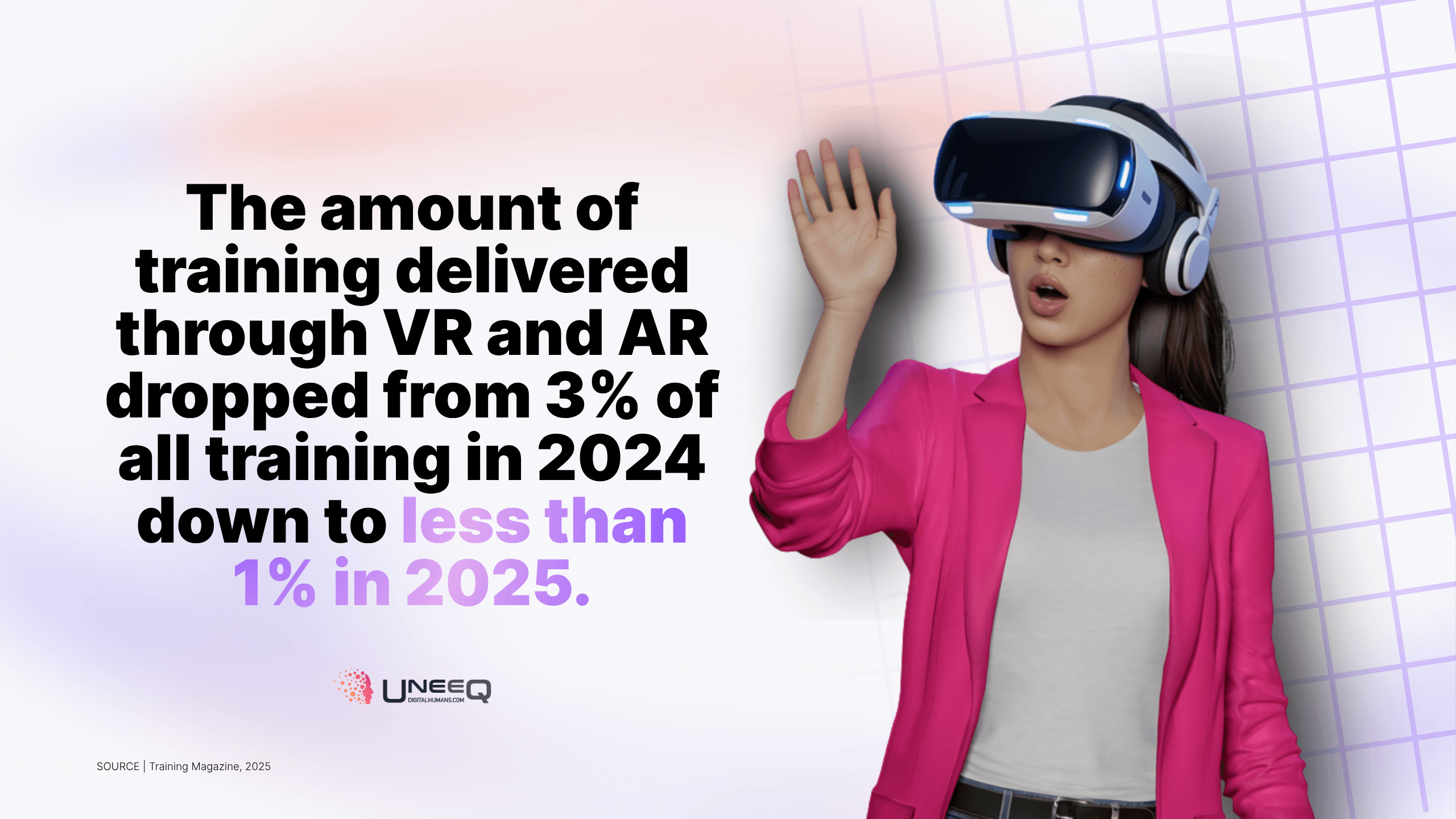
For every business enjoying the advantages of VR training, there are many that have given it a try, and then quietly moved on. According to a Training Magazine report, the amount of training delivered through VR and augmented reality (AR) dropped from 3% of all hours in 2024 down to less than 1% last year.
Why the exodus? The report doesn't say, but we have our suspicions.
Now, this isn’t a VR hit-piece. We love VR at UneeQ, and have a long history of supporting VR applications for digital humans. But we’re realists, too.
In this article, we're going to look at why VR training hasn't taken the L&D world by storm yet, and how the potential of immersive learning could be better achieved by looking beyond the headset.
There's no denying that VR training has its benefits. Studies have shown that 78% of learners prefer VR training to regular classroom environments, and PwC research indicates that people complete training four times faster using VR.
That's the good news. The bad news is that training with VR comes with a lot of drawbacks. The tech is often expensive to buy. For many it’s uncomfortable or even nauseating to wear over long periods. That's not to mention the ongoing cost of maintaining the hardware and updating the software.
As for creating new content, it's a mammoth task.
We also need to talk about VR's scaling issue. Many of the challenges we've listed above are multiplied across larger workforces, making VR training almost impossible when you have hundreds or even thousands of employees unless you have very deep pockets.
For many organizations, the juice simply isn't worth the squeeze when it comes to VR. However, if we take a step back, what is the big selling point of the technology? What makes it so effective as a training tool? It’s immersiveness. It’s realism.
But are these qualities unique to VR? We don't believe a headset is needed to make training feel authentic and engaging.
Whether it's lifelike conversations, interactive roleplay scenarios, or training that feels real, there are other options.
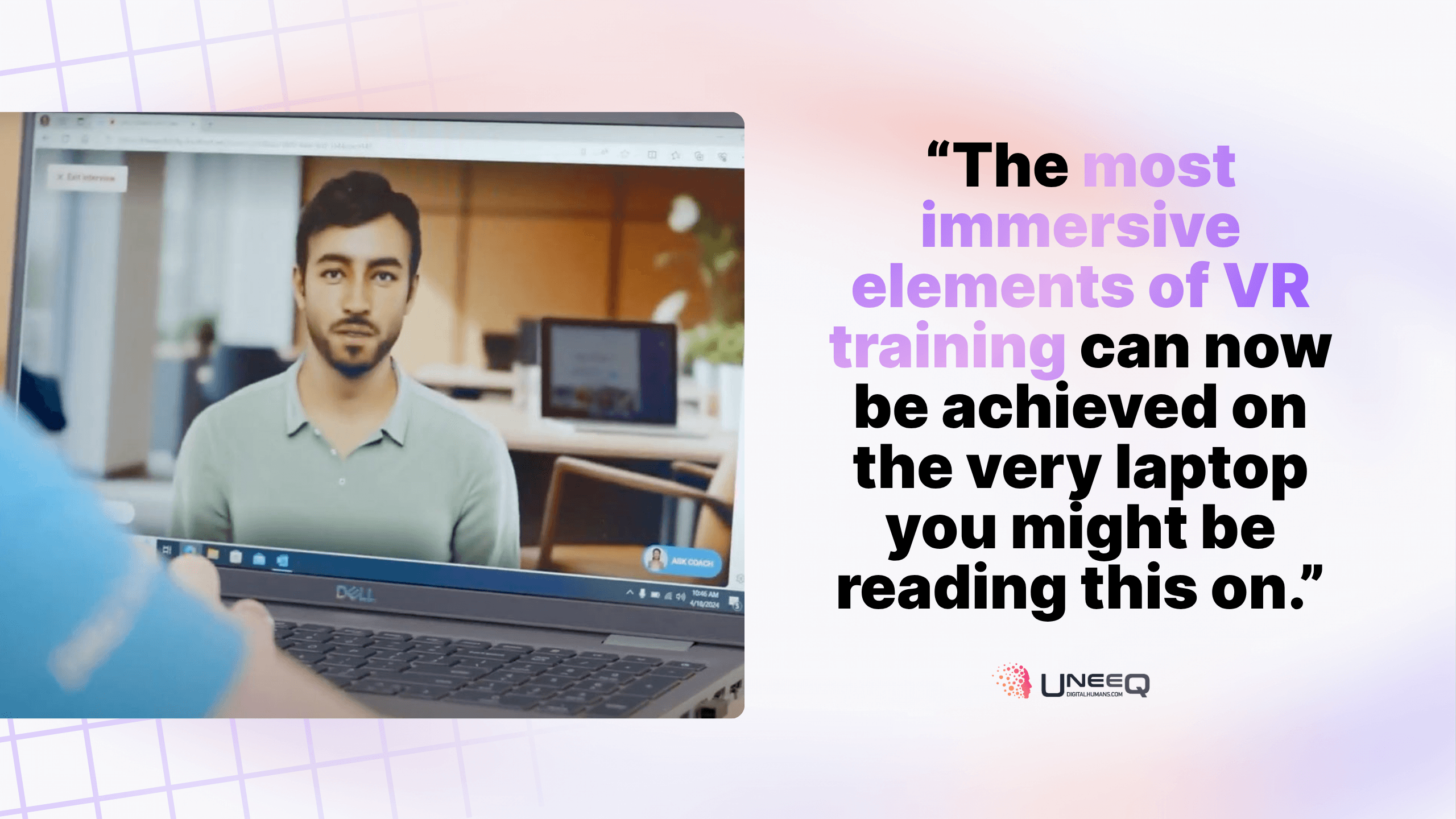
Indeed, the most immersive elements of VR training can now be achieved on the very laptop you might be reading this on.
We believe it's time to unplug the expensive hardware and see immersive learning (for want of a better phrase) as a state of mind — a place where users are able to suspend their disbelief and practice in environments that are realistic enough to improve their real-world skills — just as we’ve experienced with film, literature, and other arts throughout the years.
Because you don’t need a closet full of dusty, unloved headsets (nor a budget that would make a procurement team wince) to immerse people in learning and development content.
If VR works because it feels real, AI roleplay reaches a similar outcome in a far simpler way. By simulating people’s most important conversations and interactions.
UneeQ's Immersive Training Platform doesn't place your people in virtual worlds, but it will put them in the kinds of scenarios they'll actually face every day in their job.
That may be responding to objections in a sales call or navigating a difficult customer complaint. It might also be leadership training interactions, giving a performance review, or other soft skills training for managers.
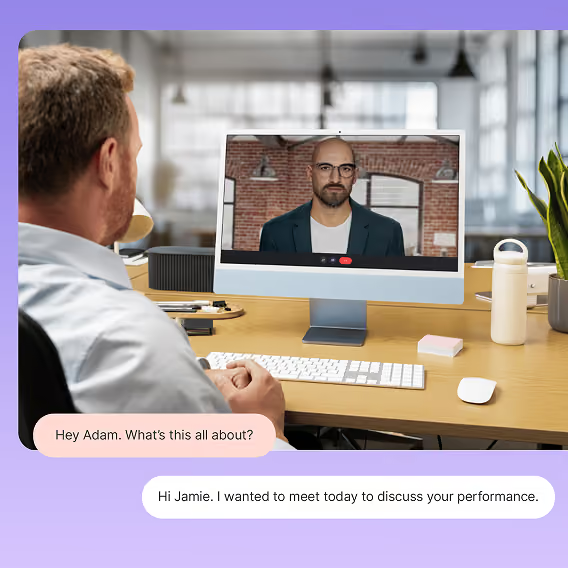
Roleplay platforms like ours enable your teams to practice these face-to-face conversations. With Immersive Training Platform, people roleplay with lifelike, emotionally intelligent digital humans who don't just respond and react but also adapt as discussions naturally evolve.
Our digital humans show emotions like disinterest, outrage, agreement, happiness, and many others as the situation progresses — training people how to read the room, not read from a script.
Your teams can test different approaches, refine their communication and build confidence before stepping into real-world interactions with customers, clients or colleagues. That immediacy is what gives the experience its impact.
No pilot gets to fly an airplane before they complete rigorous training in a simulator. The same can’t be said for sales people, customer service reps, leaders, and countless other professionals whose success depends on their people skills.
Like flight simulators (and VR simulations) AI roleplay creates a safe environment where mistakes carry no real-world consequences.
A sales rep failing an immersive training scenario where they learn how to negotiate on price isn’t a bad thing. It’s a learning experience, where they are coached on what went wrong and given the chance to go again.
Did you know, UneeQ’s Immersive Training Platform has an endorsement feature? Managers can see who has reached proficiency in a scenario and is ready for the real thing!

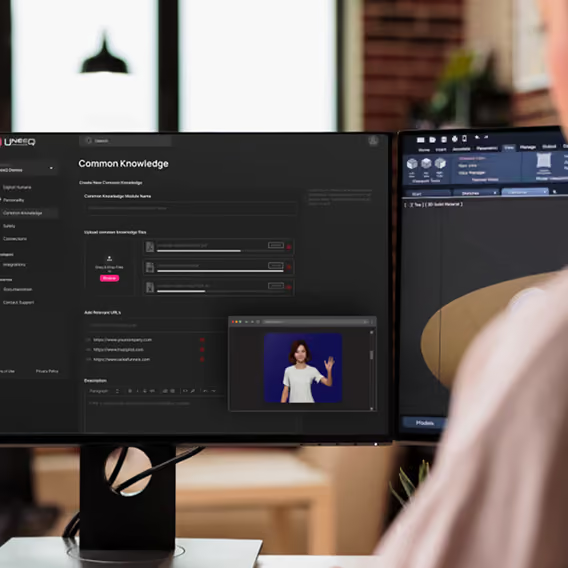
And great news for instructional designers, new exercises can be created quickly (we’re talking minutes) around your organization's specific products, services, buyer profiles, compliance procedures, organizational priorities, etc. It’s far easier to keep your training up to date with immersive learning when VR worlds don’t need to be created.
The feedback your employees receive is also instant and detailed through AI roleplay. Your employees will know what their strengths and weaknesses are, as well as where (and how) they can improve. Managers, meanwhile, can clearly see how individuals and teams are progressing through sophisticated analytics.
The goal is to create immersive training that helps people perform better. But with AI roleplay, you can do this without many of the barriers that VR has traditionally placed in the way.
Did you know, after every session on UneeQ’s Immersive Training Platform, learners get the opportunity to discuss their scores with their very own AI coach, where they can better understand what went well and how they can improve?
Well, it’s complicated. VR training will no doubt continue to be useful for creating immersive training environments that are dangerous, spatial, or expensive to do in real life.
But it has to be acknowledged that VR usage in corporate L&D has collapsed over the past couple of years — and there’s a good reason for that.
With 2026 training budgets under pressure and training ROI under the spotlight, expensive headsets with long content-development cycles are a luxury.
Ultimately, putting VR learning trends aside, the technology you use matters far less than the effectiveness of training.
A huge part of efficacy comes from the ability to immerse people in realistic training environments.
That’s very much possible today without VR — for a fraction of the price, and with incredible outcomes. Ready to learn more? You can book a demo here. We’d love to show you how browser-based immersive training can work for you.