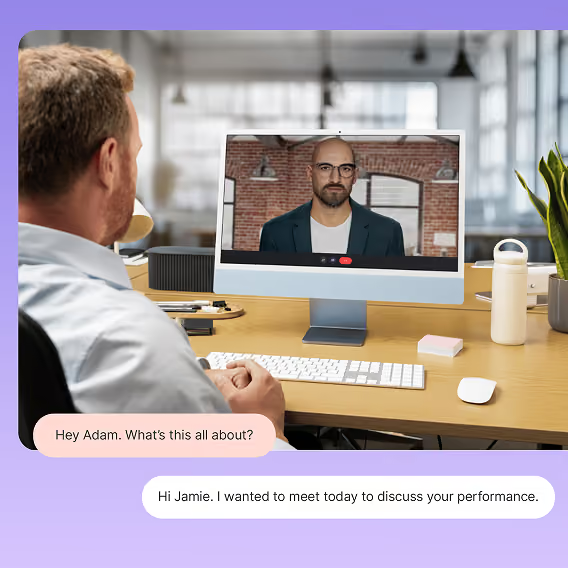
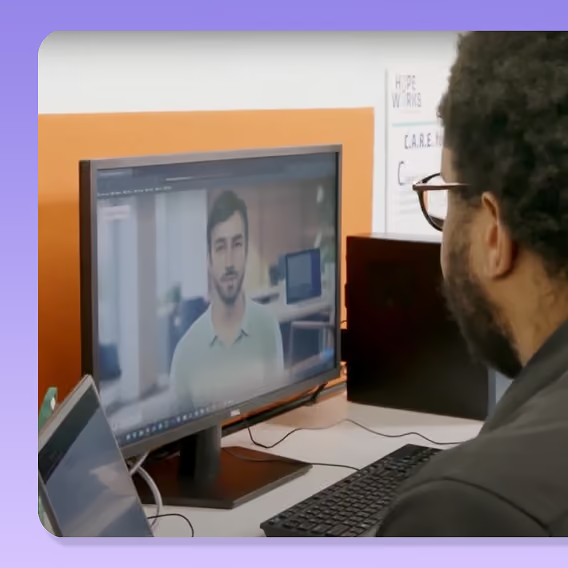
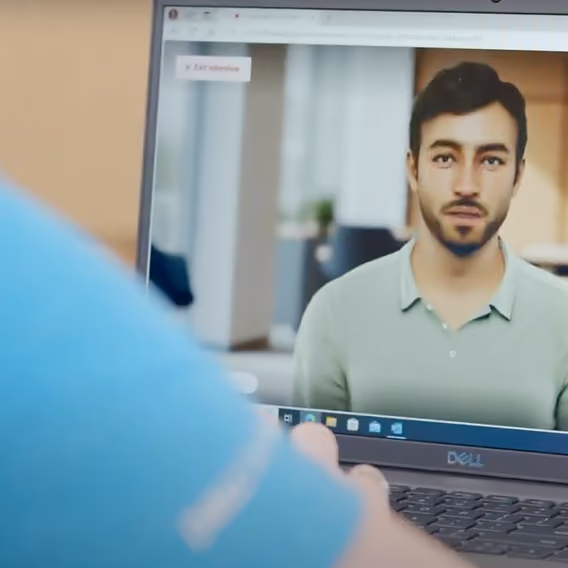
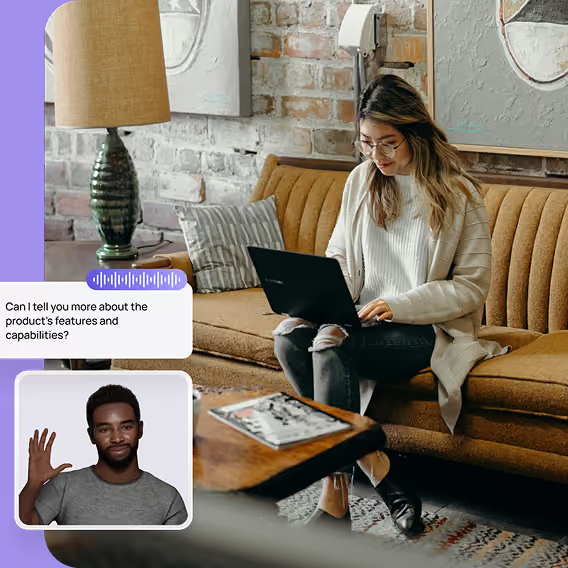
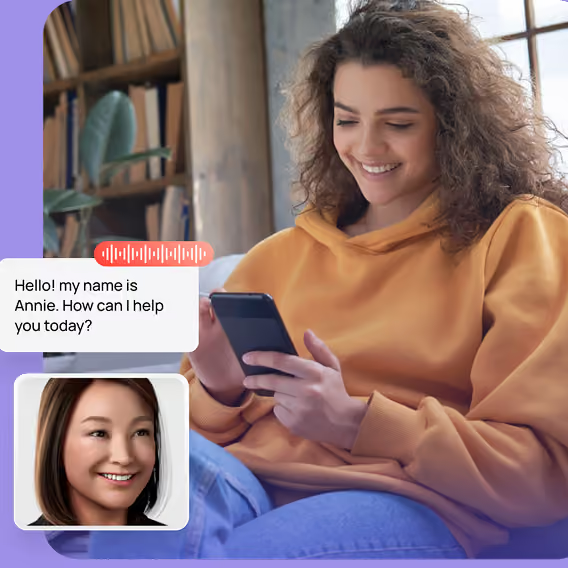
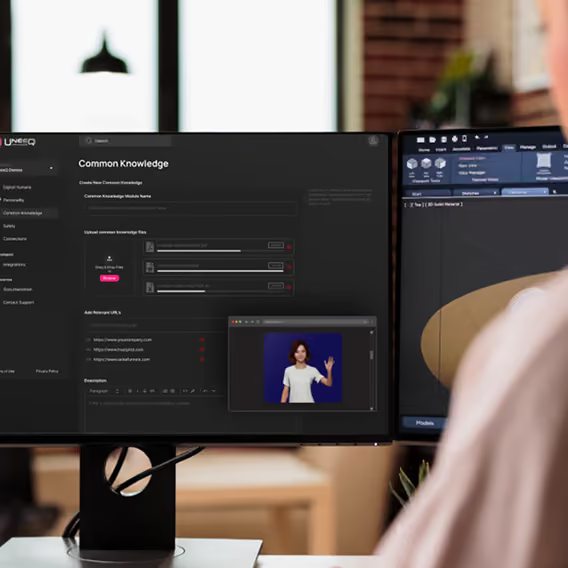
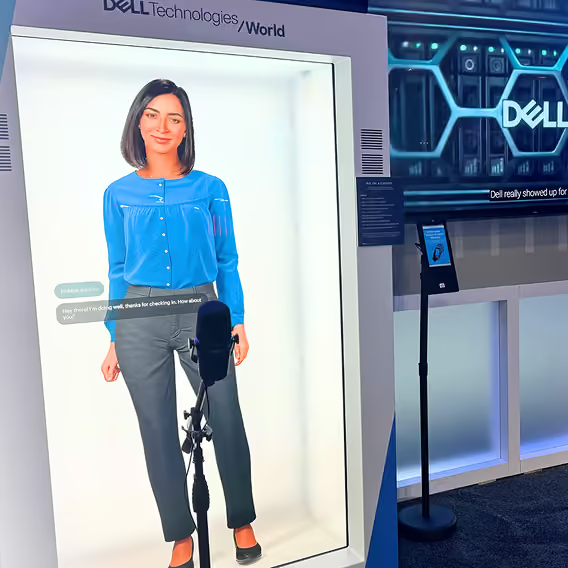
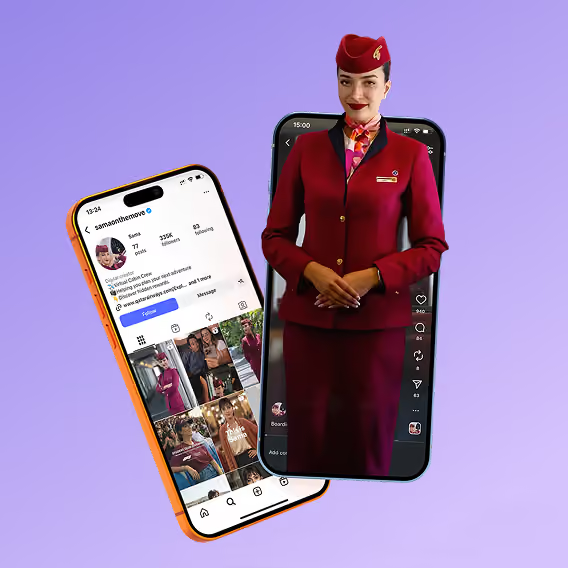
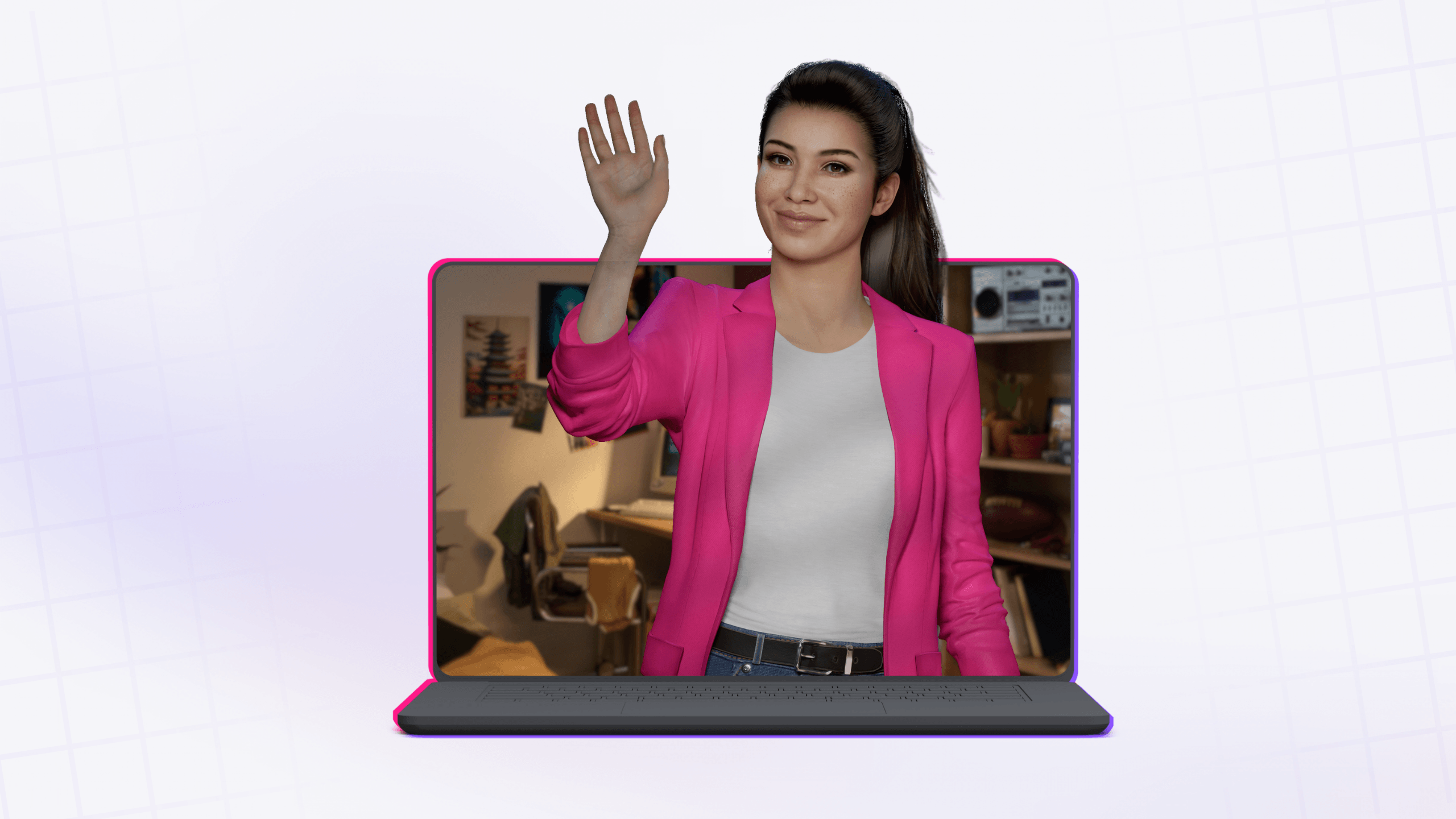
Digital humans have evolved from experimental novelty to a technology enterprises increasingly use to stand out in a digital-first world. With 89% of customers preferring digital humans over traditional chatbots and organizations reporting up to 300% increases in engagement, the technology has proven its value for customer experience, brand engagement, and employee training.
The industry traces its origins to 2016, when UneeQ's Piers Smith sketched the conceptual architecture for modern digital humans on a napkin. That vision became reality through the Nadia project for Australia's NDIS—a groundbreaking digital human voiced by Cate Blanchett, designed to help people with disabilities access government resources. Co-created by UneeQ (then known as FaceMe) and Soul Machines, Nadia proved that digital humans could serve meaningful, accessible purposes, setting the foundation for today's enterprise applications.
But not all digital human solutions are created equal. This guide compares the leading providers across two distinct categories: real-time interactive digital humans powered by CGI technology, and AI video avatar platforms that generate pre-recorded content using deepfake technology. Understanding this distinction is crucial for making the right choice for your organization.
Understanding the technology: CGI vs. Deepfake
1. CGI-powered digital humans (real-time interactive)
CGI-based digital humans are created by skilled artists using game engine technology like Unreal Engine. They respond in real-time to user input, holding genuine two-way conversations with sub-second response times. This approach avoids the 'uncanny valley' effect—that unsettling feeling when something looks almost-but-not-quite human—creating experiences that feel comfortable and engaging.
Real-time conversational interaction.
Two-way dialogue with emotional intelligence.
Professionally designed to avoid uncanny valley.
Engaging video-game-like technology to interface with.
Best for: Customer experience, brand ambassadors, immersive training.
2. Deepfake-based AI video avatars (pre-recorded content)
Deepfake technology uses AI neural networks to generate synthetic video of human likenesses. These avatars produce either one-way, pre-recorded video content or, increasingly, real-time interaction. They are often low-cost and very fast to create, making them ideal for small to medium-sized business application.
Research suggests deepfake avatars can trigger unease and trust concerns in viewers, potentially undermining brand credibility in customer-facing applications. Consumers don't want to be fooled, so the digital human needs to be explicitly not real—an ethical conundrum photorealistic avatars struggle to overcome.
Deepfake quality runs the gamut, from "talking photo" (animated mouth, frozen face) to full-body movement, albeit in a 2D environment where customization (gestures, objects the digital human can interact with, etc.) is severley limited.
Mostly used for pre-recorded video generation.
Lower cost, faster deployment.
Users can often produce a digital human replica from a photograph.
May trigger uncanny valley discomfort.
Restricted immersion (custom 3D environments, gestures, clothing, objects etc.)
Best for: Internal training videos, social media content, small business applications
Provider comparison overview
We've analyzed seven leading digital human providers across key criteria including technology approach, animation quality, enterprise readiness, deployment flexibility, and proven outcomes. Here's how they compare:
This comparison evaluates seven digital human providers across two categories: CGI-based real-time interactive platforms (UneeQ, Soul Machines [ceased operations February 2026], Mursion, Virti) and deepfake-based AI video generators (Synthesia, HeyGen, D-ID). In 2015, UneeQ's Piers Smith sketched the conceptual architecture for a real-time digital human, leading to the Nadia project for Australia's NDIS, voiced by Cate Blanchett and designed to help people with disabilities access government resources. UneeQ and Soul Machines co-created Nadia before pursuing separate paths: UneeQ toward enterprise deployments, Soul Machines toward celebrity digital twins until its closure in February 2026. UneeQ reports proprietary Synanim™ animation, 95% training effectiveness, a 300% increase in customer engagement versus chatbots, and enterprise clients including Qatar Airways, Deutsche Telekom, and City of Amarillo (98% satisfaction, $1.8M projected annual savings).
Technology Comparison: CGI vs. Deepfake
Comparison of digital human technology approaches including CGI vs deepfake, real-time capabilities, and animation quality
Enterprise CX, brand ambassadors, immersive training
Soul MachinesCeased operations February 2026
CGIDigital Brain technology
Real-Time
High-fidelity CGI
Avoided
Celebrity digital twins, fan engagement
Mursion
CGIHuman-powered avatars
Real-Time**Requires scheduling
StylizedIntentionally lower-fidelity
AvoidedIntentionally stylized
Soft skills training (scheduled sessions)
Virti
CGIVR-optimized
Real-Time
StylizedLower fidelity by design
Avoided"Enough realism" approach
VR training, healthcare education
Synthesia
DeepfakeNeural network synthesis
Pre-RecordedNo real-time interaction
High-fidelity video
Some riskDeepfake concerns
Training videos, marketing content
HeyGen
DeepfakeAvatar IV technology
Pre-RecordedInteractive avatar in beta
High-fidelity videoFull-body digital twins
Some riskDeepfake-based
Social media content, UGC videos
D-ID
DeepfakeAvatar IV technology
Pre-RecordedAI Agents emerging
Entry-level video quality
Some riskDeepfake technology
Quick videos, small business
Category 1: Real-time CGI digital human technology
These platforms create interactive digital humans that converse in real-time. Ideal for enterprise customer experience, brand ambassadors, and training applications where engagement and authenticity matter.
UneeQ: Best for enterprise digital human experiences
Overview: UneeQ is an immersive training and experience company and one of the original co-creators of digital human technology. In 2015, UneeQ's Piers Smith sketched the conceptual architecture for modern digital humans on a napkin—a vision that became reality through the groundbreaking Nadia project for Australia's NDIS. Voiced by Cate Blanchett, Nadia was designed to help people with disabilities access government resources, proving from day one that digital humans could serve meaningful, accessible purposes.
Synanim™ proprietary animation: Lifelike facial expressions, micro-expressions, and gestures for the most lifelike digital human experiences.
Comprehensive platform: UneeQ Studio (brand ambassadors), Immersive Training Platform (learning and development), and bespoke digital human creation.
Open architecture: LLM-agnostic, integrates with your existing tech stack—no vendor lock-in.
Enterprise-grade: SOC 2 Type II certified, GDPR compliant, flexible deployment (cloud, hybrid, on-premise).
White glove service: End-to-end partnership from strategy through deployment and ongoing optimization, built for enterprise success.
Proven outcomes:
95% training effectiveness (vs. 20-30% traditional e-learning)
3X higher user recommendation scores
300% increase in customer engagement vs. chatbots
City of Amarillo: 98% user satisfaction, 16,800 queries in first 8 weeks, $1.8M projected annual savings
Notable enterprise clients: Qatar Airways, Deutsche Telekom, Saudi Tourism Authority, City of Amarillo, PwC, Pearson Education, Deloitte, Vodafone, Mercedes-Benz Consulting, General Organization for Social Insurance (Saudi Arabia).
Best for: Enterprise organizations seeking comprehensive digital human solutions with maximum flexibility, premium quality, and white-glove support. Ideal for customer experience transformation, AI brand ambassadors, and immersive training at scale.
Soul Machines: Strong CGI with celebrity focus
Overview: Founded in 2016 in New Zealand, Soul Machines co-created the foundations of digital human technology alongside UneeQ (then known as FaceMe) through the pioneering Nadia project for Australia's NDIS. While both companies share this origin, they've since pursued different paths: Soul Machines has gained recognition for creating digital twins of celebrities including Carmelo Anthony, Will.i.am, and Jack Nicklaus, enabling fans to interact with AI versions of their favorite stars.
Key features:
Experiential AI™: Patented technology for emotionally responsive digital humans.
Celebrity digital twins: Expertise in creating interactive versions of celebrities.
Digital Workforce product: Ready-to-deploy digital workers for HR, sales, healthcare
Best for: Organizations interested in celebrity digital twins and fan engagement applications. Their consumer-focused approach works well for entertainment and brand activations, though enterprise deployments may require more customization.
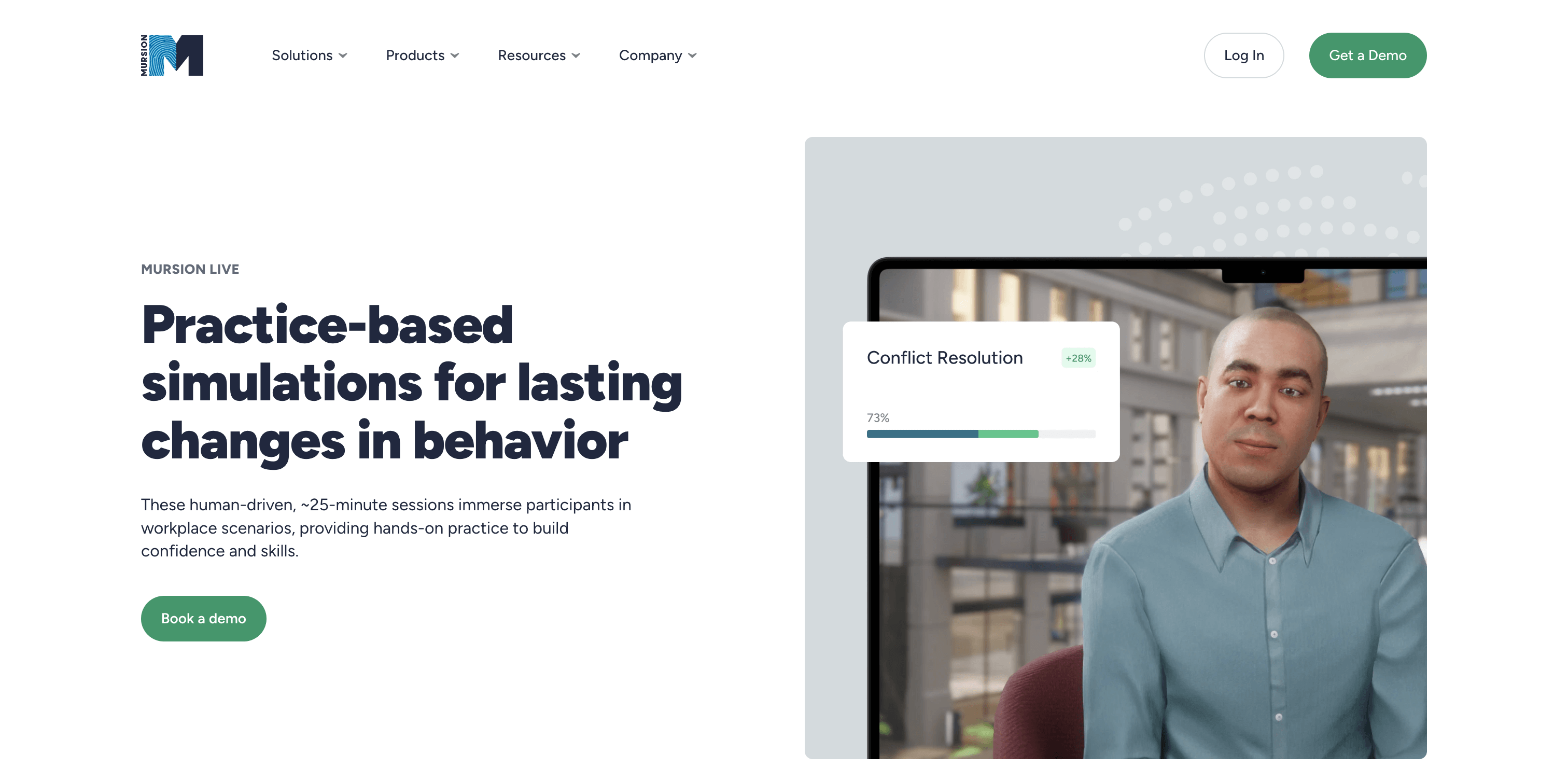
Mursion: Human-powered simulation training
Overview: Mursion takes a unique approach by combining AI-driven avatars with live human 'Simulation Specialists' who control the characters in real-time. This human-in-the-loop model creates realistic training simulations but requires scheduling and has higher per-session costs.
Key features:
Human-powered avatars: Live operators drive realistic improv-based interactions.
Session-based model: Scheduled sessions (~$49-164 per person per session).
Lower-fidelity CGI: Stylized avatars prioritize functionality over photorealism.
Notable clients: Best Western, Ericsson, educational institutions, healthcare organizations.
Best for: Organizations prioritizing human nuance in training simulations and willing to accept scheduling constraints and per-session pricing. Less suitable for 24/7 customer-facing applications or unlimited practice scenarios.
Virti: VR-first immersive learning
Overview: Virti is an AI role-play and video training platform that emphasizes virtual reality (VR) deployment. Their 'Virtual Humans' are designed for healthcare, sales, and leadership training scenarios, with a no-code platform for creating simulations.
Key features:
VR-optimized: Strong focus on virtual reality headset deployment.
No-code scenario builder: Create training content without technical expertise.
360-degree video: Immersive video experiences alongside AI characters.
Lower-fidelity avatars: Engagement potential hampered by low-quality CGI.
Affordable entry: 14-day free trial, tiered pricing for smaller orgs.
Best for: Organizations with existing VR infrastructure seeking an affordable training platform. The lower-fidelity avatar approach potentially trades visual realism for cost efficiency. Less suitable for customer-facing brand experiences.
Enterprise Features & Capabilities
Comparison of enterprise features including security, deployment, integration, and support options
Provider
SOC 2 Certified
GDPR Compliant
On-Premise Deploy
LLM Agnostic
White Glove Service
UneeQ
Type II
Yes
Full support
Any LLM
Comprehensive
Soul Machines
Yes
Yes
Limited
Partial
Enterprise tier
Mursion
Yes
Yes
Not supported
N/A
High-touch
Virti
ISO 27001
Yes
Not supported
Limited
Enterprise tier
Synthesia
Type II
Yes
Not supported
Not supported
Enterprise tier
HeyGen
Yes
Yes
Not supported
Not supported
Enterprise tier
D-ID
In progress
Yes
Not supported
Not supported
Self-service
Category 2: AI video avatar platforms (deepfake-based)
These platforms generate pre-recorded video content using deepfake technology. They're designed for content creation rather than real-time interaction. While cost-effective for producing training videos and marketing content, they're not suitable for interactive customer experiences or brand ambassadors that require genuine conversation.
Synthesia: Leading AI video generation
Overview: Synthesia is the market leader in AI video generation, enabling users to create professional videos from text scripts. The platform uses deepfake technology to animate AI avatars, producing one-way video content in 140+ languages. Recently valued at $2.1 billion following a $180M Series D round.
Key features:
Text-to-video: Generate videos from scripts "in minutes".
230+ stock avatars: Diverse pre-built presenters.
140+ languages: Multilingual voice synthesis and lip-sync.
Custom avatars: Create digital twins (Enterprise tier only).
SCORM export: LMS integration for training content.
Limitations:
No real-time interaction—pre-recorded content only.
Deepfake technology may trigger viewer unease.
Not suitable for customer-facing brand experiences.
Best for: Internal training videos, marketing content at scale, and organizations needing quick video production without studio costs. Not recommended for interactive customer experiences or premium brand ambassadors.
HeyGen: Creator-focused video platform
Overview: HeyGen has evolved from a creator tool to an enterprise-grade AI video platform. Their Avatar IV technology produces full-body digital twins, and they offer 1,000+ stock avatars with support for 175+ languages and dialects.
Key features:
Avatar IV: Latest generation full-body digital twins.
1,000+ avatars: Extensive library including UGC-style presenters.
Video translation: Lip-sync dubbing in 175+ languages.
Enterprise features: SOC 2, GDPR, team collaboration.
Limitations:
Primarily pre-recorded video content generation.
Deepfake-based approach may stray into "AI slop", impacting engagement and brand trust in some applications.
Best for: Content creators, marketing teams, and organizations needing scalable video production. Strong for social media content and training videos, but not designed for real-time customer interactions.
D-ID: Accessible video creation
Overview: D-ID gained recognition for Deep Nostalgia (animating old photos) and now offers Creative Reality™ Studio for business video creation. They've recently acquired simpleshow to expand their explainer video capabilities.
Key features:
Photo-to-video: Animate any photo into a speaking avatar.
Creative Reality Studio: Self-service video creation platform.
AI Agents: Conversational avatars (newer capability).
PowerPoint plugin: Add presenters to slide decks.
Limitations:
Lower visual fidelity than purpose-built enterprise solutions.
Deepfake concerns for brand-sensitive applications.
Best for: Small businesses, individual creators, and teams needing quick, affordable video content. Entry-level option for organizations exploring AI video without major investment.
Solutions & Use Cases
Comparison of solutions including customer experience, brand ambassadors, training, and content creation
Provider
Customer Experience
Brand Ambassadors
Immersive Training
Video Content
Bespoke Creation
UneeQComprehensive platform
Website, apps, kiosks
Via UneeQ Studio
Training Platform
Via UneeQ Studio
Full service
Soul Machines
Website, apps, kiosks
Celebrity focus
Limited
Unknown
Supported
Mursion
Not supported
Not supported
Human-powered
Not supported
Not supported
Virti
Not supported
Not supported
VR focus
360° video
Not supported
Synthesia
Not real-time
Pre-recorded only
Videos only
Core strength
From video recording
HeyGen
Not real-time
Pre-recorded only
Videos only
Core strength
From video recording
D-ID
Not supported
Not supported
Videos only
Supported
From video recording
How to choose the right digital human provider
Step 1: Define your use case
Customer experience & brand ambassadors
If you need digital humans to interact with customers, represent your brand 24/7, or serve as AI concierges, you need real-time CGI technology. Deepfake-based platforms cannot provide genuine conversational experiences.
For immersive roleplay and soft skills training, you need platforms that enable realistic practice conversations. Pre-recorded video platforms cannot adapt to learner responses.
For creating scalable training content where interaction isn't required, AI video platforms offer cost-effective production.
→ Consider: Synthesia, HeyGen, D-ID.
Step 2: Evaluate enterprise requirements
Security & compliance: Does the provider offer SOC 2, GDPR, and industry-specific certifications? Can they deploy on-premise if required?
Integration flexibility: Will the platform work with your existing tech stack? Look for LLM-agnostic solutions that avoid vendor lock-in.
Scalability: Can the solution handle your volume—whether that's millions of customer interactions or thousands of training sessions?
Support model: Do you need white-glove service and ongoing optimization, or is self-service sufficient?
Proven track record: Has the provider successfully deployed for organizations similar to yours?
Step 3: Consider brand & trust implications
For customer-facing applications, the technology behind your digital human matters. CGI-based solutions are designed by artists to feel comfortable and trustworthy. Deepfake technology, while improving, can still trigger subconscious unease—potentially undermining the very brand trust you're trying to build. For premium brands and high-stakes customer interactions, CGI-based platforms offer the sophistication and reliability that enterprise clients expect.
Enterprise Features & Capabilities
Comparison of enterprise features including security, deployment, integration, and support options
Provider
SOC 2 Certified
GDPR Compliant
On-Premise Deploy
LLM Agnostic
White Glove Service
UneeQ
Type II
Yes
Full support
Any LLM
Comprehensive
Soul Machines
Yes
Yes
Limited
Partial
Enterprise tier
Mursion
Yes
Yes
Not supported
N/A
High-touch
Virti
ISO 27001
Yes
Not supported
Limited
Enterprise tier
Synthesia
Type II
Yes
Not supported
Not supported
Enterprise tier
HeyGen
Yes
Yes
Not supported
Not supported
Enterprise tier
D-ID
In progress
Yes
Not supported
Not supported
Self-service
Frequently asked questions (FAQs)
What's the difference between a digital human and an AI avatar?
Digital humans are interactive AI-powered characters that can hold real-time conversations, responding dynamically to user input with appropriate facial expressions and gestures. AI avatars typically refer to pre-recorded video presenters that deliver scripted content without real-time interaction capabilities.
Why does CGI vs. deepfake technology matter?
CGI digital humans are purpose-built by artists to avoid the 'uncanny valley'—that unsettling feeling when something looks almost-but-not-quite human. Deepfake technology, which synthesizes video from photos or video of real people, can trigger this discomfort, potentially undermining brand trust in customer-facing applications.
How long does it take to deploy a digital human?
Deployment timelines vary by provider and customization level. UneeQ can deploy stock digital humans in days for quick tests, enhance existing MetaHumans in 4-6 weeks, or create fully custom brand ambassadors in 3-6 months through UneeQ Studio. AI video platforms like Synthesia can generate individual videos in minutes, but don't offer interactive deployment.
What languages do digital humans support?
Leading providers support 70+ languages with natural voice synthesis. UneeQ supports multilingual capabilities for global teams, while platforms like Synthesia and HeyGen emphasize their 140+ language support for video content.
Can digital humans integrate with my existing systems?
Enterprise platforms like UneeQ offer open architecture with APIs that integrate with CRMs (Salesforce, HubSpot), LMS platforms, knowledge bases, and existing conversational AI investments. UneeQ's LLM-agnostic approach means you can use any AI provider—OpenAI, Anthropic, Google, or your own fine-tuned models—without vendor lock-in.
What ROI can I expect from digital humans?
ROI varies by use case. UneeQ reports 95% training effectiveness (vs. 20-30% for traditional e-learning), 300% higher engagement than chatbots, and clients like the City of Amarillo have seen 98% user satisfaction with $1.8M projected annual savings. For brand ambassadors, metrics include increased engagement, conversion rates, and 24/7 availability without proportional staffing costs.
Are digital humans secure for enterprise use?
Leading enterprise providers like UneeQ are SOC 2 Type II certified and GDPR compliant, with options for on-premise deployment, data residency controls, and guarantees that your data is never used to train their models. Always verify security certifications before selecting a provider for customer-facing or data-sensitive applications.
Proven Outcomes & Notable Clients
Comparison of proven outcomes, metrics, and notable enterprise clients
Provider
Key Metrics
Enterprise Clients
Experience
UneeQ
95% training effectiveness
300% engagement vs chatbots
98% user satisfaction (Amarillo)
$1.8M projected savings (Amarillo)
16,800 queries in 8 weeks
Qatar Airways, Deutsche Telekom, Saudi Tourism Authority, City of Amarillo, PwC, Deloitte, Vodafone, Mercedes-Benz Consulting, GOSI
10 years — co-creator of digital human technology (Nadia project, 2015)
Soul Machines
Celebrity engagement metrics
4.6x conversion rate reported (SK-II)
2.3% CSAT increase reported
Nestlé Toll House, P&G, WHO, Carmelo Anthony, Jack Nicklaus, Will.i.am
8 years — co-created Nadia with UneeQ before diverging; ceased operations February 2026
Mursion
~$84M revenue impact reported (Best Western)
90% of learners reported applying training to work
Best Western, Ericsson, educational institutions
9 years (founded 2015)
Virti
92% of learners reported feeling better prepared
No-code platform adoption
Healthcare institutions, universities
7 years (founded 2017)
Synthesia
90% faster video production reported
$2.1B valuation (2025)
60,000+ enterprise customers (video generation)
7 years (founded 2017)
HeyGen
Millions of users
Enterprise adoption growing
Marketing teams, content creators
~3 years (founded ~2022)
D-ID
Deep Nostalgia viral success
$47M+ funding
Warner Bros, Mondelez, small businesses
~7 years
Conclusion: Making the right choice in 2026
The digital human market has matured significantly, with clear differentiation between real-time interactive platforms and pre-recorded video generators. For enterprise organizations seeking to transform customer experience, build iconic brand ambassadors, or develop employees through immersive training, the technology approach matters as much as the features.
CGI-based platforms like UneeQ—with 10 years of pioneering experience, proprietary Synanim™ animation technology, and proven enterprise deployments for organizations like Qatar Airways and Deutsche Telekom—set the standard for quality, reliability, and outcomes. Their comprehensive approach (UneeQ Studio + Immersive Training Platform + bespoke creation) combined with open architecture and white-glove service makes them the clear choice for enterprises that won't compromise on brand experience.
For organizations with simpler needs—internal training videos, marketing content at scale, or initial experiments with AI-generated media—platforms like Synthesia and HeyGen offer accessible entry points. Just recognize that these tools generate content, not conversations.
The bottom line: If your digital human will represent your brand to customers, and brand reputation is high on your list of priorities, you need CGI-based real-time technology from a provider with enterprise-grade security and proven results. If you're producing videos at scale for internal consumption, AI video platforms can offer cost-effective production. Choose the right tool for your specific needs—and ensure your provider can grow with you as your digital human strategy matures.
Quick Reference: Which Provider Is Right For You?
Quick reference guide for selecting the right digital human provider based on use case
If You Need...
Best Choice
Why
Enterprise digital human experiences (CX, brand ambassadors, training)
UneeQ
10 years experience, comprehensive platform (Studio + Training), high-fidelity CGI, white-glove service, proven enterprise clients, open architecture
Celebrity digital twins (fan engagement, entertainment)
Soul Machines
Expertise in celebrity likenesses (Carmelo Anthony, Will.i.am), strong consumer focus
Human-powered training simulations (if budget allows per-session pricing)
Mursion
Live human operators, high-touch experience, strong in education sector
VR-focused training (with existing VR infrastructure)
Virti
VR-optimized platform, healthcare focus, affordable entry point
Scalable training video production (internal, not customer-facing)
Synthesia
Market leader in AI video, 140+ languages, SCORM export for LMS
Social media content at scale
HeyGen
Creator-focused, UGC-style avatars, strong video translation
Quick, affordable video creation (small business, experimentation)
D-ID
Low barrier to entry, photo-to-video, PowerPoint plugin


.png)