.png)



Training






Services









10 years ago I saw someone cry speaking to the first digital human. Today, it's clear how humanizing AI helps bring out the best in people.

I didn't expect to see someone cry.
It was 2016 and we were running a user test on a digital human we'd built for the National Disability Insurance Agency (NDIA) in Australia.
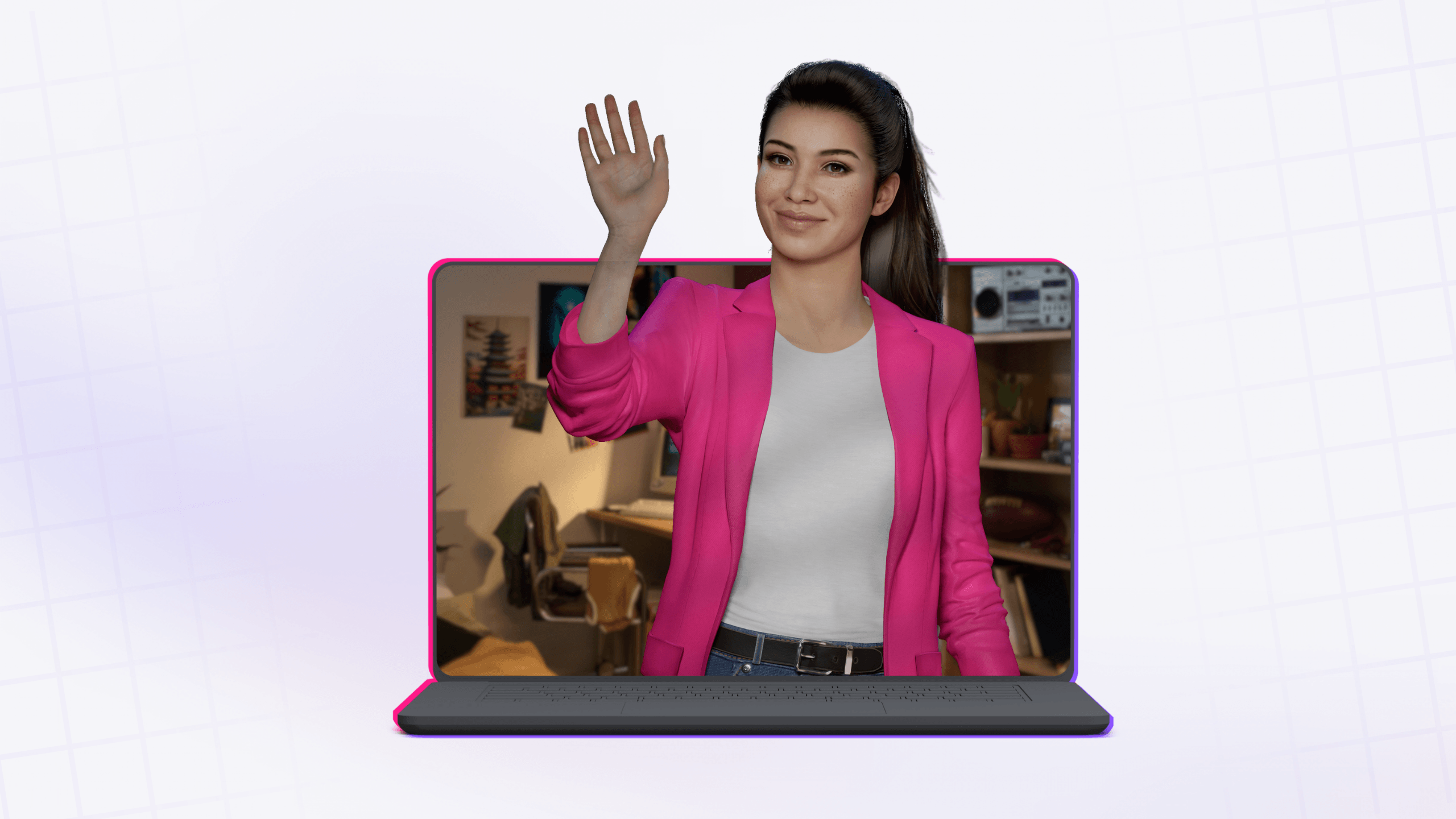
In a collaboration with IBM, Auckland University, and NDIA we built the first ever real-time interactive digital human experience, accessible on any browser. On reflection it changed my life. But back then, we didn’t know what the reaction was going to be.
All we knew is we’d put people in front of a screen, talking to something we'd made to be more human and accessible at scale than typical websites and self-service technology.
Our avatar wasn't perfect. It was still a little uncanny and very different from what we can do today, simulating emotion, personality, and empathy.
But something had happened: the person on the other side felt seen and valued. They felt a lack of judgement and were safe enough to say what they actually meant. Then came the smile — and the tears.
I'm writing this partly because of that moment. And partly because, after more than a decade building immersive digital human experiences for global brands, I keep running into the same uncomfortable truth: the closer machines get to imitating us, the more appreciation I develop for the difference between depth vs display.
Before I started an AI company, I had a video technology startup, primarily focused on frictionless video for call centers.
Our target industry was financial services, because we had discovered that trust was fundamental to outcomes, and that body language and emotional responsiveness was key to not just establishing trust quickly, but also supporting faster decision making and providing significantly higher customer satisfaction.
Side note: video contact centers have not really taken off yet, but I do believe the time is coming soon, because it’s the best way to leverage our human advantage over AI.
Then we started working with the disability community in Australia. The goal was simple and ambitious: make it easier for people to get support, ask questions, and feel understood.
The constraints were obvious. Two-hour wait times, people with disabilities stuck on hold — the demand for high-quality, face-to-face interactions kept rising. The contact center at that time couldn't keep up.
I can’t take the credit for what happened next. It was the CIO at that government department that led the innovative idea of “what if we put a digital human on the end of that video call” — AI represented in human-like form, designed for conversation and presence.
Not to replace humans; to give people access when humans weren't available.
And critically, we didn't build it in a lab; we designed and built it with the people it was for. The disability community shaped the behavior — the eye contact, the pacing, the tone. They told us when it felt right and when it felt off.
That co-design process is why someone cried in that testing room. It wasn’t because the technology was flashy and new; I believe it was because finally someone was paying attention.
Above: UneeQ's Digital Human Cardiac Coach was built following our work on Nadia for the NDIA.
Here's what I've learned from hundreds of customers building digital humans with UneeQ: AI today is incredibly sophisticated and offers amazing potential through pattern recognition, both in what it understands and what it can display. This enables us to scale many of the aspects of human skill and value in unprecedented ways.
While many focus on disruption of the workforce, it’s been my experience that the prize is actually how we can now deliver better experiences to a broader audience than ever before, and evolve the workforce to focus on the undeniable human advantages.
It comes from understanding what it means to be human, this is what I call depth.
Display is what AI can perform. Depth is what humans have lived. Both will have different but equally important roles in serving customers, patients, students, staff, and others.
What’s increasingly clear is organisations need to understand the value of both and apply the right strategy to maximize the potential of each.
When someone feels safe, they disclose more. They ask the question they were too embarrassed to ask. They admit they didn't understand the instructions. They stop performing, saying “I'm fine”, and they start telling you what's actually wrong.
That changes everything. In healthcare, it means better adherence. In customer service, it means more support without needing to wait for an actual person. In immersive learning, it means trainees focusing less on ‘performance’ and more on actually improving.
But here's the uncomfortable part: if your organization's default mode is to rush users, AI won't fix that. It will scale it. Faster throughput, more people feeling dismissed.
That person cried because we built something that took the time to listen. AI that offered a human experience.
Most of the conversation about AI runs binary: replacement or augmentation, optimism or fear. I get why, but I've found that framing pretty unhelpful in practice because it skips over the part that actually matters.
AI will keep taking more of the ordinary work we've been paid to do. That's already underway; and honestly, a lot of that work wasn't particularly good for humans anyway. Nobody dreams of growing up to be a policy router. The real question is what happens to the humans when the routine disappears.
When machines handle the consistent answers and the twentieth repetition of the same question, what's left?
In my experience, it's the stuff that never fit neatly into a script. Judgment when the context is messy. Building trust with someone who arrived already frustrated. Caring enough to slow down when slowing down costs you something.
These get called "soft skills," which has always struck me as a strange label for the things that are hardest to teach and most difficult to automate.
Here's my challenge: are you investing in depth as much as you're investing in display?
Display is what AI does well—appropriate responses, consistent tone, the right reaction at the right time. Depth is what humans bring: judgment shaped by experience, care that’s actually valued by customers. One scales; the other doesn’t. One builds trust; the other doesn’t
AI will continue to improve, and your competitors will have access to the same tools you do. The efficiency gains are real, but they'll spread fast precisely because they're available to everyone. If your entire strategy is "do more with less," you're in a race where the lead keeps shrinking.
Culture is how your people decide what they're actually here to do. It's how they treat customers when it would be easier not to. It's whether they take responsibility when the AI gives them a plausible-sounding answer but something still feels off. Culture determines whether "more automation" translates into "more humanity" or just "fewer humans."
I keep coming back to that user test because it clarifies something. The person cried because our digital human gave them time and space to say what they needed to say. That experience was, apparently, rare enough to be moving
And while I saw it as incredible validation of what was a brand-new technology back then, it probably says more about how often people feel rushed or dismissed in their interactions with organizations today.
Danny Tomsett is the CEO of UneeQ, where he's spent over a decade building digital humans that help organizations deliver better experiences at scale. This is the first in a series exploring what AI teaches us about being human.