.png)



Training


Services







When we look at what makes an effective leader, we see how important it is to train soft skills. But soft skills aren't easy. Let's take a look.

Here's a confronting truth: 70% of what separates an engaged team from a disengaged one comes down to the manager. That's not a small influence, that's almost everything! And it puts a serious emphasis on the importance of upskilling leaders to be their best, particularly when it comes to human skills, more commonly known as leadership soft skills.
Everyone wins when the leader gets better. Teams thrive. Retention improves. Performance climbs. And yet, almost 60% of first-time managers have never received any formal training in how to lead.
The good news? Leadership isn't a fixed trait. The best leaders tend to see themselves as students, not experts. As Simon Sinek puts it: "The best leaders I've ever met consider themselves students of leadership."
So what separates good leaders from great ones? Often, it comes down to the human side of leadership: the soft skills.
When you think of soft skills in leadership, you might immediately think of communication, team-work and problem-solving skills – but that's just the tip of the iceberg.
Other abilities that often fall within the soft skills umbrella include emotional intelligence, creativity, adaptability, critical thinking, and conflict resolution.
But what are the most important soft skills for leaders?
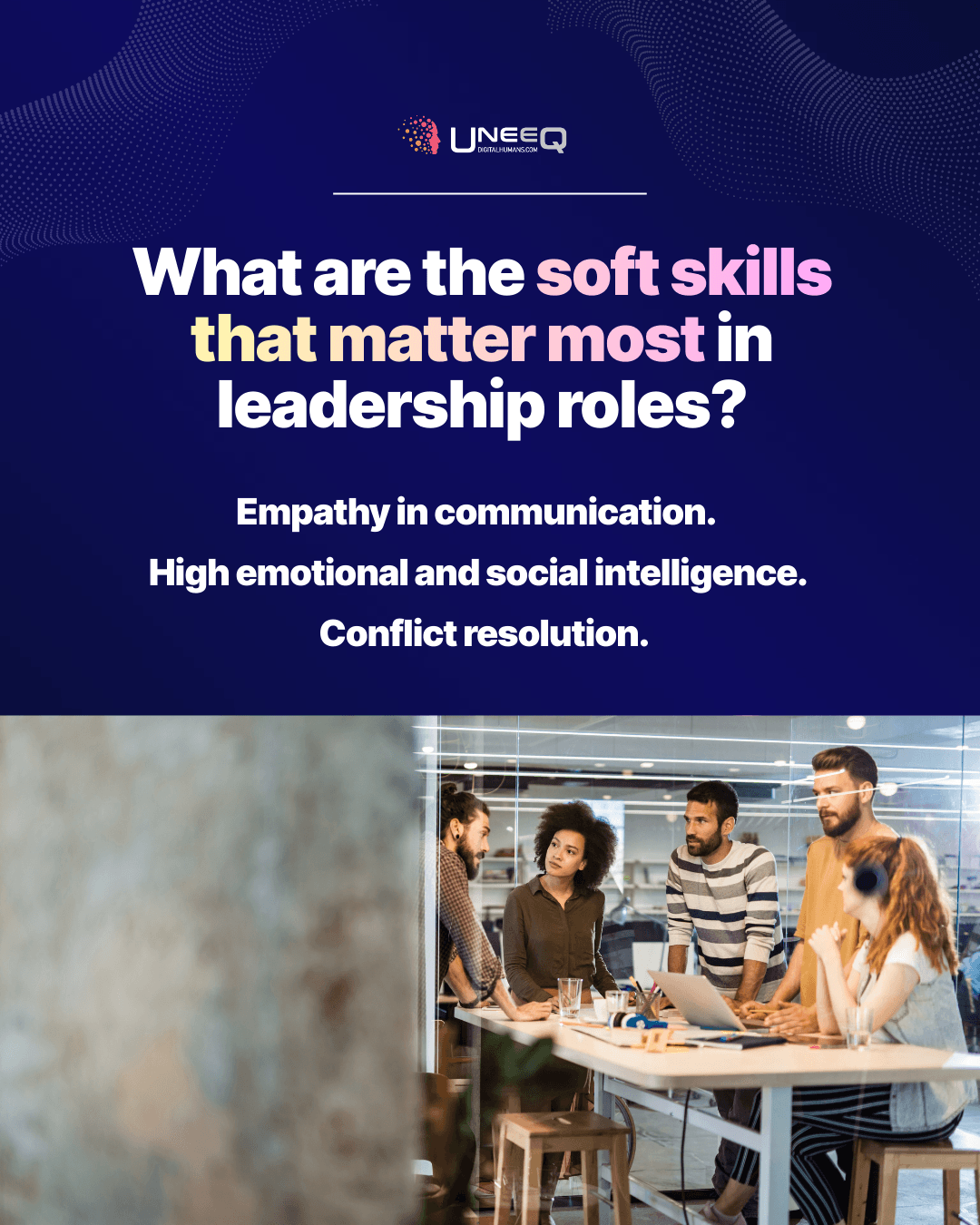
A recent Harvard Business study highlighted three key soft skills that businesses expect leaders to have in order to navigate the 'new normal' of constant disruption, technology advances, and hybrid work strategies. They are:
In other words, the best leaders are able to understand how their employees are feeling, communicate ideas clearly and empathetically, all while helping everyone work effectively together.
That is no small challenge! But with training, practice and a growth mindset, leaders can rise to meet this challenge. Because great leaders aren’t born, they’re trained.
When you start to look at how to develop these capabilities in the workplace through soft skills training, it’s important to remember that soft skills are actually really hard.
Contrary to old-school beliefs, they’re not something you’re born with; they can be trained like any other skill — and should be. Unfortunately, that’s not often the case.
Leaders are often undertrained, and not just in their soft skills. Less than half (44%) of managers worldwide say they’ve received formal management training, according to Gallup figures.
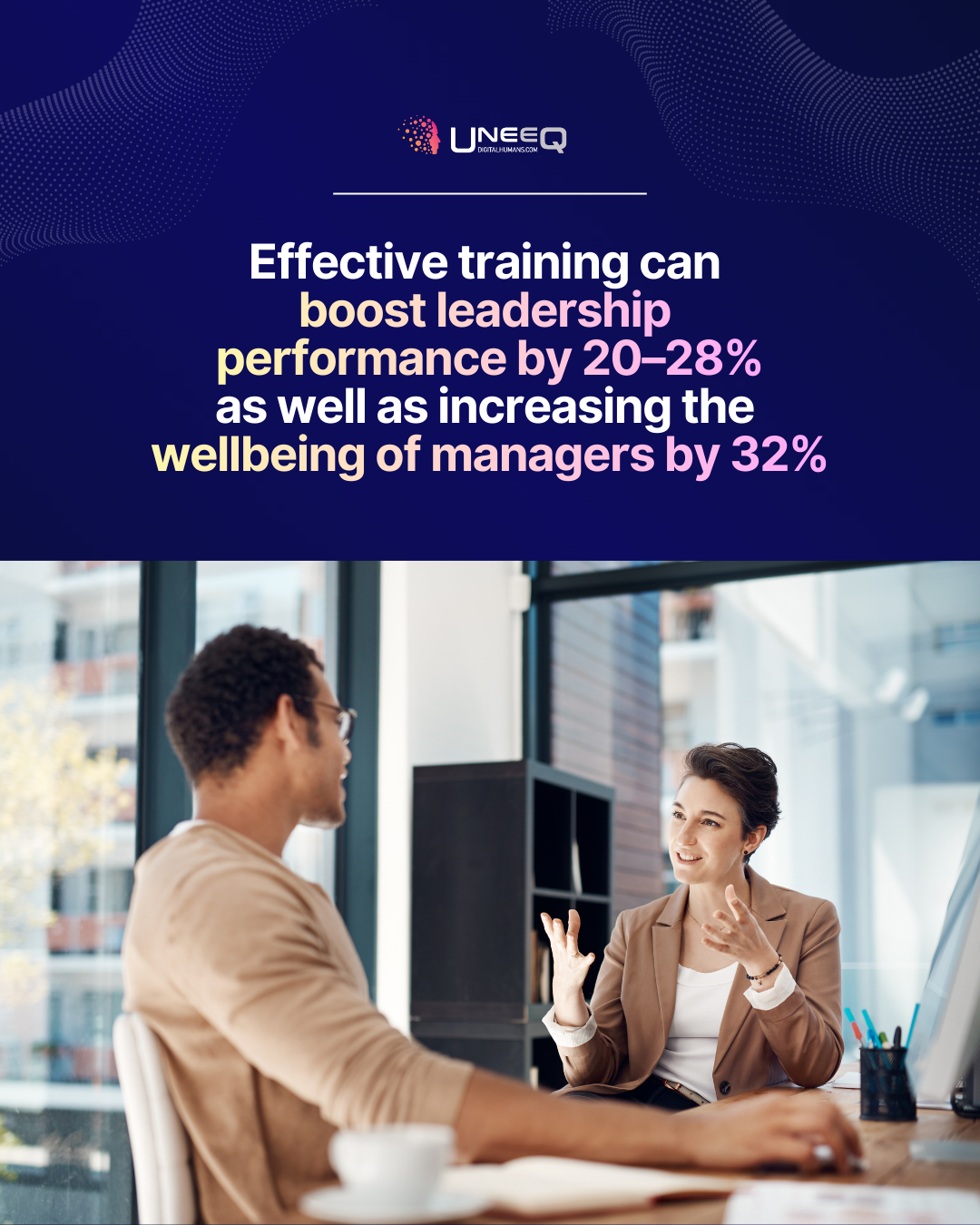
And yet, effective training can boost leadership performance by 20–28%, as well as increasing the wellbeing of managers themselves by 32%.
With soft skills training specifically, learning has to feel immersive and true to life. Instead of just learning frameworks or systems, leaders must practice real interactions — giving feedback, handling conflict, and leading with confidence.
Effective soft skills training needs to be practical and hands-on: think roleplay, coaching, workshops, or online practice. It focuses on trying things out, practicing adaptability and building confidence
This type of immersive training has been incredibly difficult to achieve in the past, let alone scale across global leadership and management teams. But a great and consistent way to do this today is through AI roleplay training.
The hardest part of training soft skills is being able to practice in the right environment — one where realism is high but the stakes are low. That's where roleplay usually comes in.
With traditional in-person roleplay, however, it can feel awkward or stilted and the scenarios are often unrealistic. For leaders especially, finding the time in their diaries to attend a soft skills training session can also be difficult.
And that’s before even getting onto the training, coaching, and travel costs!
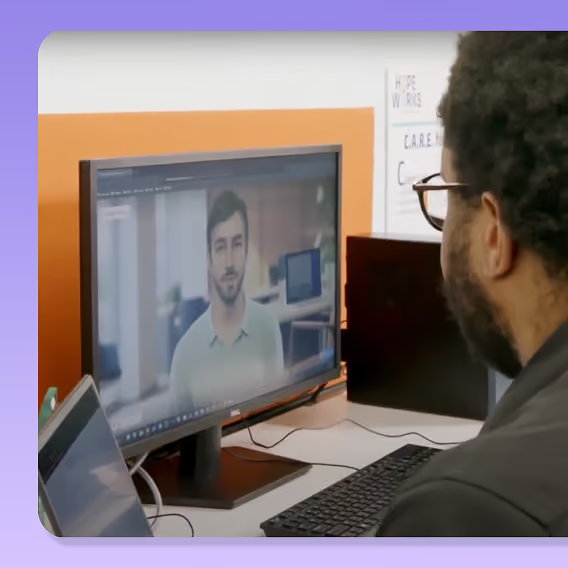
This is where AI roleplay adds real value. It provides scalable, realistic soft skills training across a range of scenarios, wherever you are, at whatever time you're available.
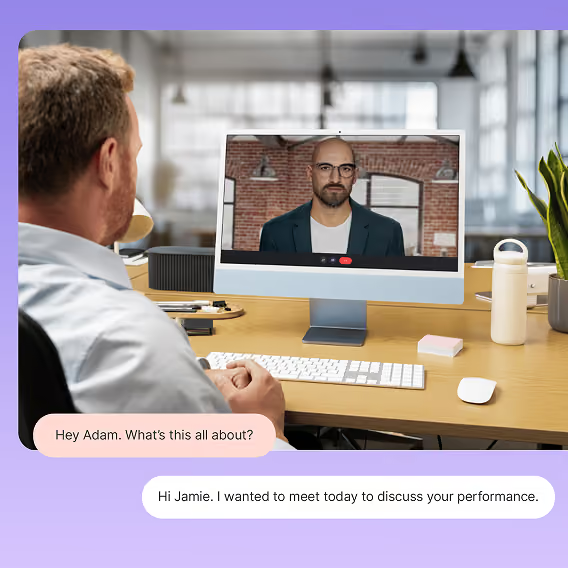
Take performance management, for instance. Having a conversation with an employee who is underperforming is never easy. Leaders have to be clear, fair, and open to employee feedback in the moment. They have to read body language and tone to understand how the employee is feeling, and might even have to diffuse a situation if it becomes emotional or negative.
These are difficult waters to navigate. And being well practiced helps leaders be more confident and comfortable in these difficult moments. Roleplaying with an AI is a safe space to do just that.
Now, I get that it might sound strange to practice soft skills with a machine. But that's exactly the point — AI gives leaders the emotional safety to stumble, experiment, and try new approaches without judgement and most importantly without practicing on a team member in a live and sensitive situation.
With AI roleplay, leaders can repeat scenarios as many times as you like, and get instant feedback each time based on success metrics established by their manager or L&D department.
Are these skills transferable? You bet they are. A recent study has shown that people who show strong leadership skills while working with an AI agent are also much more likely to be great leaders of human teams.
So think of AI roleplay as a flight simulator for being a better leader — one in which you can hone soft skills and build confidence, and where crashing is simply a learning opportunity.
Whether you’re a leader seeking better tools or a pioneering L&D professional, my team at UneeQ is here to help.
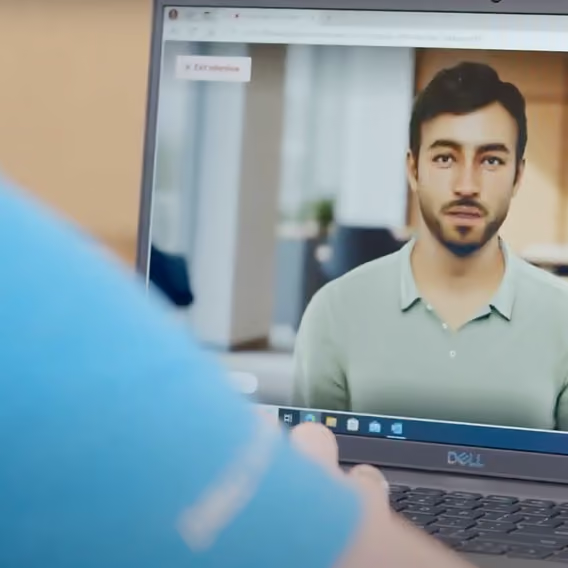
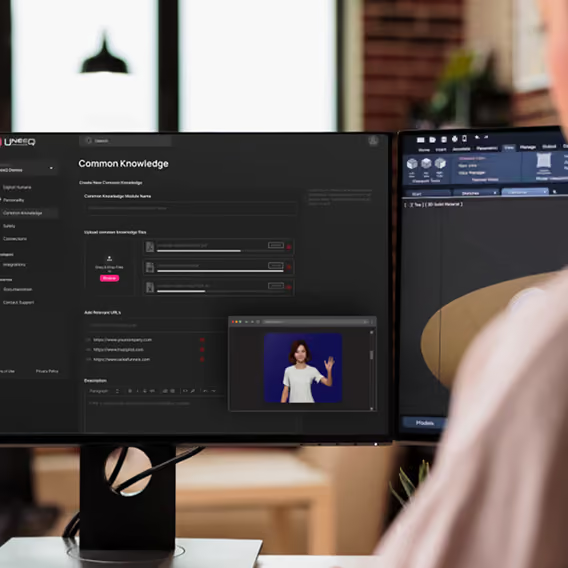
UneeQ’s Immersive Training platform is built for real-time roleplay. Our enterprise-grade solution lets teams set up the key leadership training scenarios they need, establish goals, connect your LMS, and simply start practicing.
Leaders will see their improvement over time, as they practice their most challenging conversations — either in preparation for a difficult discussion or simply as a way to reinforce their skills through ongoing training.
Does that sound like a bit of you? Simply get in touch and we’d love to show you how it works with a demo.