.png)



Training



Services








Comparing the best Tavus alternatives? See how UneeQ, Synthesia, and HeyGen stack up on interactivity, use cases, and price — and which fits your goals.

The best Tavus alternative depends on whether you want a real-time, two-way conversation or a polished one-way video. Tavus is a developer-first platform: it hands engineering teams the APIs and building blocks to assemble their own interactive video agents. If you want that same live interactivity but with ready-made use cases and less build time, an interactive digital human platform is the closer match. If you mostly need scripted, presenter-style videos at scale — for training libraries, explainers, or localized comms — an AI video generator like Synthesia or HeyGen will be faster and cheaper. Match the tool to the job: conversation or content.
If you've landed here, you're probably weighing up Tavus and wondering what else is out there. Fair enough; in a short amount of time, Tavus has built a genuinely impressive developer platform for real-time AI video, and a lot of teams love the control it gives them. But "control" and "building blocks" cut both ways. Plenty of buyers don't want a box of parts. They want the use case already built.
So this guide does two things. First, it sorts the market into the two camps that actually matter — interactive digital humans versus AI video generation — because picking the wrong camp is the most expensive mistake you can make. Then it breaks down the three alternatives worth knowing: UneeQ, Synthesia, and HeyGen. We'll keep the claims grounded, and we'll tell you plainly when a tool is great at something we're not.
We've been making digital human experiences for a decade. So here are some things we think you should know when choosing between Tavus or an alternative.
Tavus positions itself as a research-led platform for "human computing." Based on publicly available information, it offers two main things: a Conversational Video Interface (real-time, interactive AI humans) and Video Generation (script-to-video using AI digital twins). Its calling cards are developer-first, white-labeled APIs, bring-your-own LLM/voice, and low conversational latency.
Where Tavus fits well:
Where teams start looking elsewhere:
Almost every "AI human" tool falls into one of two buckets. Get this right and the shortlist sorts itself out.
These platforms hold a live conversation. The digital human listens, understands, responds, reads tone, and reacts in the moment — like a face-to-face exchange. This is what you need for assistants, concierges, AI ambassadors, and roleplay-based training where the whole point is the back-and-forth. Tavus and UneeQ live here. The difference is in execution (Tavus uses GAN technology to make its avatars while UneeQ uses CGI).
These platforms turn a script into a polished video with an AI presenter. The output is excellent and the workflow is fast, but it plays the same way every time. There's no listening and no reacting. This is the right tool for creating cheap training libraries, onboarding modules, product explainers, and localized comms — quickly. Synthesia and HeyGen live here. HeyGen and Synthesia have both added lighter "interactive" features more recently, but their core strength remains scripted video at volume.
Match the tool to the job. Here's which camp each need points to.
| What you need | The right camp | Examples |
|---|---|---|
| What you need A live, two-way conversation that reacts in real time | The right camp Interactive digital humans | Examples UneeQ, Tavus |
| What you need Scripted videos produced quickly at scale | The right camp AI video generation | Examples Synthesia, HeyGen |
| What you need Roleplay practice where the trainee must respond under pressure | The right camp Interactive digital humans | Examples UneeQ (Immersive Training Platform) |
| What you need A localized library of explainer or onboarding clips | The right camp AI video generation | Examples Synthesia, HeyGen |
Why this matters: if your real goal is a conversation and you buy a video generator, you'll end up with beautiful clips that can't talk back. And if you only need scripted video but you buy an interactive platform, you're paying for a conversation engine you won't use. The three alternatives below are organized with this split front of mind.
Whichever camp you land in, weigh these four things:
Do you need real-time, two-way conversation, pre-generated video, or both? Be honest about which one actually drives your outcome. Everything else is secondary to getting this right.
A developer toolkit is powerful but front-loads the work onto you: scoping the use case, wiring the orchestration, designing the experience, and maintaining it. Platforms with pre-built solutions (customer experience, brand ambassadors, sales or leadership training) get you to value faster because the hard thinking is already done.
Full-face animation, micro-expressions, natural pauses, and the ability to read and respond to emotion all decide whether an interaction feels human or hollow. For roleplay and CX especially, "good enough" avatars undermine the whole point.
APIs and SDKs matter, but so do deployment flexibility (cloud, hybrid, on-premise), bring-your-own-LLM, data privacy, and compliance such as SOC 2 and GDPR. The best platforms give you openness and proven enterprise hardening, not one at the cost of the other.
Pricing models differ wildly across these tools. Some are flat subscriptions, some are credit- or minute-based, and the interactive platforms are typically custom-quoted for enterprise needs. The table below summarizes publicly available information to help you compare at a glance. Treat it as a starting point, not gospel: figures change often, so confirm directly with each vendor.
Pricing models differ wildly across these tools — flat subscriptions, credit- or minute-based plans, and custom enterprise quotes. Use this as a starting point and confirm current figures directly with each vendor.
| Platform | Type | Starting price | Free trial | Notable cost considerations |
|---|---|---|---|---|
| Tavus | Interactive + video gen | From ~$59/mo* | Yes | Usage-based (conversation minutes, replicas, video credits); costs scale with volume and can be hard to predict; enterprise tiers add SOC 2/HIPAA options |
| UneeQ | Interactive digital human | Per seat, per month | Yes | Per seat per month, all features included (Immersive Training Platform). Enterprise pricing for Digital Human OS and XD Studios. |
| Synthesia | AI video generation | From ~$29/mo | Yes | Subscription + credit/minute limits; per-seat pricing; SCORM export, SSO/SAML and unlimited personal avatars sit on Enterprise |
| HeyGen | AI video generation | From ~$29/mo | Yes | Credit-based; premium avatar video consumes credits quickly; team/business tiers add 4K, collaboration, and SCORM export |
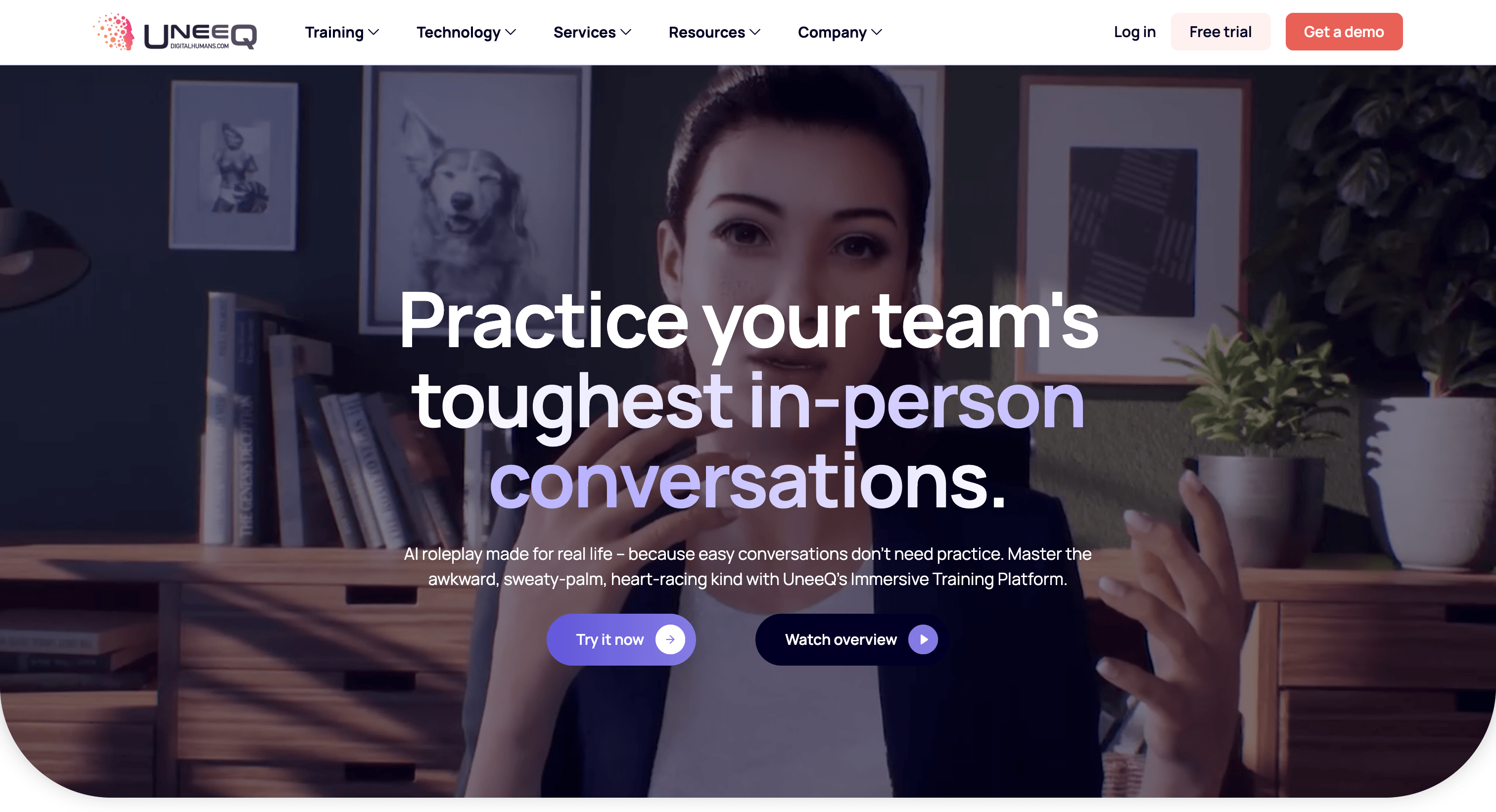
UneeQ sits in the same interactive camp as Tavus: real-time, two-way, face-to-face digital humans. But there are core differences.
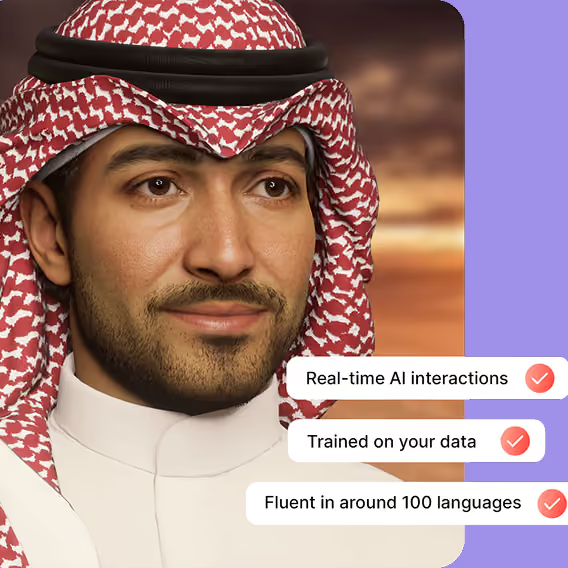
You may notice both digital human avatar types look noticeably different. UneeQ creates its digital humans using Unreal Engine, the leading 3D creation tool used in video games, movies, architecture, and more. These are 3D, full-body CGI characters custom built for brands and able to interact across various digital environments. Tavus's offering is Phoenix-4, a gaussian-diffusion rendering model that creates generative AI avatars at speed and scale.
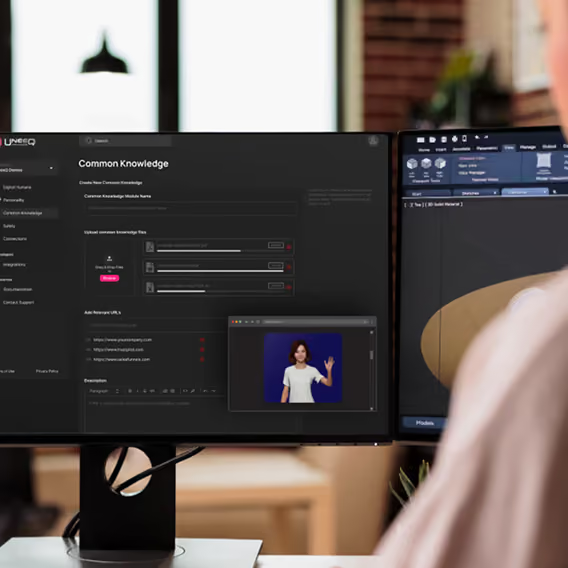
Another key difference is, where Tavus hands developers the building blocks, UneeQ shows up with the use cases already built for enterprise teams. UneeQ's technology platform, the Digital Human OS, combines proprietary Synanim™ animation with LLM orchestration to power lifelike interactions, and that same foundation drives distinct, ready-to-go offerings for enterprise buyers.
With a decade pioneering digital humans, UneeQ leans on proven, production-hardened deployments. Here's how the use cases break down.
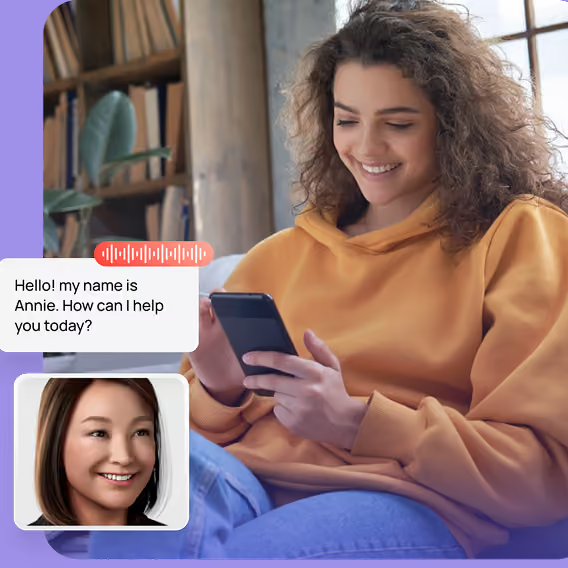
For customer experience leaders, CMOs, and innovation leaders who want an outcome rather than a development project, UneeQ offers ready-made ways to deploy an AI ambassador across websites, apps, kiosks, and immersive environments. These digital humans deliver human-like engagement that people genuinely prefer to chatbot or voice-only solutions: based on industry data, 89% of end-users prefer a digital human over a traditional chatbot, and digital humans can drive up to a 300% increase in customer engagement.
Best fit: CX leaders who want consistent, on-brand, 24/7 engagement across channels without staffing every shift; CMOs and innovation leaders who need a differentiated, headline-worthy experience that still ties back to measurable engagement.
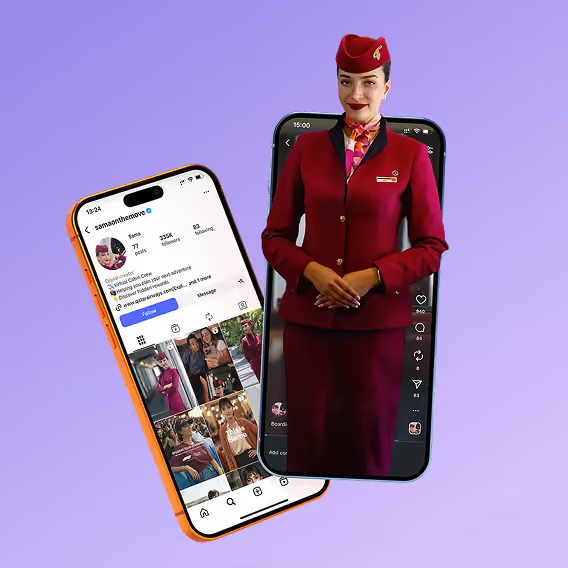
When "off-the-shelf" won't do, UneeQ XD Studio is the white-glove, end-to-end creative service that crafts a bespoke digital human ambassador for your brand — character, personality, cultural intelligence, voice, and deployment, all designed from the ground up. This is the path global brands take when they don't want to slap a face on their AI, but require an ambassador built for their brand and ready to embody it. Qatar Airways' Sama and Deutsche Telekom's digital human are examples of the calibre UneeQ Studio delivers.
Compared with assembling your own from a developer toolkit, the value here is strategic partnership: UneeQ does the hard craft and ongoing evolution so your team doesn't have to become a digital-human engineering shop.
Best fit: brand and marketing leaders at premium or high-profile organizations who need a one-of-a-kind, on-brand ambassador; teams that value a managed, expert-led build over DIY assembly and maintenance.
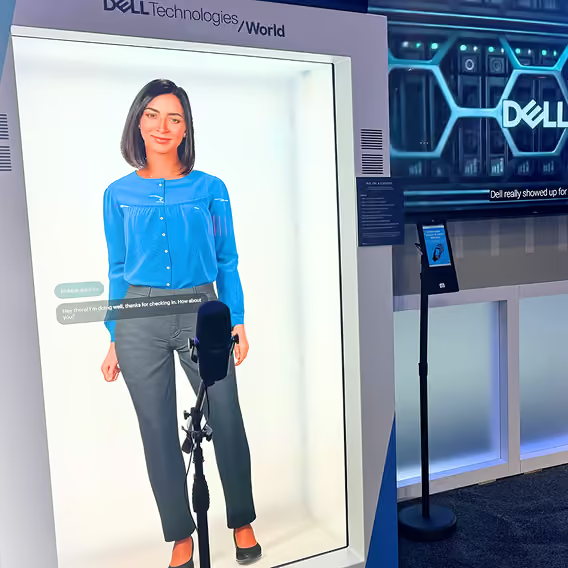
This is where UneeQ does something the AI video tools simply can't. The Immersive Training Platform uses emotionally intelligent digital humans to let employees practice high-stakes, face-to-face conversations — in a psychologically safe space, on repeat, before it counts for real. Because the digital human reacts to the trainee in real time, it can simulate an emotionally challenging, complex, relevant conversation and respond appropriately, training people to read the room, not just recite a script.
It's purpose-built for the learning domains enterprises care about most: sales, customer service, and leadership. Verified outcomes in active use include:
Scenario setup is super fast, and the platform offers enterprise-grade flexibility — bring-your-own-LLM, on-premise deployment options, and high customizability into existing enterprise software environments.
Best fit: L&D, enablement, and HR leaders at enterprises with large, distributed teams where human conversations drive outcomes; organizations that want to measure soft skills with data — not just tick a training box.
Where Tavus may suit you better: if you have an engineering team that wants to build a fully custom interactive video product, and you don't need UneeQ's pre-built use cases, Tavus's developer-first approach is a strong fit. If generative AI humanlike characters are your preference over CGI digital humans.
UneeQ is ideal for: real-time assistants and AI ambassadors, bespoke brand experiences, and roleplay-based training, where you want interactivity without building (and maintaining) the whole stack yourself.

Synthesia is one of the most established names in AI video generation. Synthesia turns scripts into presenter-led videos using AI avatars, with strong multi-language support and template-driven workflows. It's optimized for pre-generated content rather than live, two-way conversation, so it's a different camp from Tavus's interactive interface, even though both involve AI "people" on screen.
Where it shines:
Worth knowing:
Ideal for: teams whose core need is high-quality scripted video at volume, not real-time interaction. If you came to Tavus for its conversational interface, Synthesia solves a different problem — but it solves that problem very well.

HeyGen is a fast-moving AI video generator known for high-quality talking-head avatars and excellent video translation/localization. Based on publicly available information, it's a favorite for marketing clips, social content, and rapid multilingual production. Like Synthesia, its core is one-way scripted video — though it has added lighter interactive avatar and "video agent" features more recently.
Where it shines:
Worth knowing:
Ideal for: marketing and content teams that need polished avatar video fast, especially across languages. For real-time, reactive conversation, it isn't the tool; but for scaled video content, it's a strong pick.
A quick reference across the dimensions that decide the call. "Interactive" means real-time, two-way conversation; "video gen" means scripted, one-way output.
A quick reference across the dimensions that decide the call. “Interactive” means real-time, two-way conversation; “video gen” means scripted, one-way output.
| Dimension | Tavus | UneeQ | Synthesia | HeyGen |
|---|---|---|---|---|
| Primary mode | Interactive + video gen | Interactive | Video generation | Video generation |
| Scripted video generation | Yes | Limited | Yes | Yes |
| Real-time two-way conversation | Yes | Yes | Limited / newer | Limited / newer |
| Pre-built use cases | Developer toolkit | CX, brand, training | Templates (video) | Templates (video) |
| Bespoke, managed build | Self build | Yes (UneeQ Studio) | Self build | Self build |
| Roleplay / soft-skills training | Build your own | Yes (Immersive Training Platform) | Scripted only | Scripted only |
| Bring-your-own LLM | Yes | Yes | No | No |
| On-premise / private cloud | Cloud-first | Yes | Cloud | Cloud |
| Primary buyer | Developers | CX, brand, innovation, L&D | L&D, comms | Marketing, creators |
Author's note: Based on publicly available information; capabilities and tiers change frequently. Confirm current details directly with each vendor.
It depends on what you need. For real-time, two-way conversations with pre-built use cases, UneeQ is the closest interactive alternative. For scripted video at scale, Synthesia (training and comms) and HeyGen (marketing and localization) are the leading AI video generators. Tavus itself remains a strong choice for developer teams building custom interactive video from APIs.
Yes, if you want interactive digital humans without building the experience yourself. UneeQ and Tavus are both real-time and two-way, but UneeQ ships ready-made solutions for CX, brand, and innovation leaders, offers bespoke ambassadors through UneeQ Studio, and provides the Immersive Training Platform for L&D — whereas Tavus is a developer-first toolkit you assemble yourself.
Interactive digital humans (like UneeQ and Tavus) hold a live, two-way conversation — they listen, understand, and respond in real time. AI video generators (like Synthesia and HeyGen) turn scripts into polished one-way videos that play the same way every time. Choose interactive for assistants, ambassadors, and roleplay; choose video generation for training libraries, explainers, and localized comms.
Their core strength is scripted, one-way video. Both have added lighter interactive or "video agent" features more recently, but neither is purpose-built for the real-time, reactive, face-to-face conversation that an interactive digital human platform delivers.
For roleplay-based training where employees must respond in real time, you need an interactive platform built for it. UneeQ's Immersive Training Platform is purpose-built for sales, customer service, and leadership practice with emotionally intelligent digital humans. Synthesia and HeyGen are better suited to scripted training videos, not live practice.
AI video generators start low — Synthesia and HeyGen both begin around $29/month on entry plans, though credit and seat limits add up at scale. Interactive digital human platforms like UneeQ are typically custom-quoted to the use case, deployment model, and scale. Always confirm current pricing directly with each vendor.
Tavus is an impressive platform for deploying an interactive gen AI avatar. But if you are looking for alternatives, you may choose to list your requirements to help you make the best decision.
Pick your camp first — a real conversation or a scripted video — then pick the tool that was built for it. If you want polished video at scale, Synthesia and HeyGen are excellent, although Tavus can also offer scripted video recordings. If you want a live, two-way digital human experience Tavus and UneeQ are strong options. If you'd rather not take on the development work yourself, UneeQ gives you interactivity with the use cases already built: ready-made solutions for CX and brand leaders, bespoke ambassadors through UneeQ XD Studio, and the Immersive Training Platform for L&D. A toolkit gives you parts. UneeQ gives you the outcome.