
.png)


Training





Services









Modern learning content puts learners in the situation, not in front of a video. What's changed, why old content was slow to build, and what to do next.

Traditional learning content is struggling to win attention and engagement — and the statistics show it. Learning and development teams are looking to modernize their learning content, making it engaging, cost-effective, scalable, and much more. And now’s a great time for them to do it.
Confession time: Last week, YouTube was my most-used app. I clocked up sixteen hours of screen time. Welp!
I'd love to tell you those 16 hours were spent watching documentaries, DIY tutorials, and other productive videos. It wasn't. I probably couldn't even tell you what one of the videos was about.
YouTube was on in the background for most of this time. It ran while I cooked dinner, washed the car and, played video games. It ran while I worked (which I'd appreciate you keeping between us).
Video has become the thing I put on while I get something else done. I doubt I'm unusual in that. In fact, I know I'm not — because L&D has the same problem.
A recent survey made me look at my screen time differently.
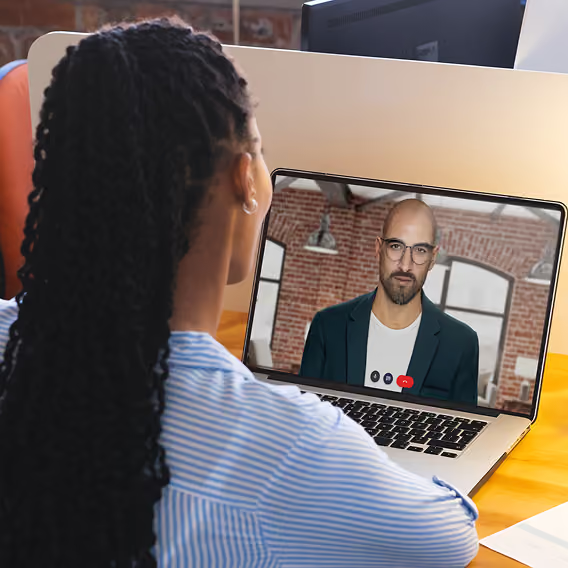
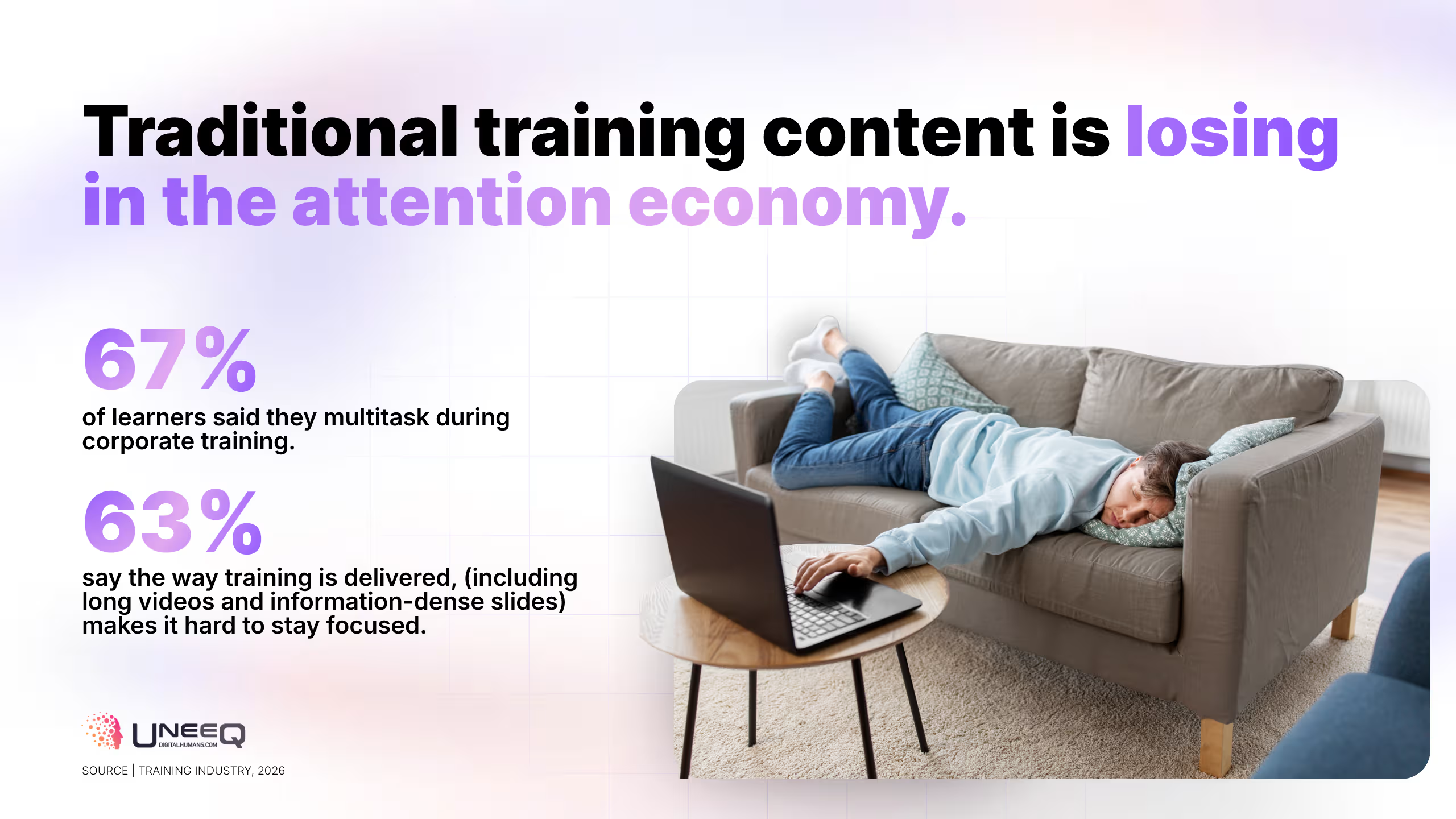
Training Industry asked more than 1,200 learners about their experience of corporate training in 2026. More than two-thirds (67%) say they multitask during it: checking email, doing other work, the usual. Training has become background content; it plays while people get on with their day.
And like the 16 hours of YouTube videos I watched last week, learners aren't committing much of that information to memory. In fact, they're rather disengaged by today's L&D content.
So is video training content becoming the PowerPoint presentation of the 2020s? The outdated, ineffective type of training that simply cant't hold the attention of modern audiences? I think there's a strong case for that.
Which makes the logical follow-up question obvious.
Today's L&D teams need learning content to be a lot of things at the same time:
So now let's look at some modern types of learning content:
Next, let's evaluate how each type works to meet the goals of L&D departments.
Scroll the table sideways to see every column.
| What L&D needs | Interactive video | VR and AR | Gamified challenges | AI roleplay | Virtual labs |
|---|---|---|---|---|---|
| Engaging and effective | PartlyThe learner still watches | YesStrong sense of presence | PartlyCompletion over capability | YesYou can't multitask through a conversation | YesReal tasks, real consequences |
| Easy to create and update | NoEvery branch is another shoot | NoBespoke 3D builds | PartlyTemplates improve ease of creation | YesMinutes, not months | NoEach environment is built and maintained |
| Simple to scale | YesRuns in a browser | NoHeadsets to buy and manage | YesNo per-learner cost | YesUnlimited reps, no manager time | PartlyCompute cost rises per learner |
| Immersive and realistic | PartlyYou watch the scene, not stand in it | YesBest for spatial and physical tasks | NoAbstracts the work into a game layer | PartlyA simulated experience in a digital space | YesFor technical work, it is the real thing |
| Cost-effective | PartlyCost climbs with every branch | NoHardware plus production | YesCheapest on the list | YesPer seat, no production or hardware | PartlyHeavy setup, ongoing compute |
| Fits LMS and HR systems | YesMature, well supported | PartlyDevice management sits outside | YesOften native to the LMS | YesHigh customizability into enterprise software | PartlyUsually standalone platforms |
There are at least two tests you can use to assess modern learning content, how it might meet your learning goals, and how it might return on your investment.
Content where the learner is a spectator has a ceiling, however well produced it is. Content where the learner has to make a decision, say the words out loud, read the other person's reaction and live with the outcome sits in a different category. Taking action demands more attention.
This matters most for human skills: the negotiation, the difficult piece of feedback, the customer complaint that starts reasonable and doesn't stay that way.
ROI comes from training effectiveness — how well training makes that person better at their job.
My ice-cold take: Nobody has ever effectively learned to de-escalate an angry person by watching a video about de-escalating angry people, even if they're not multi-tasking throughout it.
Is there anything more soul-destroying than having to scrap a great created piece of content because something out of your control changed?
It means a beautifully designed module describing a product you stopped selling in Q1 becomes a museum piece, however good the instructional design was.
AI isn't solving this, it's making it worse. IBM research shows that the lifespan of a skill has shrunk from 10 years to only four, as constant change causes people to need much more regular re-training. Forbes believes AI is causing this squeeze.
So the second test is whether your means and tools for creating content is modern enough to be quick and efficient. If refreshing a scenario takes a quarter and a budget request, your content will struggle to meet the meaning of 'modern', and hit a return on investment that leadership teams require.
At this point I want to say that 'modern' doesn't mean new and shiny. Great learning content doesn't even have to be modern — it has to be great.
So if your current learning content is meeting those criteria I've mentioned — of being engaging and effective; easy to create (and update); simple to scale across teams and departments; immersive/realistic; cost-effective; and easy to integrate — it's already great.
I use the word modern to mean more likely to achieve all of those things more often than not.
I think there are another six questions you can use to know if you need to modernize your learning content (and, in the immortal words of David Beckham in that meme: be honest):
If most of your answers point the wrong way, that's a symptom of the old production math rather than a judgment on your team.
So let my 16 hours of background YouTube mean something (please!) Let it highlight something about creating great L&D content in the attention economy.
Attention goes where something is happening. Training that asks nothing of a learner will always lose to whatever else is on their second screen, and training that puts them in the room has a fighting chance.
.png)