.png)


Training






Services






In 2017 Ali Reda sold 1,582 cars in a single year, becoming a world record salesperson. So what does he say is the secret to his success?
.png)
In 2017, Ali Reda sold 1,582 cars in a single year, shattering a world record set in 1973.
That's roughly six cars every day. One every two hours. And he did it working five days a week, no weekends!
What makes Reda's story worth paying attention to is he did it by turning car sales kind of on its head.
No, this isn’t a story of AI-driven productivity in car dealerships; nor is Reda selling a 10-point coaching program. He simply found that being the world’s best car salesman meant being trustworthy.
I say this as someone who knows people who work in car sales and know them to be lovely, generous people, but they’re just not trusted by the general population. A recent Gallup poll found that only 8% of the population trusts car salespeople, below only senators and members of Congress. Ouch!
Ali Reda says he draws a clear line between transactional selling and relationship selling.
In a transactional sale, you need to quickly convince someone to believe in you — and even then, you might close 15–20%of the time.
In a relationship sale, people already trust you before they walk through the door. Someone they know has already told them about you. They show up ready to buy. Reda's closing ratio? Around 85–90%.
The tactic is something Rory Sutherland agrees with. To paraphrase the marketing sense-talker, the mindset of the world’s best salespeople isn’t ‘what can I possibly do to sell this person a car,’ but ‘how do I make sure this person comes to me for their next car’.
It’s long-term thinking that lends itself to recurring revenue. But that shift in sales mindset (short-term to long-term sales) awakens something in the relationship. The salesperson starts to guide the buyer and advise them with honesty — and people notice that.
Here's where Reda's approach gets really interesting (and really counterintuitive).
He never asks for referrals. Never pays for them either.
Many salespeople offer $200 bounties for referral leads. Reda thinks that's a terrible idea.
When you put a dollar amount on a referral, he says, the experience becomes about money. The customer isn't out there sharing a story about you anymore, they're doing a transaction for their own short-term gain. And, as Reda knows, that doesn’t sell cars.
Instead, Reda focuses on giving every customer such a memorable experience that they can't help but talk about it — at family dinners, at community events, with coworkers, wherever.
The referrals happen naturally because the level of service is worth telling people about.
Sometimes people walk in saying three different friends told them to come see Ali — completely unprompted. That's the compound interest of genuine human connection.
One of Reda's strongest (and perhaps most controversial) opinions? Scripts don't work.
In Reda’s mind, if you were selling a car to your mother, you wouldn't need a script. You'd just help her find the right one. Now imagine every single customer walking in with that level of care.
He says reading someone else's words always felt "goofy." He emphasizes: “if there's certain words you don't say regularly, don't say them to your customers."
Now, we could go further and say scripts come across as inauthentic and dishonest, even when read with the best of intentions.
An example of how this can work comes, interestingly enough, from Jay Leno’s Garage, the Emmy-award-winning car series.
Jay was interested in ceramic disc brakes as an optional extra. Instead of following the script and saying “yes sir, they’re $20,000 each”, the salesperson enquired why he wanted them.
It turns out that Leno didn’t really need them — he wasn’t planning on going to a racetrack with the car, and the standard brakes would be better for driving on the streets — and the salesperson told him this.
Sure, it cost the dealership some revenue in the short term; but they more than made up for it with a customer who will absolutely be back to spend another $500,000+ on his next car.
That’s Reda’s exact way of thinking. Forget the script, focus on the person in front of you, and help them make the best decision.
Want an example of how empathy is used in sales? Look no further.
“I like to tell salespeople, when you go to buy a suit or a shirt or shoes, pay attention to how the salesperson is treating you,” explains Reda.
“Pay attention to what they're saying. Pick up on all of the things you think are good and bad. That's what you should be concentrating on.”
This kind of emotional awareness (reading body language, sensing how a customer feels, knowing when to push and when to give space) is exactly the kind of soft skill that separates top performers from everyone else.
And it's exactly the kind of skill that's hardest to develop through traditional sales training methods.
In consultative selling, Reda says, you don't really need to close people the way transactional sellers do. If you've been transparent throughout the entire process, you just naturally arrive at a decision together.
No pressure phrases, no urgency tactics, just simple questions woven through the conversation:
And if everything checks out: "What time do you want to pick it up?"
But, even for Reda, sometimes deals don’t close right away. Instead of panicking and applying more pressure, Reda gives people space. "Okay, I understand. No problem at all. If you have any questions, please call me."
Then he follows up the next day with a quick, personal text — not a template. Just himself: "Hey, thanks for stopping in. I appreciate the opportunity. Please call me if you have any questions. Here's my cell phone number."
He's not worried about losing that customer to another dealership. Because when you've built a real relationship, people don't want to start over somewhere else.
Strip away the impressive numbers, and the lesson from the world's best car salesman is refreshingly human. Sales success — real, sustainable, record-breaking success — isn't built on tactics, tricks, or pressure. It's built on:
These aren't just "nice-to-haves." They're the soft skills that separate elite performers from the average. And they're the skills that matter most when the stakes are high and the conversation gets real.
Before I wrap up, I just want to point out that the only way to practice sales skills isn’t on the forecourt, at your desk, in the field, or wherever you meet real customers.
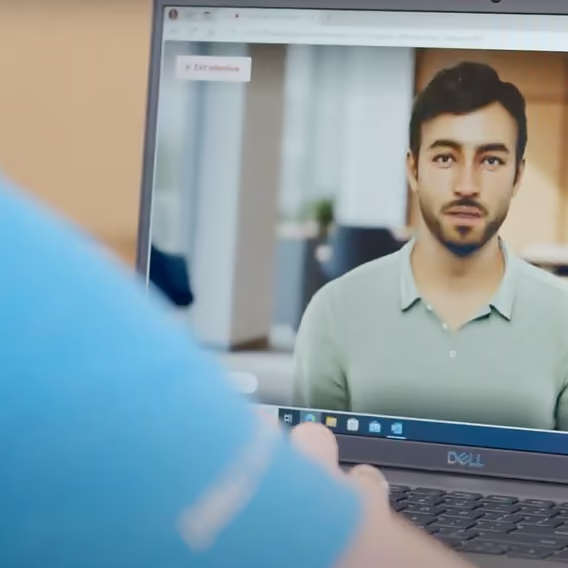
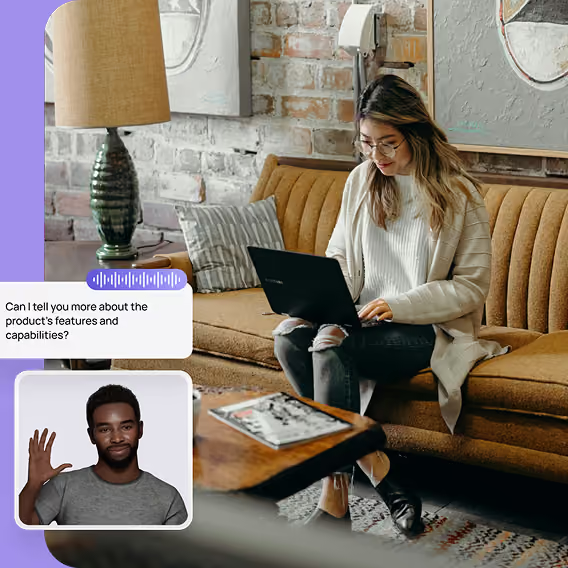
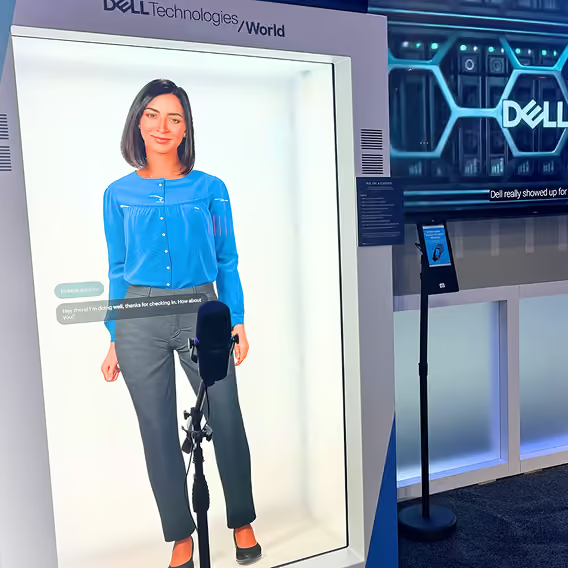
AI sales roleplay tools like ours, UneeQ’s Immersive Training Platform, is built for this purpose.
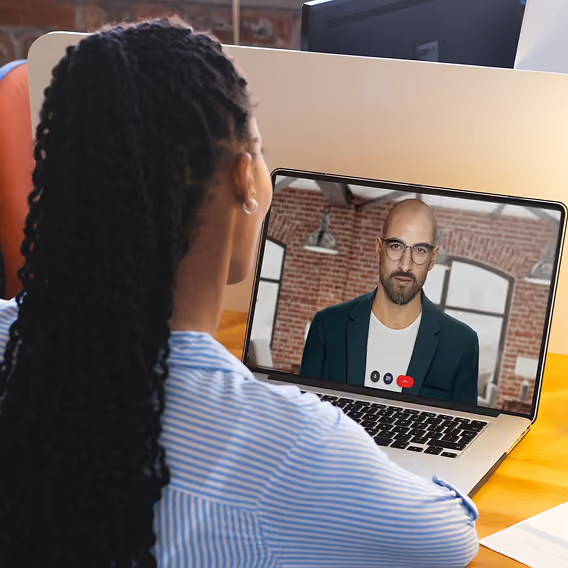
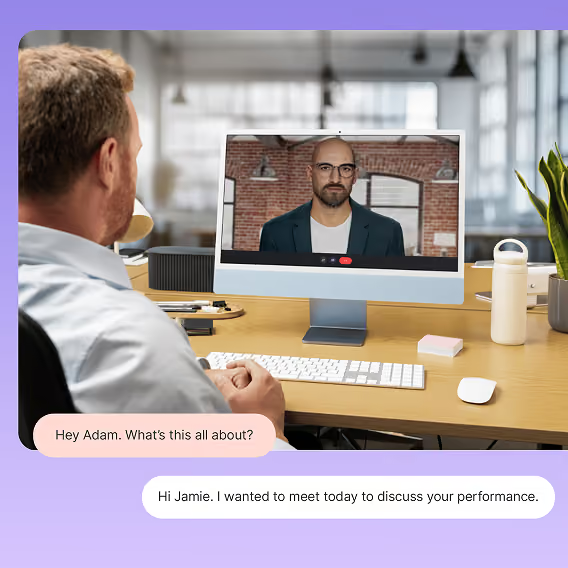
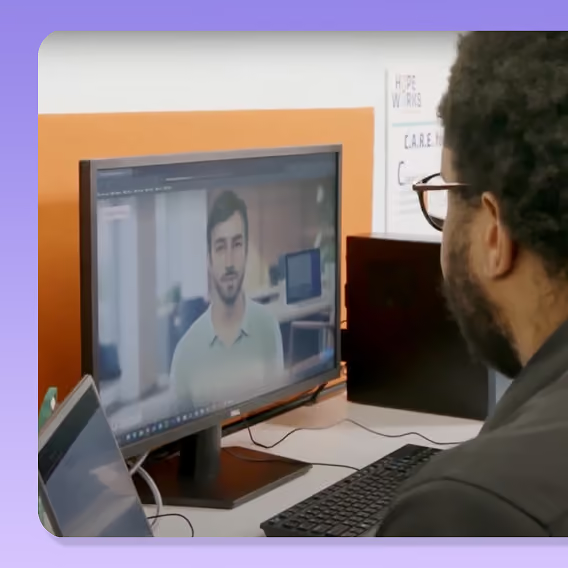
Sales teams practice high-stakes conversations face-to-face with realistic AI buyers. It’s all about developing strong sales reactions and reflexes, building skills, confidence and composure, and seeing where the gaps are in your sales team’s skills.
Our platform analyzes and coaches reps on the words they say, sure, but also on how they show up — how they build relationships through empathy.
There might only be one ‘world’s best car salesman’, but great teams aren’t built on individual superstars. They’re built on elevating most of the team to their highest level. As our CEO recently considered, it’s like Moneyball for sales teams.
If you’d like to explore AI sales roleplay that actually feels like talking to a real person, we’re happy to show you a demo.