
.png)




Training







Services








This guide delves into the top 10 sales roleplay tools, comparing key features that truly impact sales readiness in 2026.

Sales roleplay has always been one of the most effective ways to build confident, high-performing reps. The problem? Traditional roleplay is awkward, inconsistent, and almost impossible to scale.
Enter AI-powered sales roleplay tools — platforms that let reps practice realistic customer conversations on demand, without waiting for a manager's calendar to open up.
The results speak for themselves. Research shows sellers who regularly practice roleplay achieve 20–45% higher win rates than those who don't. And according to Allego's 2025 AI in Revenue Enablement Report, 43% of enablement leaders now use AI-powered roleplay to enhance coaching.
But not all roleplay tools are created equal. Some focus purely on voice interactions — essentially phone call practice. Others offer video-based pitch recording. And a newer category delivers something closer to real face-to-face sales conversations, complete with visual cues, body language, and emotional responses.
This guide breaks down the top 10 sales roleplay tools for 2026, comparing features, strengths, and limitations to help you find the right fit for your team.
Before diving into the list, here are the key criteria that separate good roleplay tools from great ones:
Conversation realism Does it feel like talking to a real buyer? The best platforms adapt naturally, raise objections, and respond to what your rep actually says — not just keywords.
Voice vs face-to-face Most tools are voice-only, which is fine for cold call practice. But if your reps sell via video or in-person meetings, you'll want a platform that includes visual interaction — facial expressions, eye contact, and non-verbal cues.
Feedback and coaching Instant, actionable feedback helps reps improve faster. Look for platforms that score against your specific criteria, not just generic communication metrics.
Customization Can you create scenarios that match your sales cycle, buyer personas, and objection types? Generic roleplay only gets you so far.
Analytics and reporting Managers need visibility into who's practicing, where gaps exist, and how training connects to real-world performance.
Integration The best tools connect with your CRM, LMS, or conversation intelligence platform to create a closed loop between practice and performance.

Best for: Face-to-face sales practice, through lifelike digital humans.
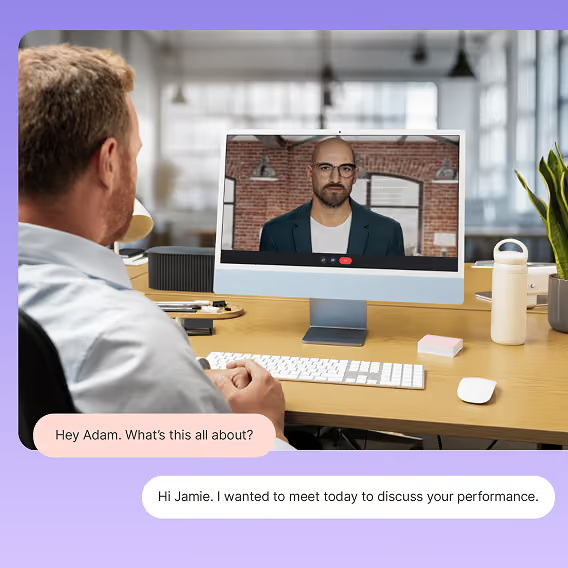
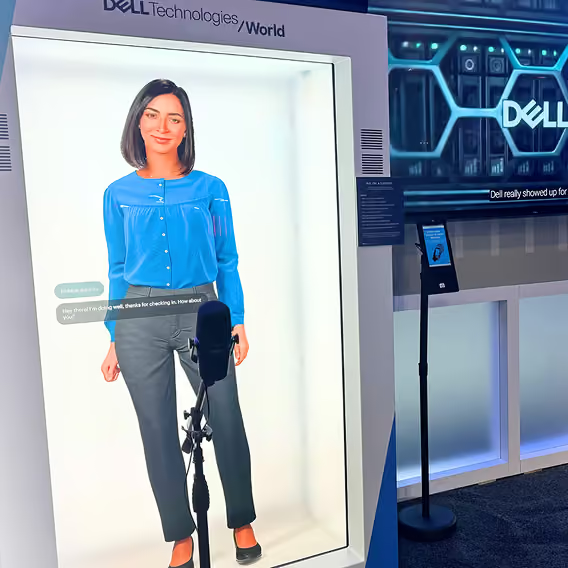
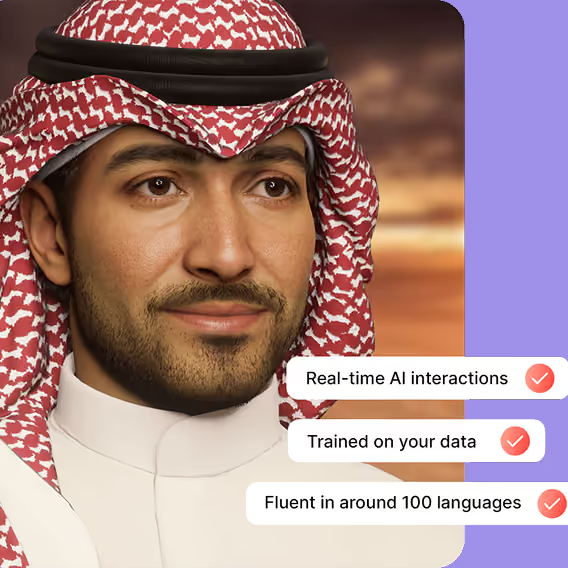
Most AI sales roleplay tools prepare reps for phone conversations. UneeQ takes a different approach — giving sales teams the ability to practice face-to-face with lifelike digital humans that see, hear, and respond in real time.
This matters because modern selling happens on video calls and in person, not just over the phone. Reading facial expressions, maintaining eye contact, and picking up on non-verbal cues are skills that voice-only tools simply can't develop.
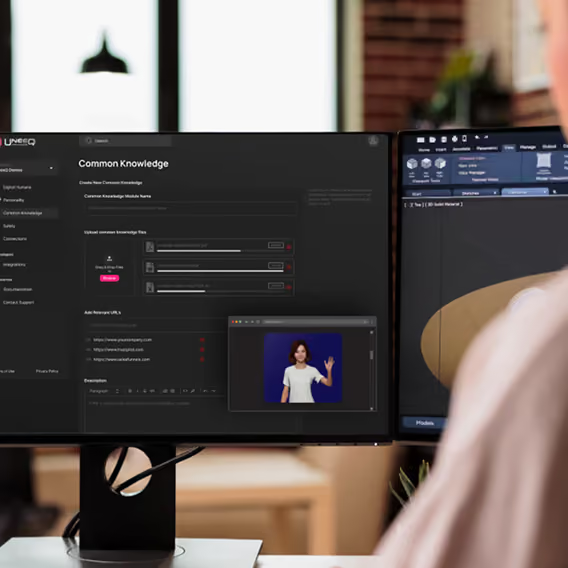
UneeQ's Immersive Training Platform uses proprietary digital human technology to create emotionally intelligent AI buyers. These aren't scripted chatbots — they adapt naturally to what your rep says, raise realistic objections, and respond with appropriate facial expressions and tone.
Key features
Strengths
Limitations
Pricing: Custom pricing based on team size and requirements. Get in touch to learn more.

Best for: Scalable voice roleplay with LMS integration.
Second Nature has been in the AI roleplay space since 2018, making it one of the more established players. The platform centers around "Jenny" — an AI persona that conducts two-way voice conversations with reps.
Second Nature is particularly strong for organizations that need tight integration with existing learning management systems. It supports 25+ languages and offers manager dashboards for tracking progress across teams.
Key features
prStrengths
Limitations
Pricing: Custom pricing for larger orgs; reports suggest $30–40/user/month for smaller sales teams.

Best for: Regulated industries requiring compliance-focused video roleplay.
Quantified has carved out a strong position in life sciences and other compliance-heavy industries. The platform offers generative AI avatars for video-based roleplay, with a particular focus on message adherence and regulatory compliance.
A standout feature is AvatarVision — the AI can see and respond to materials your rep shares via screen share or camera, making it good for practicing product demos and visual aid presentations.
Key features
Strengths
Limitations
Pricing: Custom enterprise pricing.

Best for: B2B sales teams wanting CRM-connected voice practice.
Hyperbound has quickly become established among B2B sales teams, particularly for voice-only interactions — like cold call and discovery call practice. The platform is trained on over 2 million hours of B2B sales calls, which shows in the realism of its AI buyer responses.
Where Hyperbound stands out is its focus on connecting practice to real pipeline. Reps can train with AI personas that match their actual ICPs, and the platform analyzes real sales calls to identify where coaching is needed most.
Key features
Strengths
Limitations
Pricing: Custom pricing; typical range $150–250/user/month.

Best for: Enterprise revenue teams wanting roleplay within a full enablement platform.
Mindtickle is a comprehensive revenue enablement platform that includes AI roleplay as part of a broader suite covering training, content management, coaching, and conversation intelligence.
For large enterprises already using (or considering) a full enablement platform, Mindtickle's integrated approach means roleplay data connects directly to learning paths, certifications, and CRM performance metrics.
Key features
Strengths
Limitations
Pricing: Custom enterprise pricing.

Best for: Revenue enablement teams wanting a broad solution.
Allego is a Gartner Magic Quadrant Leader in revenue enablement, and their Live Dialog Simulator — launched in mid-2025 — represents their push into realistic AI roleplay.
The platform combines learning, content management, coaching, and digital sales rooms in one place. For teams already invested in Allego's ecosystem, adding AI roleplay creates a seamless experience where practice connects to real sales execution.
Key features
Strengths
Limitations
Pricing: Custom enterprise pricing.

Best for: Individuals and small teams focused on communication skills.
Yoodli started as a speech coaching tool and has expanded into sales roleplay territory. It's particularly strong for improving general communication skills — tracking filler words, pacing, clarity, and eye contact.
The platform is backed by notable investors and has partnerships with organizations like Toastmasters and Korn Ferry. For teams where polished presentation skills matter as much as sales technique, Yoodli offers an affordable entry point.
Key features
Strengths
Limitations
Pricing: Free tier (5 sessions); Pro from $8/user/month; Custom enterprise pricing.

Best for: Revenue teams wanting practice connected to live pipeline.
Outdoo AI takes a revenue-first approach to roleplay. Rather than generic practice scenarios, reps rehearse conversations with AI personas pulled directly from their CRM — complete with deal stage context, buyer-specific objections, and tone matching.
The platform combines roleplay with conversation intelligence, AI coaching, and pipeline analytics, making it a strong choice for teams that want practice tightly connected to the deals they're actually working.
Key features
Strengths
Limitations
Pricing: Custom pricing based on team size.

Best for: Global teams needing roleplay plus full enablement stack.
SmartWinnr combines AI roleplay with a comprehensive enablement suite including knowledge management, microlearning, quizzes, gamification, and field coaching. The platform is particularly strong for organizations running large-scale, multilingual training programs.
The generative AI avatar conducts simulated sales conversations (albeit without the immersion of a digital human solution) raises relevant objections, and can respond to slide presentations or product demonstrations.
Key features
Strengths
Limitations
Pricing: Custom pricing.

Best for: Organizations wanting AI roleplay combined with human coaching.
Exec takes a hybrid approach, pairing AI-powered simulations with human coaching support. This combination addresses a common concern with pure AI tools — that technology alone can't provide the nuanced guidance needed for complex skill development.
The platform is particularly strong for management development, leadership training, and high-stakes conversation practice beyond just sales.
Key features
Strengths
Limitations
Pricing: Custom pricing.
Those looking for the best AI sales roleplay tools will need to choose a platform that's set up for the way their team sells.
Most notable is how AI roleplay solutions differ in being either voice-only or taking a more holistic approach.
Voice-only solutions simulate the experience of selling to a prospect over the phone, whereas digital human and AI avatar roleplay is better for practicing in-person sales.
We break down the considerations below.
The right sales roleplay tool depends on how your team actually sells.
If your reps primarily make phone calls, voice-based platforms like Hyperbound or Second Nature will serve you well. If you need roleplay embedded within a broader enablement ecosystem, Mindtickle or Allego offer compelling integrated solutions.
But if your sales conversations happen on video calls or face-to-face — where reading body language, maintaining presence, and building rapport through visual cues matter — you'll want a platform built for that reality. That's where digital human technology like UneeQ's Immersive Training Platform stands apart from the voice-only majority.
Whatever tool you choose, the research is clear: consistent practice drives better results. Teams that make roleplay a regular habit, not a one-off event, are the ones hitting quota and building genuinely confident sellers.
What is AI sales roleplay?
AI sales roleplay uses artificial intelligence to simulate realistic buyer conversations, allowing sales reps to practice pitches, objection handling, and discovery calls without needing a manager or colleague to play the customer role. The AI adapts to what the rep says and provides feedback after each session.
How is AI roleplay different from traditional roleplay?
Traditional roleplay requires scheduling time with a manager or peer, often feels awkward, and feedback is inconsistent. AI roleplay is available on demand, provides objective scoring, and lets reps practice as many times as needed without judgment.
What's the difference between voice-only and face-to-face roleplay tools?
Voice-only tools simulate phone conversations — great for cold calling practice. Face-to-face tools like UneeQ include visual elements, allowing reps to practice reading facial expressions, maintaining eye contact, and responding to non-verbal cues — essential skills for video and in-person selling.
How much do AI sales roleplay tools cost?
Pricing varies widely. Individual-focused tools like Yoodli start around $8/user/month. Enterprise platforms typically range from $30–250/user/month depending on features and team size. Most require custom quotes.
Can AI roleplay actually improve sales performance?
Yes. Research shows roleplay practice leads to 20–45% higher win rates. Cisco reported a 31% increase in average deal size after implementing AI roleplay. The key is consistent practice — reps who use these tools regularly see the strongest results.
How long does it take to set up an AI roleplay tool?
Most platforms can be configured within days to a few weeks. Simpler tools like Yoodli or Hyperbound allow you to create your first scenario in minutes. Enterprise platforms with deep integrations may take longer for full deployment.